Storing dry hydroponic nutrients well comes down to one variable: moisture, not age. Dry mineral salts effectively never chemically expire, yet I’ve watched a half-open bag of calcium nitrate turn into a solid brick in under three weeks in a humid Swedish spring. Keep them airtight, dry, and out of the tent.
I run DWC totes, NFT channels, a Kratky bucket and an ebb-and-flow hydroton bed side by side, and I mix every reservoir to a target EC rather than by feel. That only works if the grams I scoop are actually salt and not salt-plus-absorbed-water. Storage is the unglamorous half of dosing accuracy, and it’s the half most growers get wrong. This guide is the storage method I’ve settled on after caking ruined more than one batch.
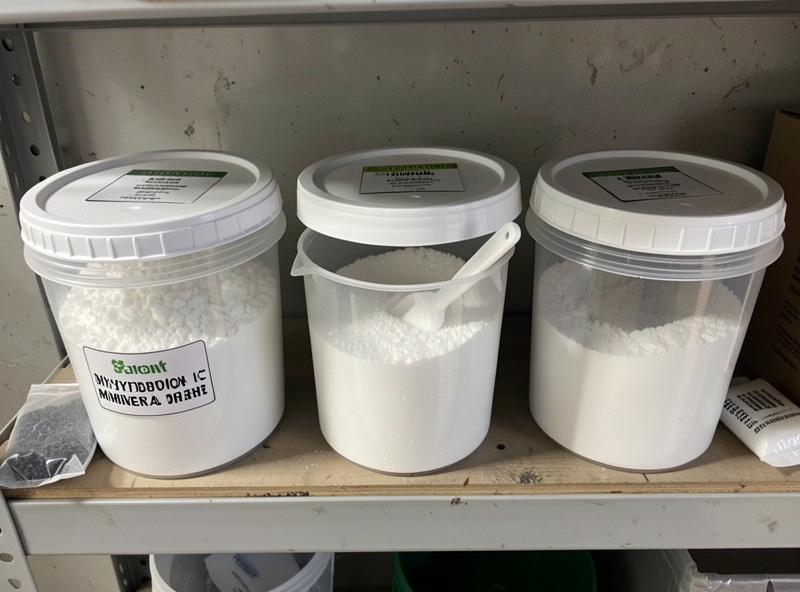
Dry salts don’t expire — moisture is the real enemy
The single most useful thing to understand: dry hydroponic salts have no meaningful shelf life as long as they stay dry. There is no expiry chemistry waiting to spoil them. Every failure I’ve had traces back to water in the air, not the calendar.
Masterblend 4-18-38, calcium nitrate (15.5-0-0, roughly 19% calcium), and Epsom salt (magnesium sulfate heptahydrate) are all mineral salts. Minerals don’t rot. A bag of cal-nit you bought two years ago is chemically identical to a fresh one — provided it hasn’t pulled water out of the air in between. The instant it does, the story changes.
This matters because growers throw out perfectly good salt assuming it’s “gone off,” and they buy fresh stock they didn’t need while the real problem — an unsealed bin in a humid room — stays unfixed. Fix the storage and a single purchase lasts seasons. My oldest Masterblend tub is well over a year old and mixes exactly as cleanly as the day it arrived, because it has never once been left open in damp air. If you want the broader recipe and ratio context, my Masterblend hydroponic nutrients guide covers the full dosing side; this article is purely about keeping that powder usable.
It’s worth separating two ideas that get blurred together. “Shelf life” on a consumer product usually implies the contents degrade chemically over time — a reaction clock ticking whether you open the jar or not. Dry mineral salts have no such clock. There is no oxidation, no breakdown, no slow loss of potency sitting sealed on a shelf. What they have instead is a sensitivity clock that only starts ticking the moment humid air reaches them. Keep the air out and the clock never starts. That reframing is the whole reason a careful grower can buy in bulk and not waste a gram: you are not racing an expiry date, you are simply keeping water away from powder.
Why calcium nitrate cakes worst — and what hygroscopic means
Calcium nitrate is hygroscopic: it actively pulls moisture out of humid air and holds onto it. Left open in a damp room it can go from free-flowing prills to a solid, damp brick within weeks. Of my three salts, it is by a wide margin the one that fails first.
Hygroscopic simply means a substance attracts and absorbs water vapor from its surroundings. Calcium nitrate is strongly hygroscopic — it’s almost greedy about it. Masterblend draws moisture too, just more slowly; you’ll see it clump before it bricks. Epsom salt is the most stable of the three, but leave it damp long enough and even that cakes into lumps. So the ranking, from “ruins fast” to “ruins last,” is cal-nit, then Masterblend, then Epsom — and I store accordingly, giving the calcium nitrate the most attention.
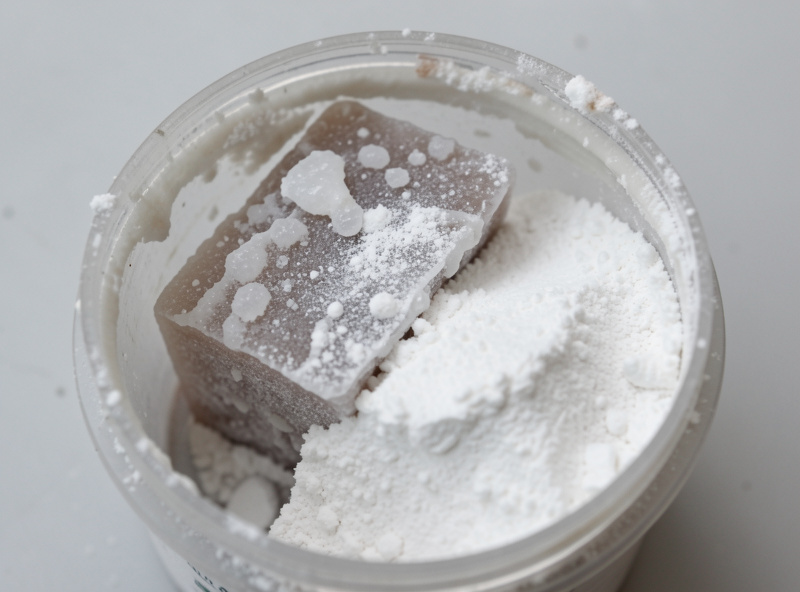
If your cal-nit has already caked, that’s a different repair than precipitation in solution — but the two get confused. If you’re chasing cloudy reservoirs or solids dropping out after you mix, read my Masterblend precipitation fix for the in-solution side of calcium chemistry, because the storage fix here won’t help a mix that’s already gone milky in the tank.
How caked salt quietly wrecks your dosing accuracy
Here’s the part that actually costs you crops: caked salt has absorbed water, so it weighs heavy. When you scoop “2 grams” of moisture-loaded cal-nit, a chunk of that mass is water — meaning you’re delivering less actual nutrient than the recipe calls for. Your EC reads low even though the numbers on paper look right.
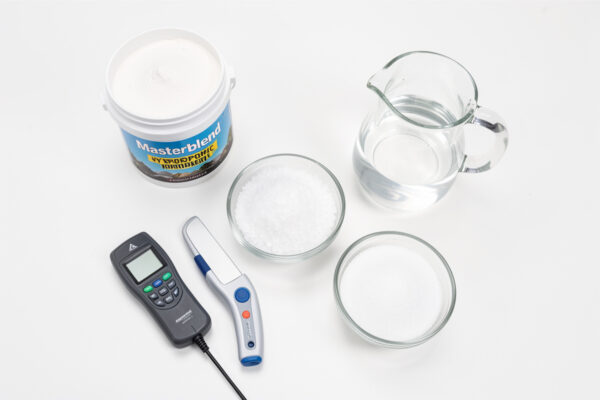
I mix to a target EC, not by feel, and this is exactly where damp salt sabotages you. The full Masterblend dry recipe is a 2-1-2 ratio — that’s Masterblend to Epsom to calcium nitrate at 2:1:2 by weight — so a full dose per gallon is 2 g Masterblend, 1 g Epsom, and 2 g cal-nit, landing me around EC 2.0–2.4 in fresh water. Build that recipe from caked salt and the same gram weights under-deliver across the board, with the cal-nit (the worst caker) skewing your calcium most of all.
The symptom is maddening to diagnose: the recipe is correct, the scale is correct, the EC pen is calibrated, and the reservoir still reads low. I’ve calibrated my pens twice chasing this before realizing the variable was the powder, not the meter. Caking also stops salt dissolving cleanly — clumps sit at the bottom or float as scum instead of going into solution — which throws the reading off further. If you’re nailing the cal-nit ratio specifically, my calcium nitrate and Masterblend mix walks the weights; just know that none of those numbers hold if the salt going onto the scale is wet.
The storage method that actually keeps salts dry
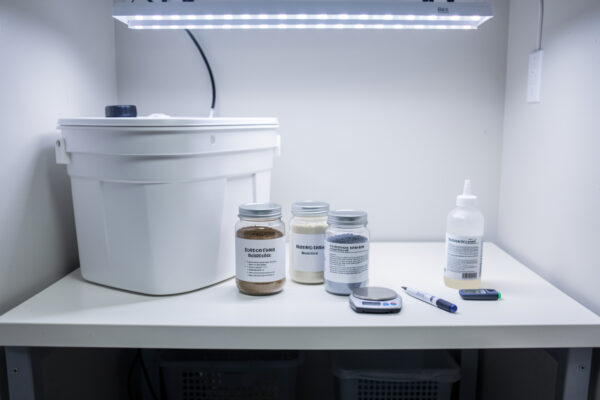
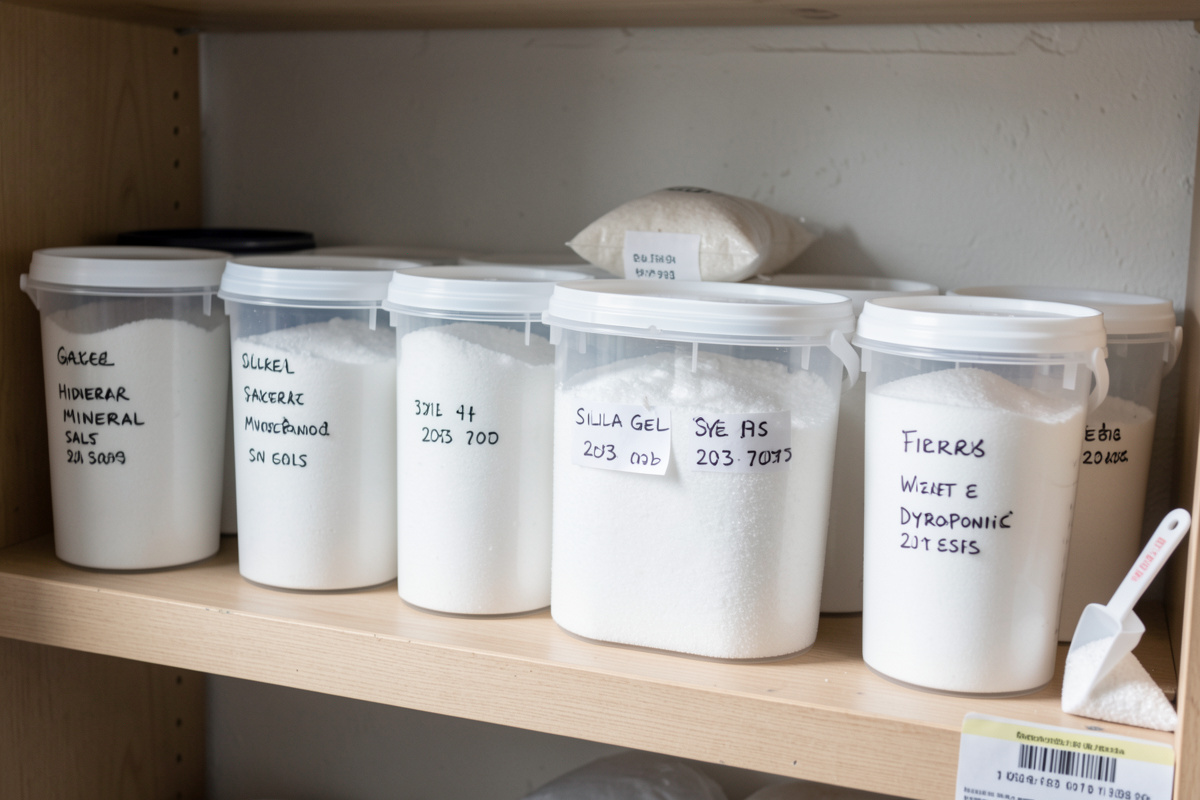
The fix is unglamorous and reliable: store all three salts airtight, with a desiccant, somewhere cool and dry. Gasket-lid buckets or genuinely sealed containers plus a silica gel pack in each, kept out of the humid grow space — that combination has kept my powder free-flowing for over a year.
Airtight is the non-negotiable. A gasket-lid bucket or a sealed food-grade container with a real seal stops the air exchange that lets hygroscopic salt feed on humidity. A clipped-over bag or a press-on lid is not airtight and will not save cal-nit. I use airtight gasket storage containers, one per salt, and I trust the gasket more than I trust any bag.
Inside each bin I drop a silica gel desiccant pack. The desiccant mops up whatever trace humidity sneaks in every time you open the lid. It’s cheap insurance, and the rechargeable indicating-bead packs let you dry them in a low oven and reuse them indefinitely.
As an Amazon Associate I earn from qualifying purchases.
Location matters as much as the container. Cool and dry beats warm and damp every time, so a basement shelf, a cupboard, or a dry garage corner all work. The one place that does not work is inside the grow tent — and a lot of growers store nutrients right there for convenience.
Keep it out of the tent — and keep cal-nit separate
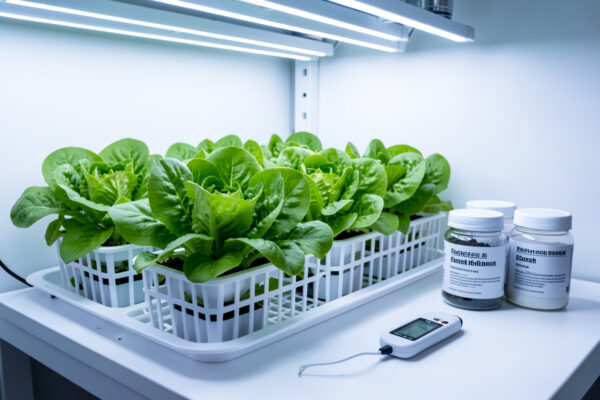
A grow tent is deliberately humid; that’s the whole point of running it for your plants, and it’s the worst possible home for hygroscopic salt. Storing dry nutrients in the tent is handing your cal-nit a constant supply of the moisture that bricks it. Move the bins out.
I keep my salts on a shelf in a dry room well away from the tent’s RH. This is a real consideration where I grow in Sweden — a humid grow tent versus a dry cupboard is a genuine storage decision, not a theoretical one, and the difference between the two is the difference between powder and brick.
Two more rules I hold to. First, keep calcium nitrate physically separated from the Masterblend and Epsom — never store them pre-mixed or concentrated together. Cal-nit is both the worst caker and the salt that drives precipitation when calcium meets sulfates and phosphates, so a combined dry stash is asking for trouble on two fronts. Second, label and date every bin. Three white powders look identical the moment they leave the original bag, and a labeled, dated container removes the guesswork. The same dry-storage logic applies to scoops and reservoir kit; my hydroponic reservoir guide covers keeping the wet side of the system clean once the salt is safely dosed.
A 3D-printed scoop in every bin
One small habit that protects the rest: keep a dedicated scoop inside each salt bin so your hands and any kitchen-spoon moisture never go near the powder. I 3D-print mine, one per salt, and they live in the bins permanently.
I print reservoir lids and net-pot collars anyway, so running off three little scoops costs me nothing but filament. A dedicated scoop means I’m never reaching in with damp fingers or a wet spoon, never cross-contaminating cal-nit into the Masterblend bin, and never leaving the lid off longer than the second it takes to dip and re-seal. Keeping the lid closed except for that brief scoop is the entire game with hygroscopic salt.
A printed scoop has one more quiet advantage: it makes weighing repeatable. Because I always dip the same scoop into dry, free-flowing powder, the relationship between a level scoop and the gram reading on my scale stays consistent batch to batch. The moment salt cakes, that consistency falls apart — a level scoop of bricked cal-nit weighs differently than a level scoop of fresh, and you lose the rough muscle-memory checkpoint that tells you something’s off before the EC pen even hits the water. Dry powder plus a captive scoop keeps both the scale and your instinct honest.
If you grow in a climate with real seasonal humidity swings — as I do in Sweden, where a damp spring is a different world from a dry winter — it’s worth checking your bins each time the weather turns. Open one, look for any clumping at the edges, and recharge or swap the desiccant if the indicating beads have shifted colour. Five seconds of inspection at the change of season has spared me every brick I used to fight, and it costs nothing but the habit.
None of this is complicated. Airtight container, desiccant pack, cool dry spot out of the tent, cal-nit kept separate, label and date, and a captive scoop per bin. Do that and your dry salts will outlast several grows while your dosing stays honest. For the full picture of how these salts fit a complete feed program, my complete hydroponic nutrients guide ties storage, mixing, and reservoir management together.
Do dry hydroponic nutrients expire?
Not in any meaningful sense. Dry mineral salts like Masterblend, calcium nitrate, and Epsom salt don’t chemically expire — they last for years as long as they stay dry. The only real failure mode is absorbing moisture from humid air and caking, which is a storage problem, not an age problem.
Why does my calcium nitrate turn into a hard brick?
Calcium nitrate is strongly hygroscopic, meaning it pulls water vapor out of the air and holds it. Left open in a humid room it can clump and then solidify into a damp brick within weeks. It’s the worst-caking of the common dry salts, which is why it needs the most airtight storage.
Does caked salt actually affect my nutrient mix?
Yes. Caked salt has absorbed water, so it weighs heavy — a measured 2 grams is partly water and less actual salt. Your mix under-delivers nutrient and your EC reads low even though the recipe looks correct. Caked salt also dissolves poorly, throwing the reading off further.
How should I store dry hydroponic salts?
Keep all three salts in airtight gasket-lid containers with a silica gel desiccant pack in each, in a cool, dry spot out of the grow tent. Keep calcium nitrate physically separate from the Masterblend and Epsom, label and date every bin, and use a dedicated scoop to avoid introducing moisture.
Can I store my nutrients inside the grow tent?
No — that’s the worst place. A grow tent is deliberately humid for the plants, which is exactly the moisture that cakes hygroscopic salt. Store dry nutrients in a separate cool, dry room, cupboard, or garage corner away from the tent’s high relative humidity.