To treat aphids in a hydroponic garden, escalate in steps: knock them off with a firm water spray, follow with insecticidal soap or cold-pressed neem at ~0.5% (5 mL/L) sprayed lights-off on leaf undersides, and for a standing infestation release ladybugs or Aphidius parasitic wasps. In a sealed indoor room aphids have no natural predators unless you import them — so you either spray on a schedule or build a biological control.
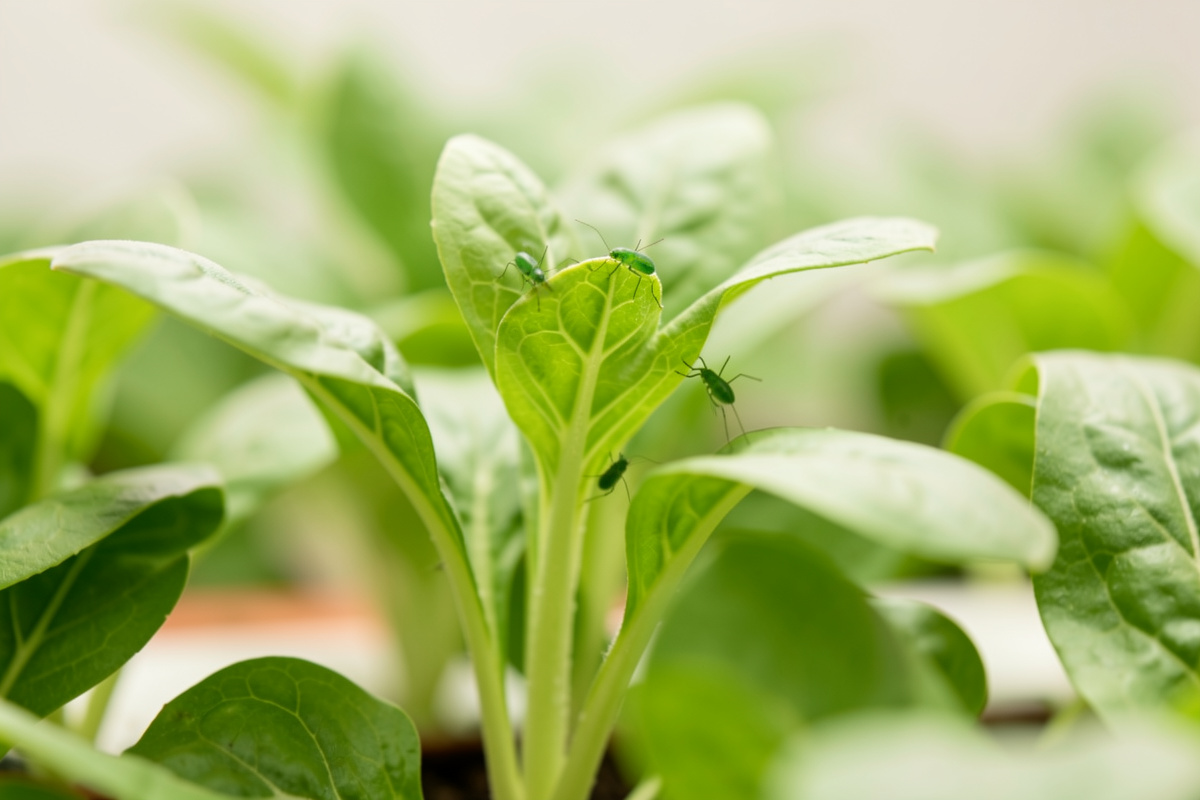
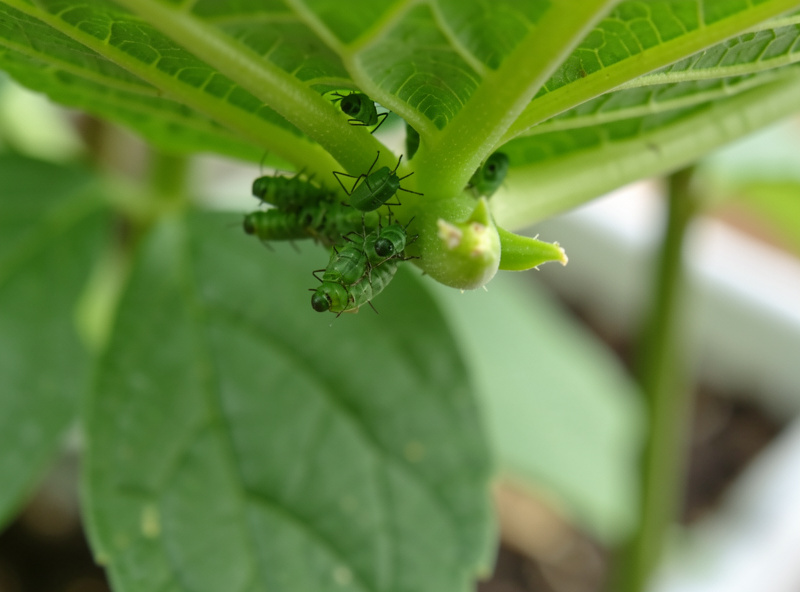
Aphids are the pest that turns up overnight and multiplies faster than seems fair. They are soft-bodied, pinhead-sized, and come in green, black, peach and grey; you will find them clustered on the newest, tenderest growth and packed along the undersides of leaves. What makes them genuinely damaging rather than just unsightly is the combination of sap-sucking — which deforms new growth and stunts the plant — and the sticky honeydew they excrete, which coats leaves, grows black sooty mold, and blocks light from the very leaves doing your photosynthesis. In a warm, predator-free hydro tent a few founders become a colony in a week. This is the treatment program I run when they show up on my bench, ordered from gentlest to most committed.
Why Aphids Thrive in an Indoor Hydroponic Garden
Outdoors, aphids are kept in rough check by ladybugs, lacewings, hoverflies and parasitic wasps that find them within days. Indoors, you have removed every one of those predators and handed the aphids a climate-controlled room with lush, well-fed, soft growth and no winter to knock them back. Hydroponic plants are often growing fast and tender precisely because they are well-fed, and that soft new growth is exactly what aphids prefer. The result is that an indoor aphid population can grow unchecked far faster than an outdoor one — many aphids reproduce asexually, so a single female seeds a colony without needing a mate. Penn State Extension has good background on aphid biology and the asexual reproduction that drives those explosive indoor numbers.
The flip side of that sealed room is the opportunity: if you import predators, they cannot wander off the way they would in a garden, so biological control is unusually effective indoors once you commit to it. That trade — no free predators, but excellent retention of the ones you buy — shapes the whole treatment strategy below.
The Escalating Treatment Ladder
I always start with the least disruptive option that can plausibly work and step up only as needed. Jumping straight to the heaviest tool wastes effort and, if you are leaning biological, can poison your own predators.
Step 1: Water Knockdown
The simplest first move is a firm spray of plain water on the undersides of leaves and the growing tips, knocking the aphids physically off the plant. Aphids are weak and slow, and a meaningful fraction that fall cannot climb back before they desiccate or get caught. On a small infestation caught early, a couple of water knockdowns a few days apart can be enough on their own. Just be careful not to soak the reservoir with run-off or blast tender seedlings apart.
Step 2: Insecticidal Soap or Neem
When water alone is not keeping up, step to a contact spray. Insecticidal soap breaks down the aphids’ soft cuticle on contact and is gentle on plants and safe on edibles when used as directed. Cold-pressed neem oil at ~0.5% (5 mL/L) with a little emulsifier is my go-to because it both smothers aphids on contact and disrupts feeding and reproduction over a few days. The rule that matters: spray lights-off, hitting leaf undersides thoroughly, or you risk leaf burn from oil under hot lights and the neem degrades faster. Repeat every few days until the population breaks, because no single spray catches every newly-hatched aphid. A bottle of insecticidal soap and one of cold-pressed neem oil cover most situations.
As an Amazon Associate I earn from qualifying purchases.
Step 3: Release Predators
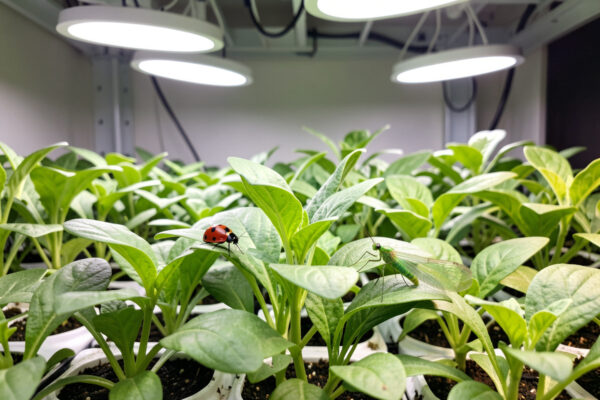
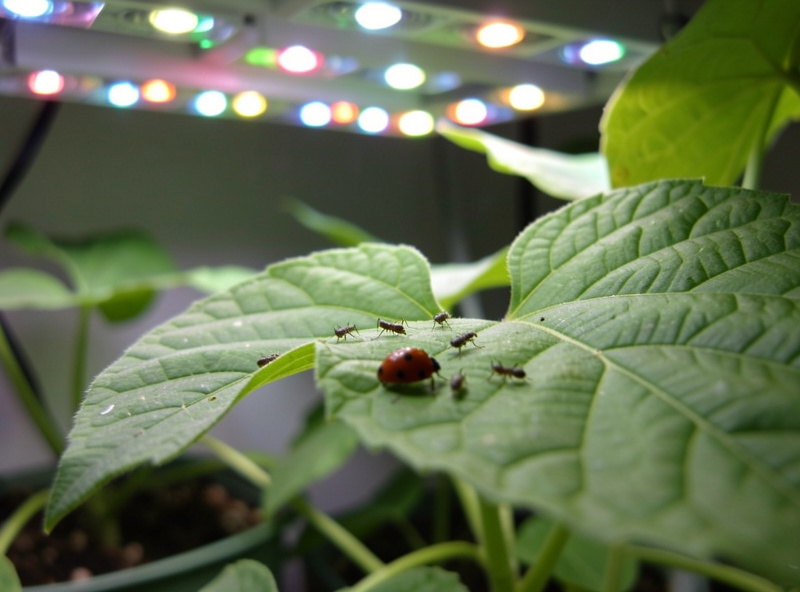
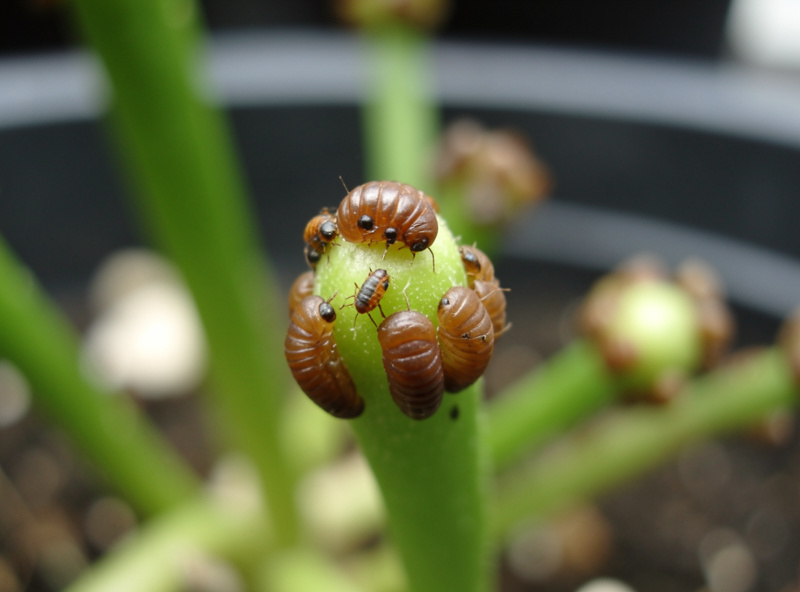
For an established or recurring infestation, biological control is the most durable answer in a sealed room. Ladybugs (lady beetles) are the classic — each adult eats dozens of aphids a day — though in an open tent some will wander; release them at dusk, lights-off, with a little water available, and they settle better. Aphidius parasitic wasps are quieter and more persistent: the tiny harmless wasp lays eggs inside aphids, leaving behind the swollen brown “mummies” that tell you it is working, and the next wasp generation keeps hunting. Lacewing larvae are another voracious option. The hard rule with all of them: once you release predators, you stop spraying neem and soap, because the same contact sprays that kill aphids kill your predators.
Matching the Treatment to the Situation
| Situation | Best first move | Notes |
|---|---|---|
| A few aphids, caught early | Water knockdown | Repeat every few days; often enough alone |
| Spreading colony | Insecticidal soap or neem ~0.5% | Lights-off, leaf undersides, repeat |
| Established / recurring | Ladybugs or Aphidius wasps | Stop all sprays once predators are in |
| Honeydew + sooty mold | Wipe leaves + treat aphids | Mold clears once the aphids are gone |
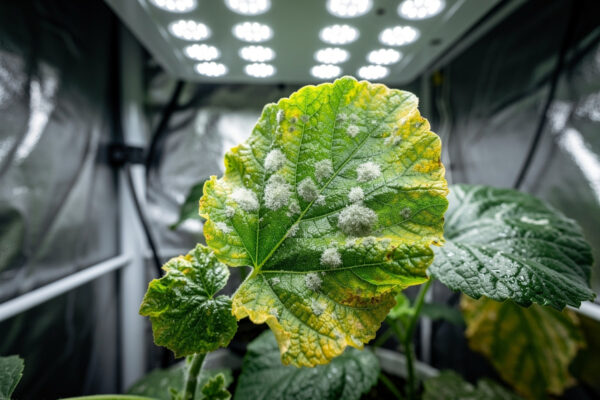
Whatever route you choose, deal with the honeydew too. Wipe sticky leaves with a damp cloth so the sooty mold that grows on the sugar does not shade the canopy. The mold itself does not infect the plant — it just lives on the honeydew — so it clears once the aphids stop feeding, but cleaning the worst of it back restores light to the leaves immediately.
Why I Skip Systemic Pesticides Indoors
You will see systemic insecticides marketed as a one-and-done aphid fix — the plant takes the chemical up and any aphid that feeds dies. On edible crops in an enclosed room I leave them on the shelf, and not out of squeamishness. A systemic moves into the leaves and fruit you intend to eat, the indoor space has no weathering or wide dilution to break it down, and it indiscriminately kills any beneficial insect you might want to use later. The whole appeal of an indoor hydroponic garden is clean, traceable produce; a systemic pesticide trades that away to save a few evenings of spraying.
The contact tools — water, soap, neem — plus biological predators handle the large majority of home aphid problems without that trade-off. They take more attention and a few repeat applications, but they keep the crop genuinely clean and they keep the biological door open. If an infestation is so far gone that only a systemic would touch it, the honest move is usually to cull the worst plants, reset, and fix the exclusion gap that let it get that bad — not to chemically saturate a salad.
How to Be Sure It Is Aphids
Before you treat, confirm what you are looking at, because the right diagnosis picks the right tool. Aphids are pear-shaped, slow-moving, and clustered — dozens packed together on a stem tip or leaf underside rather than scattered individuals. Look for two tiny tube-like projections (cornicles) sticking out the back end; under a loupe they are unmistakable and separate aphids from almost every look-alike. You will often see the cast white skins they shed as they grow, plus ants if any have found the honeydew.
The common confusions: whiteflies fly up in a cloud when you disturb the plant, where aphids stay put. Spider mites are far smaller, cause fine stippling and webbing rather than clustering, and need the different approach in the spider mites guide. Thrips are thin and dart away, leaving silvery scarring. And plain nutrient stress can curl new growth in a way that mimics aphid damage — so if you see deformed leaves but no actual insects under the loupe, check your feeding before you spray anything. Getting this step right saves a wasted treatment.
A Realistic Aphid Treatment Timeline
Aphids feel like an emergency because of how fast they multiply, but a steady program beats a panic. Here is how the job actually unfolds on my bench once I confirm a spreading colony.
Day one: water-knock the worst clusters off, wipe down the honeydew, and decide your route — spray or biological. If you are going biological, do not spray at all; order predators and hold. If you are spraying, mix neem at 0.5% or insecticidal soap and apply lights-off that evening, leaf undersides first.
Days three to four: reinspect. The first spray kills the aphids present but not the ones that hatch from eggs afterwards, so a second application catches the new generation. This is where growers quit too early and let the colony rebound — plan on a series, not a single hit.
Days seven to ten: the population should be visibly collapsing. A third spray cleans up stragglers. If you went the predator route instead, this is when you start seeing the brown Aphidius mummies or ladybugs working the colony, and your job is simply to leave them alone and keep spraying off the table.
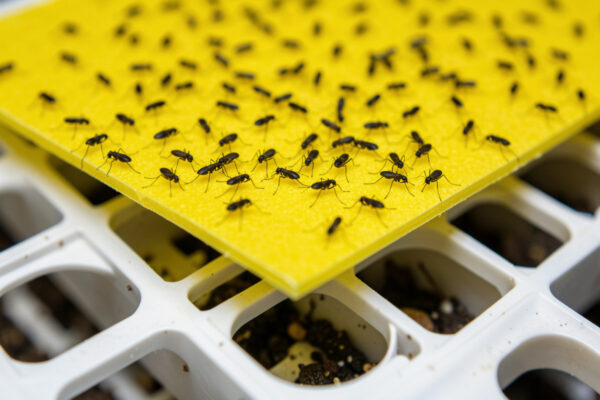
Ongoing: keep a couple of yellow sticky traps up to catch winged aphids and to monitor for a comeback. Most importantly, find the source — almost always a specific plant that brought them in — and quarantine or cull it so you are not re-seeding the room every few weeks. An aphid problem that keeps returning is nearly always an exclusion failure, not a spray failure.
Stop Them Getting In
Almost every indoor aphid outbreak arrives on a plant. A nursery transplant, a cutting from a friend’s windowsill, a herb seedling from the supermarket — any of them can carry a few founder aphids or eggs that explode into a colony once they hit your warm, predator-free room. The fix is the same exclusion discipline that prevents every other pest: quarantine new plants for two weeks and inspect them under a loupe before they ever enter the main grow, and never bring outdoor plants in. The full routine is in the hydroponic room biosecurity guide. Winged aphids can also fly in through an open window or vent in summer, which is one more argument for screening your intakes.
Aphids are one antagonist in the broader program I lay out in the hydroponic pest control guide, and the predator-release approach overlaps directly with the roster in beneficial insects for indoor hydroponic grows. As always, a healthy plant resists better than a stressed one: correct feeding and a stable root zone — the same fundamentals behind preventing root rot — make growth less of an aphid magnet and let the plant shrug off minor feeding damage while you bring the colony down.
Frequently Asked Questions
What is the fastest way to get rid of aphids in hydroponics?
For a small infestation, a firm water spray on leaf undersides knocks them off immediately, repeated every few days. For anything larger, insecticidal soap or cold-pressed neem at about 0.5 percent sprayed lights-off works within days. Predators are the most durable fix but act over a week or more.
Is neem oil safe on hydroponic vegetables for aphids?
Yes, cold-pressed neem at about 0.5 percent (5 mL per liter) is widely used on edible crops. Spray leaf undersides with the lights off to avoid leaf burn, repeat every few days until the colony breaks, and rinse harvested leaves. Stop applications well before harvest.
Do ladybugs work for aphids in a grow tent?
Yes, but release them at dusk with the lights off and a little water available so they settle instead of flying to the light. Each adult eats dozens of aphids a day. In a fully open room some will wander, so Aphidius parasitic wasps are often a more persistent choice indoors.
Why do my hydroponic plants keep getting aphids?
Indoor rooms have no natural predators and offer warm, soft, well-fed growth aphids love, and many reproduce asexually so one founder seeds a colony. They almost always arrive on a new plant or cutting, so quarantining and inspecting new plants is the single best prevention.
What is the sticky stuff and black mold from aphids?
Aphids excrete sugary honeydew as they feed, and black sooty mold grows on that sugar. The mold does not infect the plant but it shades the leaves. Wipe the worst off with a damp cloth, and it clears on its own once the aphids are gone and stop producing honeydew.