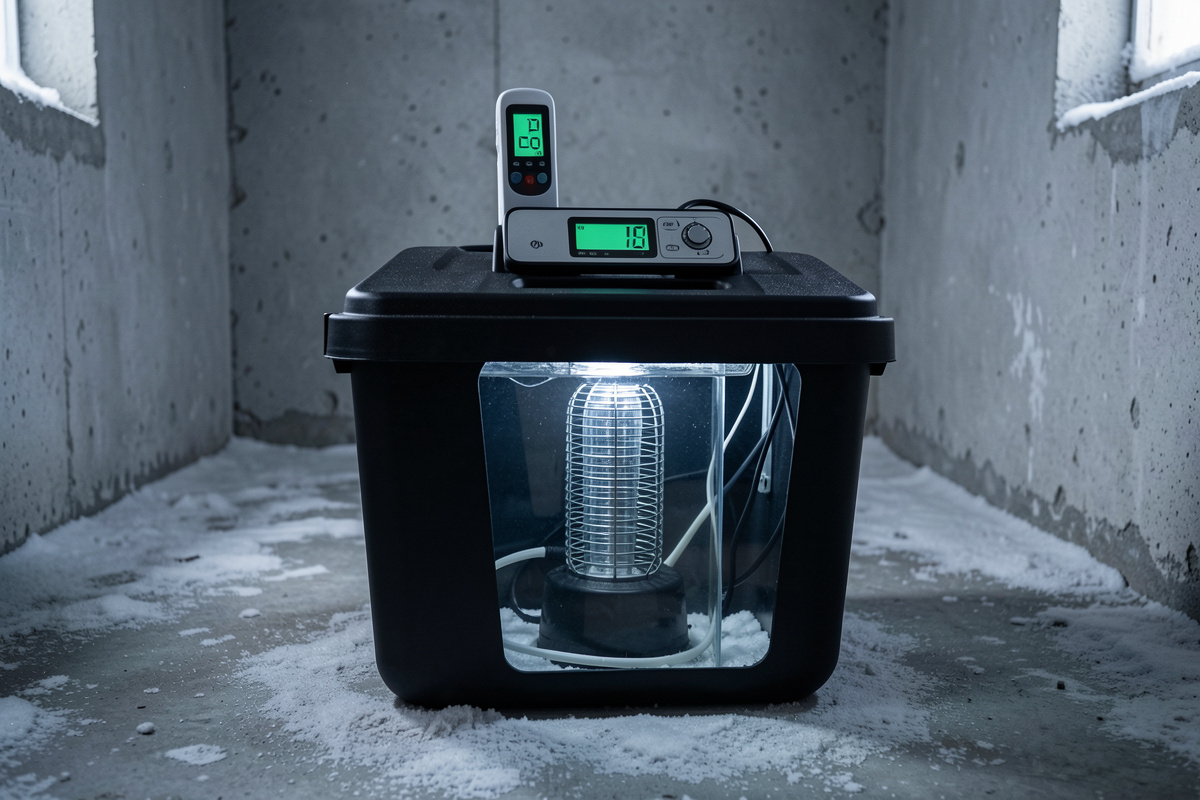
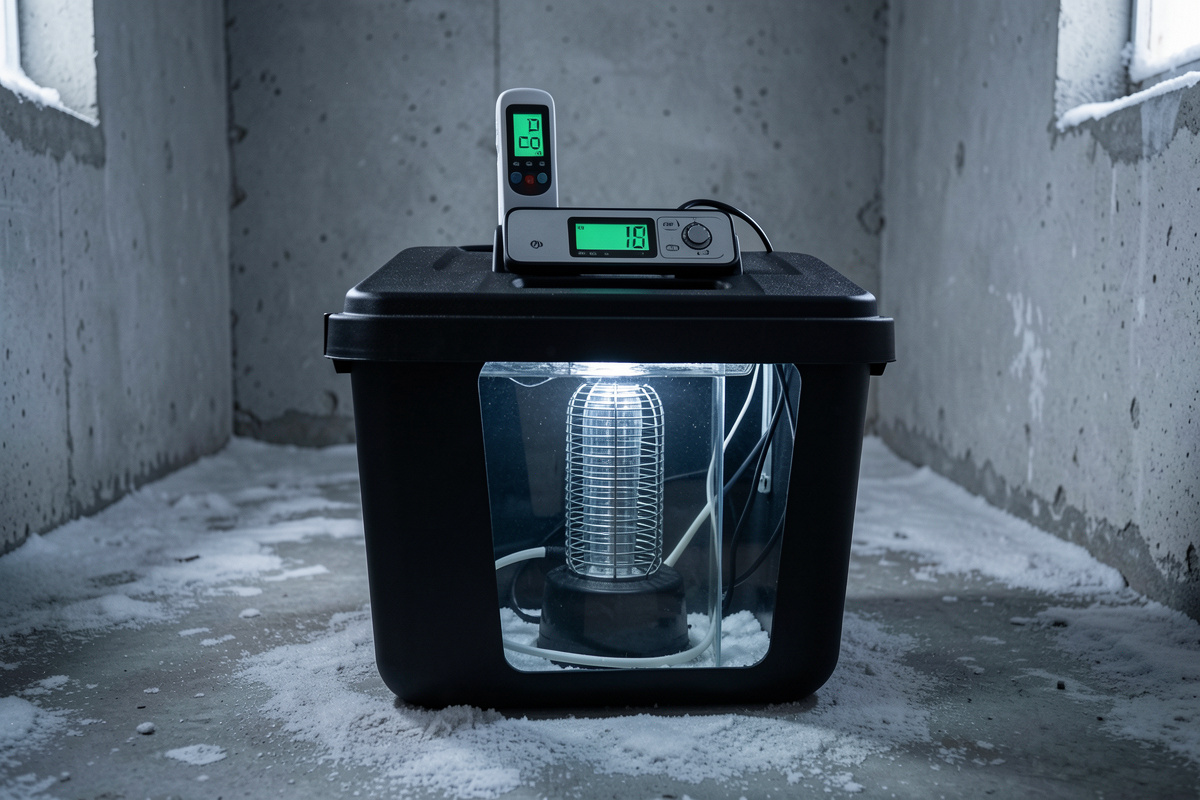
Keeping a hydroponic reservoir warm in an unheated room comes down to one number: hold the water at 18–20°C (65–68°F) and your winter greens keep drinking; let it drift under 15°C and nutrient uptake stalls no matter how good your light or your mix. The cheapest reliable way to hold that band is a small submersible aquarium heater on an external thermostat, sized to the reservoir volume, wrapped in insulation so it isn’t fighting a cold room all night. That single 25–50W device is the highest-return purchase I make every cold season.
I say that because I’ve watched the alternative. My first serious winter of DWC ran on room temperature alone in a spare room that sat at 14–16°C, and the res followed it down. The pen read a clean EC and pH, the air stones bubbled, and the lettuce simply parked for two weeks. Nothing looked wrong — that’s the cruelty of a cold reservoir. Add a heater and the same res came alive within days. Here’s exactly how I size, place, and insulate one now.
Why Does a Cold Reservoir Stall Growth?
Root-zone temperature controls the rate of nutrient and water uptake. Below about 15°C the root metabolism that pulls nutrients across the membrane slows to a crawl, and under 12°C most crops effectively pause — they sit there looking healthy while doing almost nothing. Cold water actually holds more dissolved oxygen, which is one genuine gift of winter, but slow roots can’t cash that oxygen in, so the benefit is wasted.
The tell in my logs is always the EC pen. In a warm, working res the plants drink and EC falls between changes; in a cold res EC goes flat or even rises because the roots aren’t taking anything up. That’s the diagnostic: a rising EC with a cold thermometer is a temperature problem, not a nutrient one, and the worst thing you can do is add more fertiliser to a root zone that’s already not eating. I cover the full winter diagnostic order in the cold-climate indoor hydroponics hub, and the underlying temperature science — including the summer flip where the danger is heat instead of cold — lives in hydroponic water temperature.
What Size Aquarium Heater Do You Need?
The rough rule I use is about 2–3 watts per litre of reservoir for a cold room, which means a 20-litre DWC tote wants roughly a 50W heater and a small 10-litre res is happy on 25W. Undersize it and the heater runs flat out on the coldest nights and still loses the battle; oversize it and it short-cycles but wastes nothing meaningful. When in doubt in a genuinely cold space, go one size up.
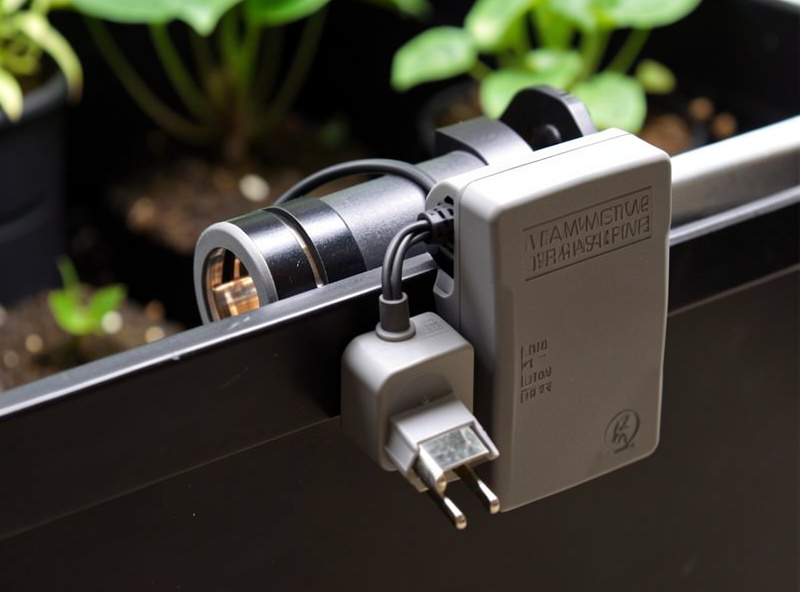
Two hard requirements. First, use a heater rated safe for full submersion and, ideally, run it on an external plug-in thermostat rather than trusting the heater’s built-in dial — the external controller with its own probe is more accurate and lets you set the target precisely. Second, never run a submersible heater in a res that can drop below the waterline; if the level falls and exposes the element, cheap heaters can crack or overheat. I mount mine low, keep the top-off schedule tight, and check the level daily in winter — and I temper whatever top-off water goes in first, the way I cover in cold tap water and your res. Reservoir volume also buffers temperature swings, which is one reason I favour a larger res in winter — the physics of that trade-off is in hydroponic reservoir size.
Where Should the Heater and Probe Go?
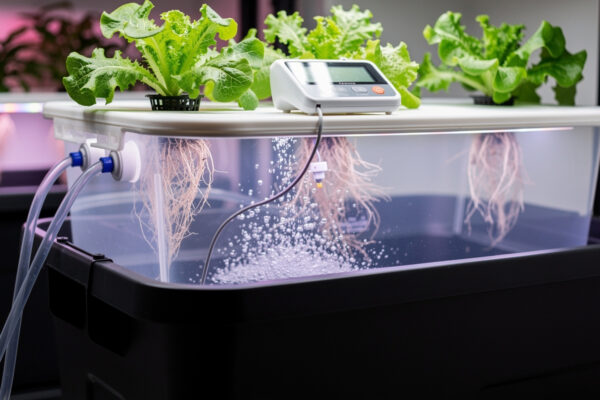
Placement matters more than people expect. I put the heater near the air stone so the rising bubbles circulate the warmed water through the whole res instead of letting a warm pocket sit around the element. Then I place the thermostat’s probe on the opposite side of the tote, away from the heater, so it reads the true average water temperature rather than the warm plume right next to the element. Read the temperature next to the heater and you’ll chronically under-heat the res.
Aeration and heat work as a pair in winter. My air stones run 24/7 anyway — dissolved oxygen is my Pythium safety margin — and in a heated res that constant circulation doubles as the thing that spreads the warmth evenly. If your build is passive Kratky with no air pump, you lose that mixing, so insulation and a warm room location matter even more; the aeration side is covered in dissolved oxygen in hydroponics. I run this whole setup on my DWC totes as the winter baseline — the method’s high thermal mass makes it the most forgiving to heat, as I explain in the DWC guide.
How Do You Insulate the Reservoir So the Heater Isn’t Fighting the Room?
Insulation is the free half of the equation, and skipping it is why people burn 150W where 25W would do. A reservoir loses heat through every surface touching cold air or a cold floor, so I wrap the sides in reflective foam insulation and, crucially, set the tote on a sheet of foam board rather than straight onto a cold concrete or tiled floor — the floor is the biggest heat sink most growers ignore. A lidded, insulated, opaque res holds temperature so steadily that the heater barely cycles.
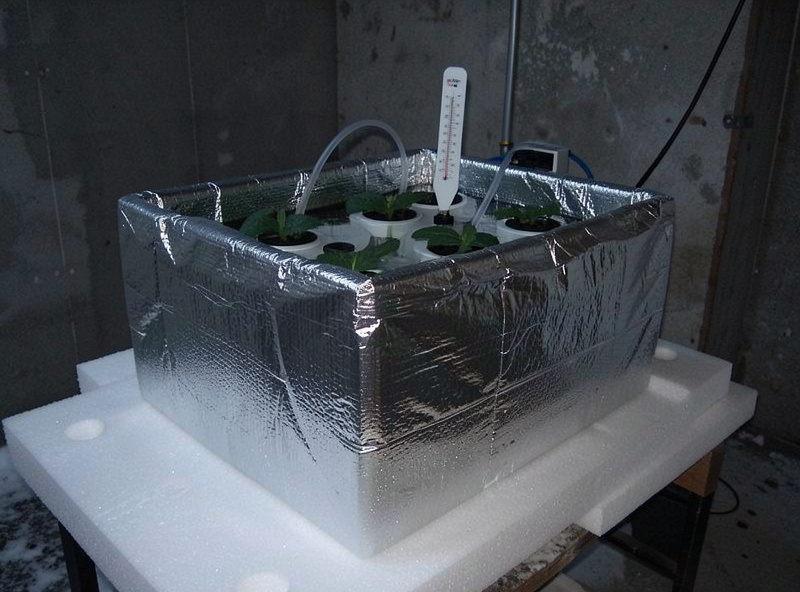
There’s a mistake I made worth flagging: I once insulated the sides beautifully and left the res sitting directly on cold tile, then wondered why the heater ran constantly. The floor was wicking heat away faster than the walls. A single foam offcut under the tote fixed it overnight and dropped the heater’s duty cycle noticeably. The same logic scales to the whole grow space — insulate the cold surfaces first, add heat second — which is exactly the approach I take with the tent itself, walked through in insulating a grow tent against a cold wall. Between insulation and a right-sized heater, a 25W element can hold 18°C in a room sitting near freezing.
What About Heating Without an Aquarium Heater?
If you can’t submerge a heater — some media beds and NFT builds make it awkward — you have a few options, in rough order of how much I trust them. Best is to warm the whole small space so the res follows: a thermostatically controlled space heater or the grow light’s own waste heat in a well-insulated tent can carry a small reservoir. Next is a seedling heat mat under or beside the res, which is gentle but slow and better as a supplement than a sole source. Least reliable is doing nothing and hoping the room holds — which is the plan that cost me a lettuce cycle.
Whatever the heat source, the thermometer is non-negotiable. I keep a cheap digital probe in every winter res and glance at it the way I glance at the EC pen, because temperature is invisible until it’s already stalled your crop. For the science on safe ranges and why both too-cold and too-warm cause trouble, university controlled-environment resources like University of Minnesota Extension and Penn State Extension are solid references.
How Long Does It Take to Warm a Cold Reservoir, and How Steady Should It Be?
A right-sized heater brings a cold res up to target over a few hours, not minutes, and that slowness is a feature — you want gradual warming, not a thermal shock to the roots. I aim to hold the temperature within about a degree of target once it’s up, and I care more about steadiness than the exact set point. A res that swings from 14°C at night to 21°C under the light every day stresses roots more than one that sits quietly at a slightly-off-but-stable 17°C.
This is where insulation and thermal mass earn their keep together. A larger, well-insulated res warms slowly but then coasts through the cold hours with the heater barely cycling, so the daily swing is small. A tiny uninsulated res whipsaws with the room. In my logs the totes I trust through winter are the ones that read nearly the same temperature at 3 a.m. as they do at 3 p.m. — boring is exactly what I want. If you’re bringing a cold res online for the season, set the heater a day before you transplant, let it stabilise, and confirm the overnight low on the thermometer before a single root goes in. That one day of patience saves the shock that sets seedlings back a week.
Frequently Asked Questions
What temperature should a hydroponic reservoir be in winter?
Target 18 to 20 degrees Celsius, which is 65 to 68 degrees Fahrenheit, in the root zone. Below 15 degrees Celsius nutrient uptake slows sharply and growth stalls even though the plants still look healthy, so in an unheated room you need to actively add heat.
What size aquarium heater do I need for my reservoir?
A rough rule for a cold room is about 2 to 3 watts per litre of reservoir volume. That means a 20-litre deep water culture tote wants roughly a 50-watt heater and a small 10-litre reservoir is fine on 25 watts. If the room is very cold, size up rather than down.
Is it safe to put an aquarium heater in a hydroponic reservoir?
Yes, if the heater is rated for full submersion and the water level never drops below the element. Running it on an external plug-in thermostat gives more accurate control than the built-in dial. Keep the top-off schedule tight so the level never exposes and cracks the heater.
Where should I place the heater and thermometer probe in the reservoir?
Put the heater near the air stone so rising bubbles circulate the warmed water through the whole reservoir. Place the thermostat probe on the opposite side, away from the heater, so it reads the true average temperature rather than the warm plume next to the element.
How do I keep the reservoir warm without an aquarium heater?
Warm the whole small space so the reservoir follows, using a thermostatically controlled space heater or the grow light’s waste heat in a well-insulated tent. A seedling heat mat can supplement gently. Whatever the source, keep a thermometer in the reservoir because temperature is invisible until growth has already stalled.
Related Articles
- Cold-climate indoor hydroponics: my winter system
- Hydroponic water temperature: chillers, heaters and the safe range
- Dissolved oxygen in hydroponics: why roots need it
- Hydroponic reservoir size: how big should it be?
What I’d do starting today: drop a thermometer in your res tonight and read it in the morning. If it’s under 15°C, order a 25–50W heater and an external thermostat before you touch your nutrients — that one part fixes the winter stall that no amount of fertiliser will.