Hydroton clay pebbles vs rockwool comes down to one question: do you want a reusable, free-draining medium or a high-retention propagation specialist? Clay pebbles drain hard, hold little water, and last for years; rockwool holds water like a sponge, roots seedlings beautifully, and gets used once. They sit at opposite ends of the water-holding scale, and most growers end up owning both.
I run both on my bench — a hydroton bed for fruiting crops in ebb-and-flow, and rockwool cubes for starting seeds and clones. They are not really competitors so much as specialists, and knowing which job each one wins saves you from forcing the wrong medium into the wrong system.
The Quick Verdict
If you need a medium for a flood-and-drain bed, Dutch buckets, or net pots that you can rinse and reuse indefinitely, clay pebbles win. If you are starting seeds, taking cuttings, or growing in slabs where you want the root zone to stay reliably moist, rockwool wins. The overlap is small, which is why I describe them as the two ends of the substrate spectrum rather than alternatives. Clay pebbles are about air; rockwool is about water.
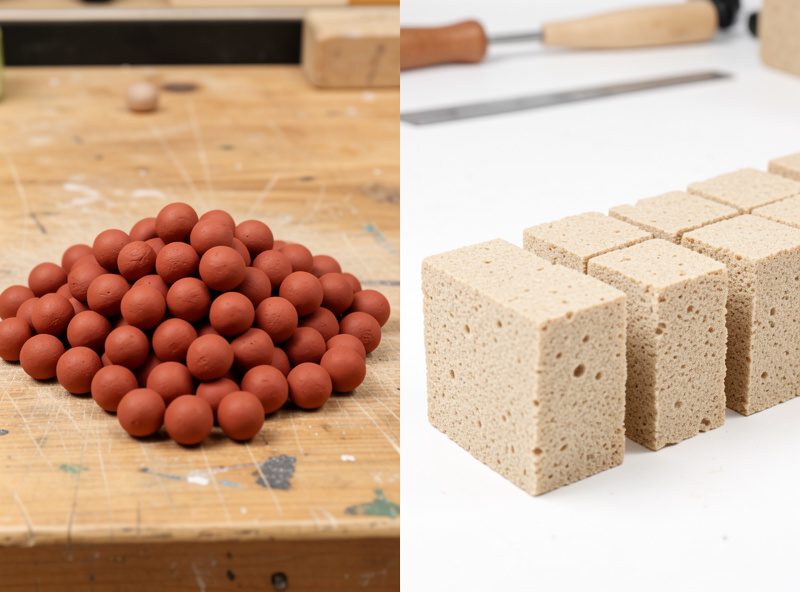
Hydroton Clay Pebbles: The Reusable Workhorse
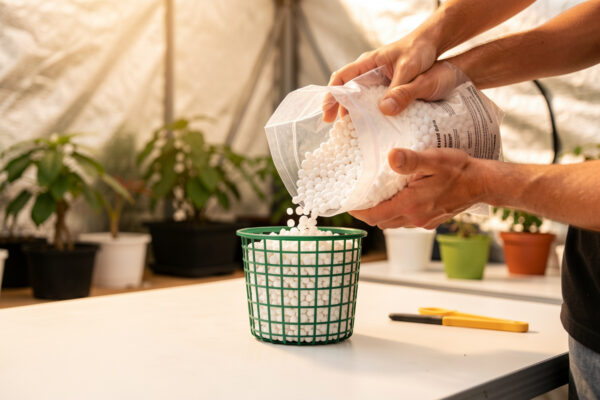
Hydroton — also sold as LECA, clay pebbles, or expanded clay — is fired clay puffed into lightweight balls riddled with air pockets. It drains almost instantly, holds only 10 to 15 percent of its volume in water, and never breaks down. After a grow I rinse it, sterilize it, and re-bed it; a single batch can last for years, which makes it the cheapest medium per grow despite a higher up-front cost.
Its strength is aeration. In an ebb-and-flow bed the pebbles flood, wet briefly, then drain and gulp air on every cycle — ideal for fruiting crops that hate wet feet. The catch is that it holds so little water that it needs frequent watering; a hydroton bed in a warm room might flood many times a day. It also needs a thorough pre-rinse, because fresh pebbles shed a cloud of red clay dust that clogs pumps. Once rinsed, hydroton is inert and leaves your EC and pH alone.
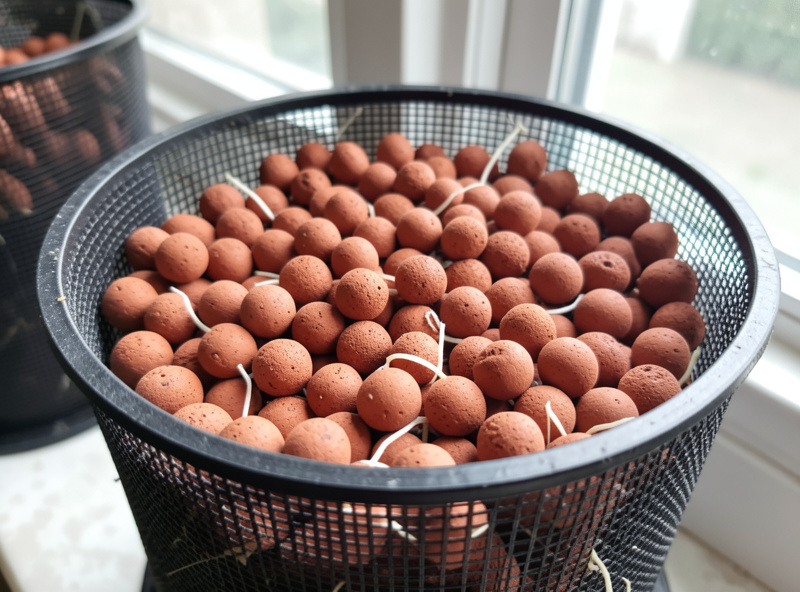
Rockwool: The Propagation Specialist
Rockwool is spun mineral fiber — basalt rock and chalk melted and spun into wool, then formed into cubes and slabs. It wicks and holds a large volume of water while keeping some air, which makes it superb for germinating seeds and rooting cuttings: the stem zone stays evenly moist without you fussing over it. For propagation, nothing on my bench beats it, and I cover that use fully in the rockwool starter cubes guide and the rockwool seed-starting walkthrough.
Rockwool has two real downsides. First, it ships at a high pH — raw cubes sit around 7.5 to 8.5 — so it must be conditioned in pH 5.5 water before use or it will lock out iron and yellow your seedlings. Second, it holds so much water that it punishes over-watering and is awkward to reuse, since spent cubes keep old root mass and stay soggy. I treat rockwool as single-use, which is its main ongoing cost and its only real environmental knock, as it does not biodegrade.
Side-by-Side Comparison
| Feature | Hydroton Clay Pebbles | Rockwool |
|---|---|---|
| Water retention | Low (10–15%) | Very high |
| Aeration | High | Low–medium |
| Raw pH | Neutral after rinse | High, ~7.5–8.5 |
| Prep needed | Rinse off clay dust | Condition in pH 5.5 water |
| Reusable | Yes, for years | No, single use |
| Best for | Ebb-and-flow, Dutch buckets, net pots | Seed starting, cloning, slab growing |
| Watering frequency | Frequent, short cycles | Infrequent, let it dry between |
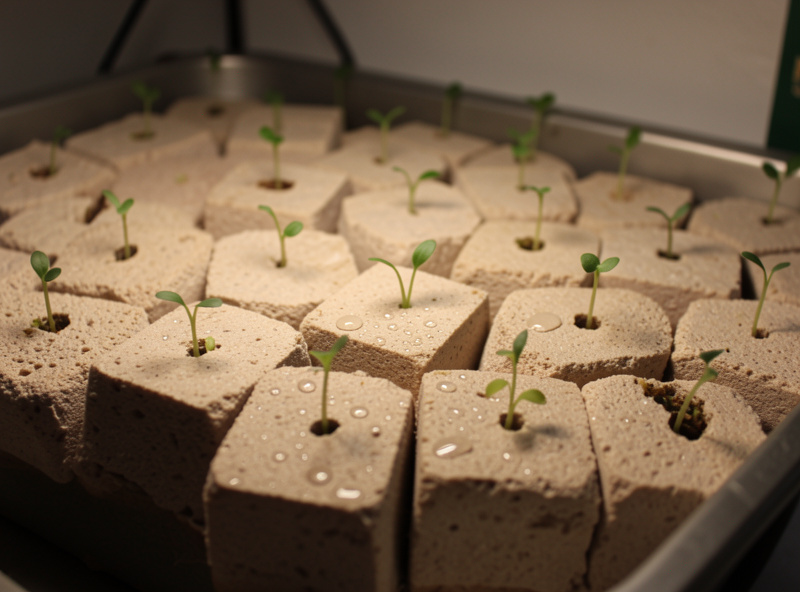
Which Should You Choose?
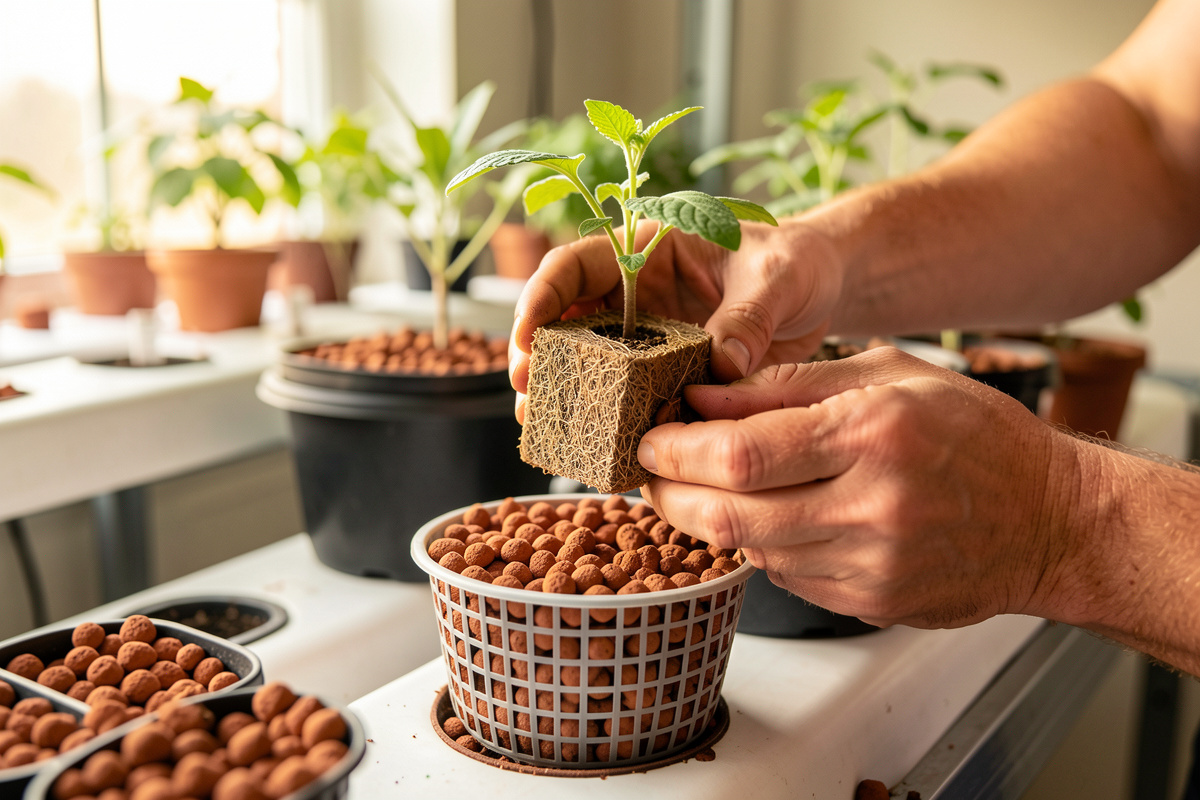
For most hobby growers the honest answer is both, used for different jobs. I start seeds in rockwool, then transplant the rooted cube straight into a net pot of clay pebbles in my main system — the cube gives the seedling its moist start, and the pebbles take over with all the air the established roots want. That hand-off is the single most common way these two media work together rather than against each other.
If you can only buy one to start, let your system decide. Running DWC, ebb-and-flow, or Dutch buckets? Clay pebbles. Focused on propagation or an NFT channel where you just need to root seedlings? Rockwool. For the full lineup of media and how they fit every system, the growing media guide hub and the detailed media comparison are the next reads, and both pebbles and rockwool feature in reusing growing media.
As an Amazon Associate I earn from qualifying purchases. A bag of hydroton clay pebbles and a pack of rockwool cubes together cover propagation and most growing systems.
Cost and Sustainability Over Time
On the shelf, clay pebbles cost more than a bag of rockwool cubes, and a lot of growers stop the math there. They should not. Because hydroton is reusable for years and rockwool is single-use, the cost per grow flips completely once you run a few cycles. A single bag of pebbles I rinse and re-bed across many seasons works out cheaper per crop than buying fresh rockwool every time I start a new batch. If you are growing continuously, clay pebbles are the long-run economy choice.
Sustainability follows the same logic. Clay pebbles are inert fired clay that lasts effectively forever, so their footprint is spread across years of use. Rockwool does not biodegrade and is awkward to recycle, so every grow adds a spent cube to the bin. That is not a reason to avoid rockwool — for propagation it is worth it — but it is a reason to use it only where it earns its place, and to lean on reusable media for the bulk of your system. In my own grows that means rockwool stays in the propagation tray and clay pebbles carry the main beds, which keeps both the cost and the waste down while letting each medium do what it does best.
Frequently Asked Questions
Is hydroton or rockwool better for hydroponics?
Neither is universally better; they are specialists. Hydroton clay pebbles win for ebb-and-flow, Dutch buckets, and reusable net-pot media. Rockwool wins for starting seeds, cloning, and slab growing. Many growers use rockwool to germinate, then transplant into clay pebbles.
Can I reuse clay pebbles and rockwool?
Clay pebbles are reusable for years after a rinse and sterilize. Rockwool is best treated as single-use, because spent cubes hold old root mass, stay waterlogged, and do not biodegrade. That single-use cost is rockwool’s main ongoing downside.
Does rockwool need to be conditioned before use?
Yes. Raw rockwool sits at pH 7.5 to 8.5, which locks out iron and yellows seedlings. Soak it in water adjusted to pH 5.5 before planting to bring the cube into the correct range, then let it drain so it is moist but not saturated.
Why do I need to rinse clay pebbles?
Fresh hydroton sheds a cloud of fine red clay dust that clogs pumps and coats roots. Rinse the pebbles until the water runs clear before they go into any system. After rinsing they are inert and will not affect your EC or pH.
Can you use clay pebbles and rockwool together?
Yes, and it is a common combination. Start seeds or cuttings in a rockwool cube, then nest the rooted cube into a net pot of clay pebbles in your main system. The cube keeps the stem zone moist while the pebbles supply abundant air to established roots.