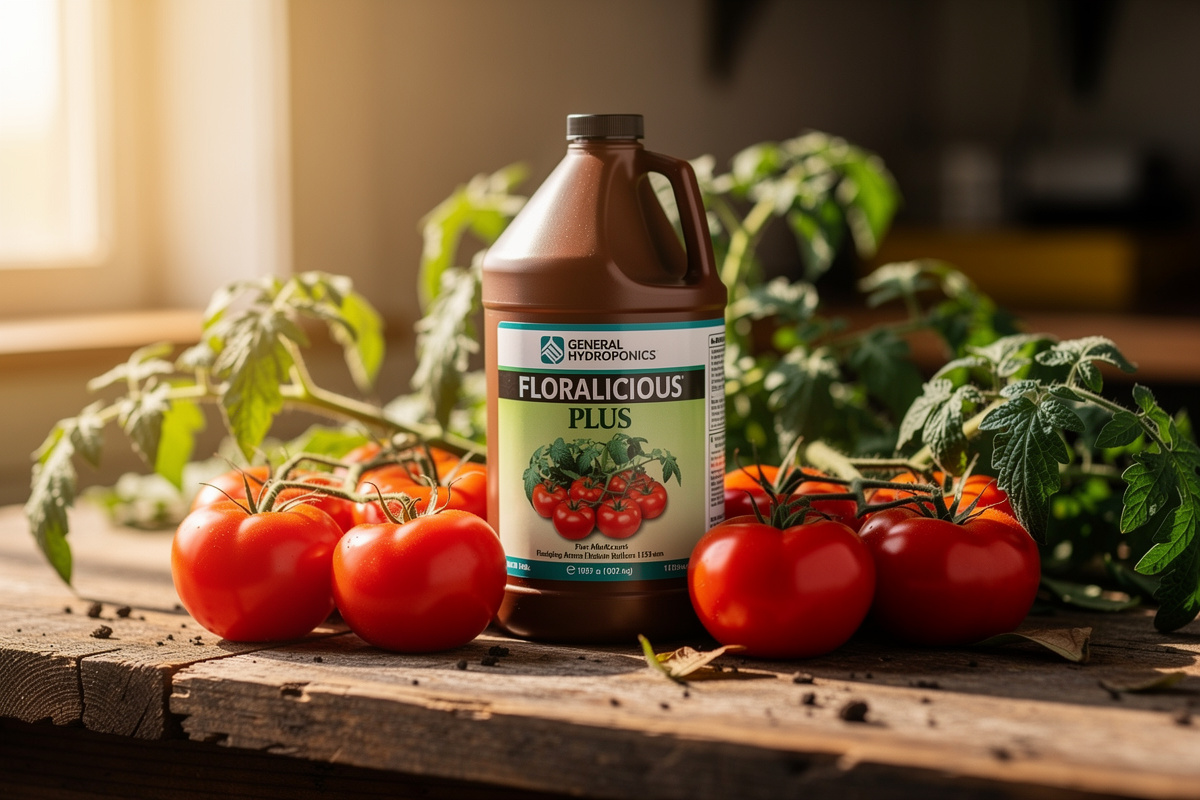
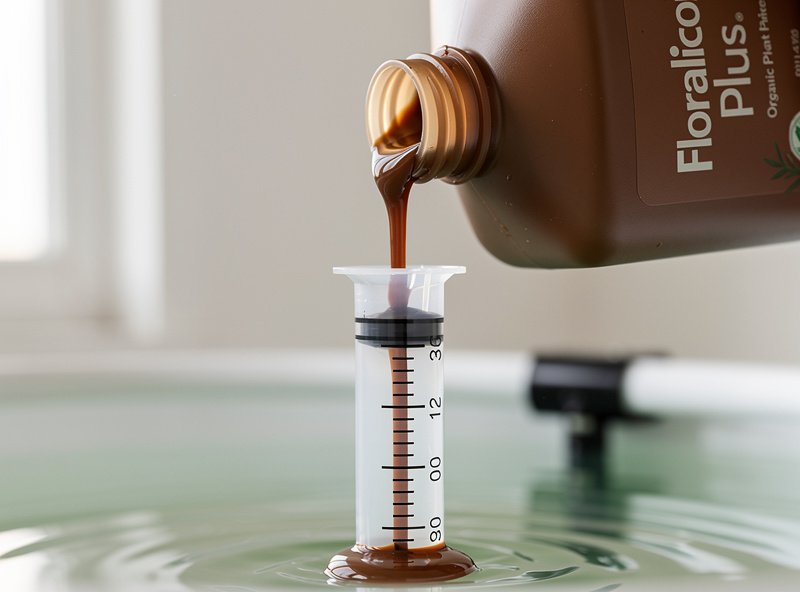
Floralicious Plus is General Hydroponics’ premium bloom supplement — a thick brown liquid additive at NPK 2-0.8-0.02, dosed at 0.5 to 1 ml per gallon during the flowering and fruiting phase. The marketing pitches improved fruit flavor, larger fruit size, and stronger aromatic compounds. The honest take: most home growers do not see the marketed benefit, and at around $45 per quart it is one of the more expensive products in the GH catalog by a wide margin.
Floralicious Plus is the textbook example of a hydroponic “bloom booster” — a category of bottle-fed additives that promise specific improvements during the flowering phase but rely on real-world results that are difficult for home growers to verify. This guide covers what is actually in the bottle, what the marketing claims do (and do not) hold up to in real growing conditions, when the supplement makes sense to add, and the cheaper alternatives that produce comparable results. For broader product context, see my General Hydroponics complete brand guide.
What Is Floralicious Plus Made Of?
Floralicious Plus is a fermented organic liquid that combines mineral nutrients (low-dose nitrogen, phosphorus, and potassium), plant-derived growth compounds (kelp extracts, humic acid, fulvic acid), microbial metabolites from controlled fermentation, and concentrated aromatic plant esters. The thick brown color and distinctive earthy smell come from the fermentation process.
The label N-P-K reads 2-0.8-0.02, which is intentionally low — Floralicious Plus is not designed to provide nutrient calories the way a base feed does. The mineral component is meant to round out trace deficiencies that might exist in a base reservoir, while the bulk of the product’s marketing rests on the kelp-derived plant hormones and fermentation byproducts.
Specifically, the product contains:
- Cytokinins and auxins from kelp extract — plant hormones that influence cell division and elongation
- Humic and fulvic acid — chelating compounds that improve micronutrient uptake
- Microbial metabolites from controlled fermentation — small organic molecules that may signal stress responses
- Concentrated plant aromatic esters — the marketed source of “improved bouquet” in fruiting crops
The full ingredient breakdown is proprietary, which is one of the limitations of evaluating Floralicious Plus on an empirical basis. Growers buying it are paying for the GH brand and the fermentation process, not for a documented elemental formula.
The Official Marketing Claims
General Hydroponics positions Floralicious Plus as a multi-purpose bloom-stage additive that delivers four specific benefits: increased flower size and density, improved fruit flavor and aroma, accelerated fruit ripening, and enhanced stress tolerance during the bloom phase. The product page recommends use throughout the entire flowering cycle in any base nutrient system.
The plant-hormone story is the strongest theoretical argument. Kelp-derived cytokinins and auxins are real plant signaling molecules, and they do influence flowering, fruit set, and ripening at the cellular level when delivered in the right concentrations. Humic acid has documented benefits for micronutrient availability in soil systems, and fulvic acid shows some demonstrated benefit in hydroponic nutrient solutions for micronutrient chelation. The fermentation metabolites are the murkiest claim — there is little independent research validating their specific role in hydroponic crop performance.
The aromatic ester component is the most marketing-driven. The pitch is that aroma compounds in the supplement get incorporated into fruit during ripening, improving the bouquet of tomatoes, strawberries, and similar fruiting crops. The chemistry is plausible at small scale; the home-grower-detectable difference in finished fruit is much harder to verify.
What Real Grower Reports Show
Independent grower reports across forums and side-by-side comparisons split into roughly three camps, though there’s no formal survey behind these numbers — this is a read on the pattern in the reporting, not a cited study. A minority of growers report a measurable benefit — usually larger fruit, better flavor, or faster ripening on tomatoes and strawberries. The largest group reports no detectable difference between Floralicious-fed crops and identical control crops without it. A smaller group reports negative effects, usually pH instability or unwanted bacterial growth in the reservoir from the organic content.
The pattern in the reports is informative. Positive results show up most consistently on long-cycle fruiting crops (tomatoes, peppers, full-season strawberries) where the supplement runs for 6 to 12 weeks of bloom. Short-cycle crops (basil flowering, baby strawberries, microgreens) almost never show benefit because the supplement does not have time to express its theoretical effects.
Reservoir health is the consistent risk factor. Floralicious Plus is an organic-rich product and feeds bacterial growth in the reservoir. Growers with stable pH discipline, regular reservoir changes (every 7 to 10 days), and aerated solutions report few problems. Growers running passive Kratky systems or skipping reservoir changes for 14+ days report bacterial blooms that crash the reservoir within 2 weeks of starting Floralicious — I saw this firsthand the one time I ran it in a Kratky tote out of curiosity, the reservoir turned cloudy and sour within ten days and I dumped the experiment. My guide to common hydroponic mistakes that kill plants covers the reservoir hygiene practices that prevent this failure mode.
When Floralicious Plus Actually Helps
Floralicious Plus is worth trying in three specific scenarios.
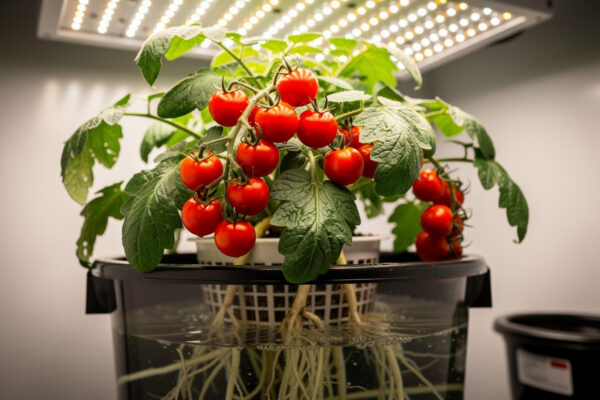
Long-cycle fruiting crops chasing flavor improvement. Indeterminate tomatoes, full-season peppers, and continuous-fruiting strawberries running 8 to 12 weeks of bloom are the crops most likely to show flavor and aroma benefit. The long bloom window gives the supplement time to express its effects, and these are the crops where flavor differences are most noticeable in the harvest. Dose at 1 ml per gallon throughout bloom.
Reservoir-stable greenhouse setups. Growers who already maintain disciplined pH, weekly reservoir changes, and active aeration are the ones who can run Floralicious Plus without the bacterial risk that derails casual setups. If your reservoir already runs clean and stable, adding Floralicious Plus introduces minimal downside.
Diagnostic experiments on stalled bloom. If you have a bloom-stage crop that has flowered but is producing small or weak fruit despite correct EC and pH on a base nutrient like the GH Flora Series or MaxiBloom, Floralicious Plus is a low-risk addition to test whether plant hormone signaling is the bottleneck. Run it for 3 weeks; if you see improvement, keep it. If not, drop it. On my own bench I ran it side by side on two identical ebb-flow tomato beds one season and couldn’t call a clear winner on flavor by harvest — which is exactly the kind of ambiguous result that keeps this in the “test it yourself” category rather than a default addition.
When to Skip It
Floralicious Plus does not belong in most home setups. Skip it in these scenarios.
Leafy greens and short-cycle crops. Lettuce, basil, herbs, kale, spinach, and any crop that never enters a meaningful flowering phase before harvest will gain nothing from Floralicious Plus. The supplement is bloom-targeted and the chemistry has nothing to act on in vegetative-only crops. Save the $45 for the next bag of MaxiBloom.
First hydroponic systems. New growers who do not yet have stable pH (drift under 0.3 points per day) and stable EC (drift under 0.2 per week) should not add Floralicious Plus. Bloom additives are the last layer to add in a hydroponic setup, after the base nutrient discipline is solid. Adding them first compounds variables and makes diagnostics impossible.
Passive systems without aeration. Kratky buckets, wicking systems, and other passive setups without active reservoir aeration are at high risk for bacterial blooms when Floralicious Plus is added. The organic content feeds anaerobic bacteria that will crash the reservoir within 1 to 2 weeks. Stick with mineral-only nutrients in passive systems.
How to Use Floralicious Plus Correctly
If you are going to run Floralicious Plus, three rules dramatically improve the odds of seeing benefit and avoiding reservoir problems.
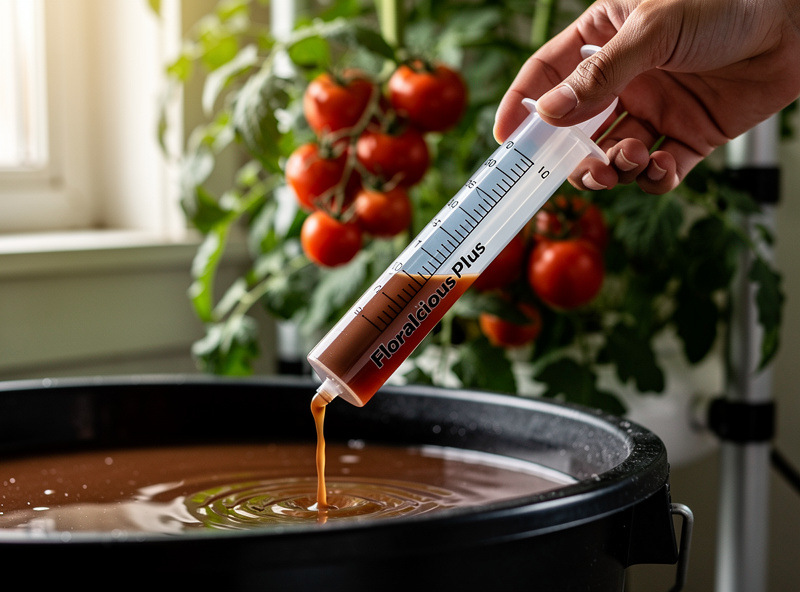
Start at the low end of the dose range. The label recommends 0.5 to 1 ml per gallon during bloom. Start at 0.5 ml for the first two weeks and only climb to 1 ml if no reservoir issues appear and the plants tolerate it. Higher doses (above 1 ml) increase the bacterial risk significantly without proportional yield benefit.
Use only during the bloom phase. Floralicious Plus added during vegetative growth wastes product without effect — the plant hormones are bloom-targeted. Begin dosing the week flowers first set on a fruiting crop, run through peak bloom, and stop in the final 2 weeks before harvest. This timing matches the marketed mechanism and minimizes total cost per crop.
Maintain reservoir discipline while running it. Reservoir changes every 7 to 10 days (not every 14 days). Active aeration through an air stone (not just a circulation pump). Daily pH checks. Aim to keep total dissolved organic content low by skipping other organic supplements while running Floralicious Plus. My step-by-step on how to mix hydroponic nutrient solution covers the underlying reservoir build sequence.
Cost Analysis — Is $45 a Quart Worth It?
A quart of Floralicious Plus at $45 mixes about 950 to 1,900 gallons of bloom-stage feed at the 0.5 to 1 ml per gallon dose. That works out to roughly $0.02 to $0.05 per gallon of supplemented bloom feed.
For a single home crop running a 5-gallon reservoir for 8 weeks of bloom (about 20 gallons of total feed), one bottle covers 50 to 100 crop cycles. The per-crop cost is essentially negligible — under $1 per harvest. The financial argument against Floralicious Plus is not the per-crop cost, it is the fact that most growers see no benefit at all and the alternative spends produce comparable results.
Cheaper alternatives that target similar mechanisms include kelp extract supplements ($15 to $20 per quart), humic acid concentrates ($12 to $18 per quart), or DIY kelp tea brewed from dried kelp meal ($10 per pound, makes 5+ gallons of supplement) — the kelp tea route is the one I actually keep around, mostly because I already brew comfrey and nettle teas for the soil-grown side of the garden and the process is identical. For comparison shopping across all GH and competitor supplements, see my roundup of the best hydroponic fertilizer for 2026.
Next Steps
For most home growers, the honest answer on Floralicious Plus is: skip it. The base nutrient brand and reservoir discipline matter more for yield than any bloom additive. Get a stable EC and pH routine on the GH Flora Series, FloraNova, or MaxiBloom first. If after 2 to 3 successful crops you want to experiment with bloom additives, Floralicious Plus is a defensible test on long-cycle fruiting crops in a well-managed reservoir.
For background on the broader nutrient landscape, see my complete guide to hydroponic nutrients.
Frequently Asked Questions
What does Floralicious Plus do?
Floralicious Plus is a bloom-stage hydroponic additive that combines kelp-derived plant hormones, humic and fulvic acid, fermentation metabolites, and concentrated plant aromatic esters. It is marketed at improving fruit flavor, aroma, flower size, and ripening. Grower reports are mixed – a minority see measurable benefit, most see no difference, and there is no formal study backing the marketing claims.
How much Floralicious Plus per gallon?
Start at 0.5 ml per gallon for the first two weeks of bloom, then climb to 1 ml per gallon if no reservoir issues develop. The maximum recommended dose is 1 ml per gallon — going higher increases bacterial risk significantly without proportional yield benefit.
When should I use Floralicious Plus?
Use only during the flowering and fruiting phase, starting the week flowers first set and stopping 2 weeks before harvest. Dosing during vegetative growth wastes the product because the plant hormones are bloom-targeted. Best results show up on long-cycle fruiting crops like tomatoes and full-season strawberries.
Is Floralicious Plus worth the price?
At around $45 per quart it covers 50 to 100 home crop cycles, so per-crop cost is under $1. The real question is whether you land in the minority of growers who report a measurable benefit. For first-time hydroponic systems and leafy greens, skip it. For long-cycle fruiting crops in well-managed reservoirs, it is worth a 3-week test.
Can Floralicious Plus damage my reservoir?
Yes if reservoir hygiene is poor. The organic content feeds bacterial growth, which can crash a poorly maintained reservoir within 1 to 2 weeks. Avoid Floralicious Plus in passive Kratky setups, in reservoirs without active aeration, or in setups where you skip reservoir changes for more than 10 days.
What can I use instead of Floralicious Plus?
Cheaper alternatives that target similar mechanisms include kelp extract supplements at $15 to $20 per quart, humic acid concentrates at $12 to $18 per quart, or DIY kelp tea brewed from dried kelp meal. None match the full Floralicious formulation but they cover the kelp-hormone benefit at lower cost.