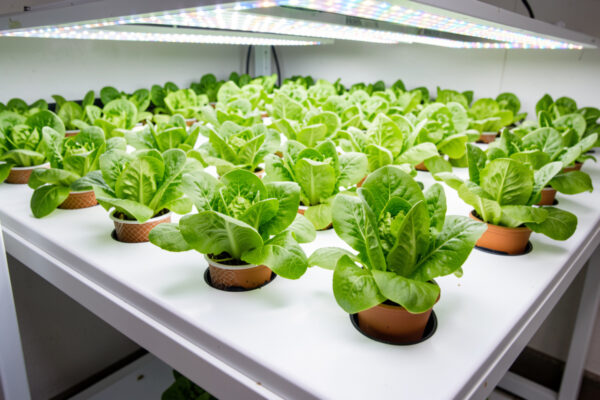
The best hydroponic fertilizer for most home growers is General Hydroponics Flora Series, a three-part liquid system that costs $40 to $60 per set and handles everything from lettuce to tomatoes through full life-cycle ratio control. For beginners on a tight budget, MaxiBloom dry powder runs $25 per pound and feeds a 5-gallon reservoir for months.
As an Amazon Associate I earn from qualifying purchases.
This guide covers the seven hydroponic fertilizers worth buying in 2026, organized by use case rather than ranked one through ten. Picking the wrong format — a fruiting nutrient for lettuce, or a single-bottle generic for a tomato grow — is the biggest reason new systems underperform. Match the product to your crop and water source first, brand reputation second.
How I Chose These Fertilizers
Every product on this list meets four criteria I hold every nutrient line to on my own bench. It must supply all 14 mineral nutrients hydroponic plants require (the full macronutrient and micronutrient package, including calcium and magnesium in chelated form). It must stay in solution without precipitating at standard mixing ratios. It must be available at major retailers in North America and Europe so re-ordering is not a hunt. And it must have a documented track record across at least one full crop cycle from a community of home growers, not just paid reviews.
I deliberately excluded any product that requires a paid subscription, proprietary mixing app, or “loyalty program” to access full feeding charts. Hydroponic nutrient brands that hide their feeding schedules behind sign-ups are gaming SEO, not helping growers.
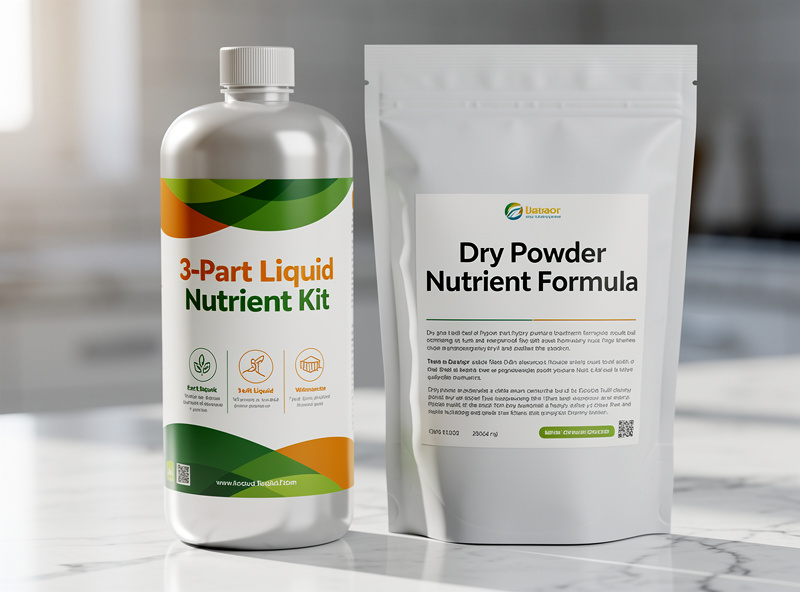
Best Overall: General Hydroponics Flora Series
General Hydroponics Flora Series is a three-part liquid system — FloraGro, FloraMicro, and FloraBloom — that has been the de facto standard in home hydroponics since the 1970s. The three bottles let you shift the N-P-K ratio independently across the plant life cycle, which means one product feeds leafy greens, herbs, fruiting vegetables, and even flowering plants without compromise.
Pricing runs $40 to $60 for a quart-size set, which mixes hundreds of gallons of nutrient solution. The standard vegetative dose is 5 ml of each part per gallon; the bloom dose shifts to 1 ml Grow, 2 ml Micro, and 3 ml Bloom per gallon. Always add FloraMicro first to your reservoir, then FloraGro, then FloraBloom — adding them out of order causes calcium precipitation that fouls the mix, a mistake I made on my very first three-part reservoir before I learned to respect the sequence.
Downsides: three bottles take up shelf space, and the dosing feels intimidating to true beginners. If you are growing only lettuce or only basil and never plan to expand, a one-part liquid is simpler. For anyone running mixed crops or considering tomatoes within their first year, the Flora Series pays back its complexity within one cycle — it’s the one I keep coming back to as the workhorse on my own bench whenever a system is running more than one crop. For the full week-by-week feeding schedule, mixing order, and the famous Lucas formula 2-bottle variant, see my complete GH Flora Series 3-part system guide.
Best Budget: MaxiBloom (Single-Part Dry Powder)
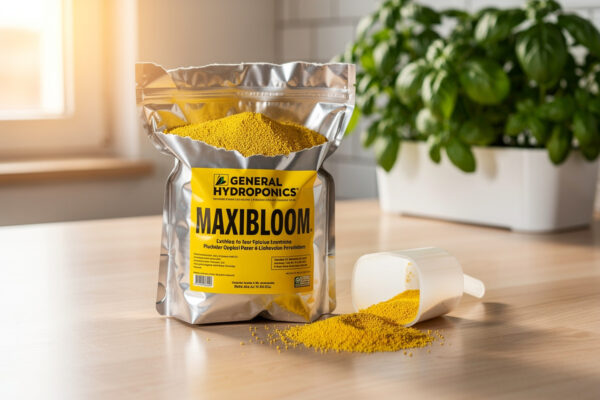
MaxiBloom is a one-part dry powder fertilizer made by General Hydroponics that has built a cult following among budget-conscious growers. A 2.2-pound bag costs $25 to $35 and produces hundreds of gallons of working nutrient solution at the standard 1-teaspoon-per-gallon dose. By volume cost, it is roughly half the price of equivalent liquid concentrates.
The trade-off is convenience. Dry powders dissolve more slowly than liquids and require a thorough five-minute stir to fully suspend. They also produce a fixed N-P-K ratio (the label reads 5-15-14), which is technically a bloom-forward profile but works surprisingly well across leafy greens and fruiting crops alike. The “Lucas Method” cult around MaxiBloom uses 7 grams per gallon throughout the entire grow with no separate vegetative formula.
Downside: MaxiBloom does not include enough calcium for plants grown in reverse osmosis or distilled water. RO users must add a Cal-Mag supplement at 1 ml per gallon. With hard tap water, MaxiBloom alone is sufficient for most crops. For the full feeding schedule including the 7-gram solo recipe, see my dedicated MaxiBloom feeding schedule and recipe guide.
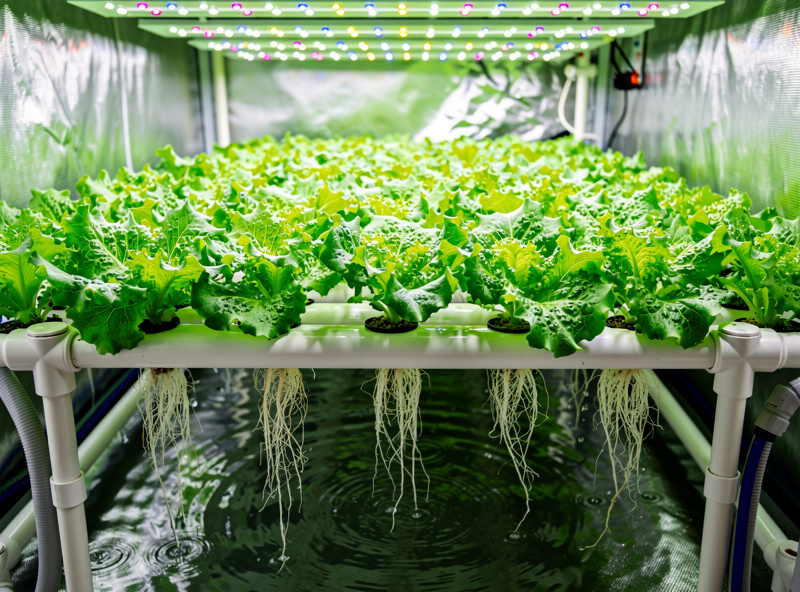
Best for Leafy Greens: MaxiGro
If you only grow lettuce, spinach, kale, basil, or other leafy crops, MaxiGro is the simpler sister product to MaxiBloom. It uses a vegetative N-P-K ratio of 10-5-14 that matches what leafy greens actually want — high nitrogen for leaf mass without excess phosphorus that does nothing for non-fruiting plants.
At $25 for a 2.2-pound bag, MaxiGro hits the same value bracket as MaxiBloom and feeds the same number of gallons. The standard dose is 1 teaspoon per gallon. Expect EC readings of 0.8 to 1.2 at this concentration, which is exactly the lettuce target range (UF/IFAS HS1422 covers the reasoning behind that EC/pH window for small hydroponic lettuce systems in more depth). For specific lettuce growing tactics, my comparison of hydroponic lettuce versus soil-grown lettuce covers crop yield differences and timing.
MaxiGro is the right pick for growers who want maximum simplicity and only ever plan to grow leaves. If you might add tomatoes or peppers later, skip straight to a multi-part system or stick with MaxiBloom (which works for both crop types).
Best for Tomatoes & Peppers: FloraNova Bloom
Tomatoes, peppers, cucumbers, and strawberries shift dramatically through their life cycle. They want high nitrogen during vegetative growth, then drop nitrogen and ramp phosphorus and potassium during flowering and fruit set. A two-part or three-part nutrient handles this best, but if you want a one-bottle solution, FloraNova Bloom is the strongest single option.
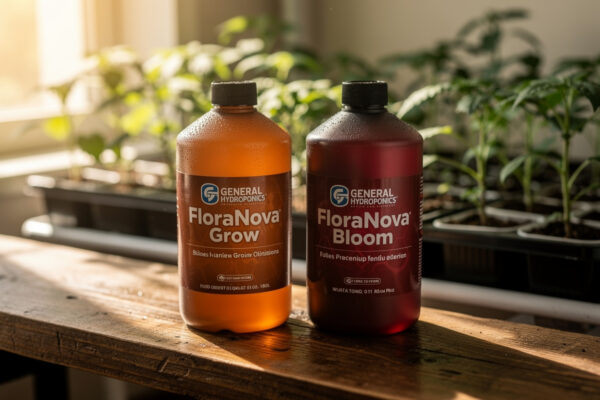
FloraNova Bloom uses a 4-8-7 N-P-K ratio that runs through the entire fruiting cycle. At $25 to $35 per quart, it is more expensive per gallon than MaxiBloom but easier to handle as a liquid and more forgiving on dosing. The standard fruiting dose is 5 to 8 ml per gallon, producing EC readings of 2.0 to 3.0 — right in the sweet spot for tomato fruit set (Ohio State CFAES’ hydroponic greenhouse tomato nutrient-solution fact sheet covers the EC ramp through the fruiting stages in more detail). For the full breakdown of FloraNova Grow vs FloraNova Bloom including when to switch between them, see my dedicated guide. My deep dive into hydroponic tomatoes versus soil-grown tomatoes covers the actual fruit yield differences.
For pepper-specific growing, the same product works at a slightly lower 4 to 6 ml per gallon dose. My hydroponic peppers comparison covers harvest timing and capsaicin levels in detail.
Best Organic: General Hydroponics BioThrive
True organic hydroponics is harder than synthetic — organic inputs cloud reservoirs, foster bacterial blooms, and require more frequent reservoir changes. But for growers who want OMRI-listed inputs, GH BioThrive is the most reliable performer. It is a two-part organic liquid (Grow and Bloom bottles) that uses fish hydrolysate, kelp, molasses, and rock phosphate as nutrient sources.
BioThrive runs $30 to $45 per quart pair. Dosing is more generous than synthetic — 10 to 15 ml per gallon — because organic nutrients release nitrogen and phosphorus more slowly. Expect to change reservoirs every 7 days instead of the 14-day synthetic standard, since the unfiltered organic matter feeds bacteria that destabilize pH.
The honest case for going organic in hydroponics is not yield — on my bench synthetics have generally out-produced the organic runs, though the gap is more about grower experience with each format than a fixed number, and it’s closer than either camp’s marketing admits. The real reason to go organic is matching a personal preference for not handling mineral salts. I unpack the full trade-off in my guide to organic hydroponic nutrients.
Best Cal-Mag Supplement: Botanicare CaliMagic
If you use reverse osmosis, distilled, or rain water, you need to add a Cal-Mag supplement on top of your base nutrient. RO water has been stripped of the calcium and magnesium that the nutrient formula assumes is present in your tap water. Without supplementation, plants develop blossom end rot on tomatoes, interveinal yellowing on basil, and stunted growth across the board.
Botanicare CaliMagic is the standard pick. A 32-oz bottle costs $15 to $20 and lasts a typical home grower a full year. The dose is 5 ml per gallon for RO users and 2 to 3 ml per gallon for soft tap water (under 100 PPM background). Add it to the reservoir before any other nutrient — calcium needs to fully dissolve before the rest of the mineral mix arrives.
If you use hard tap water (above 200 PPM background) you may not need CaliMagic at all. Test your tap water with an EC pen before deciding — it’s the first thing I check whenever I set up a res on a new water source. The detailed dosing math is covered in my guide to mixing hydroponic nutrient solution.
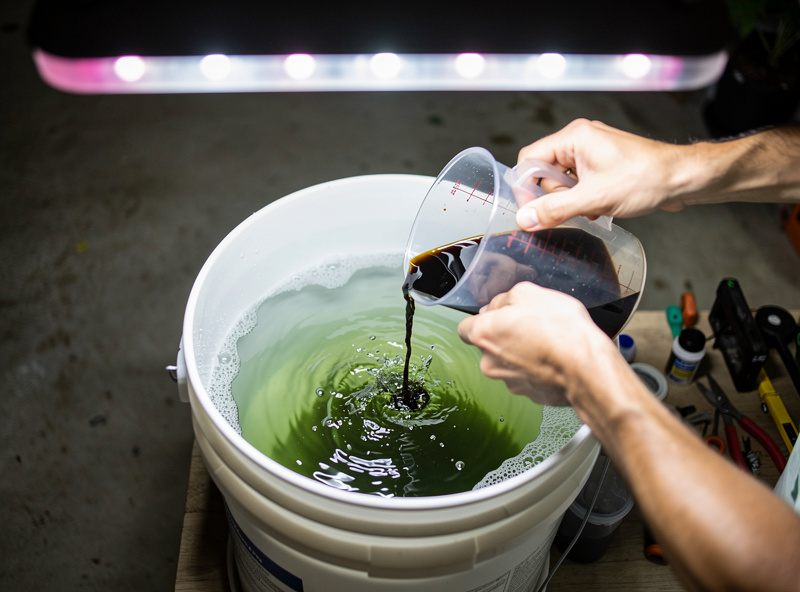
Hydroponic Fertilizer Comparison: 2026 Picks
| Product | Format | Price | Best For | N-P-K | RO Water? |
|---|---|---|---|---|---|
| GH Flora Series | 3-part liquid | $40-60 / set | Mixed crops, full life cycle | Adjustable | Add Cal-Mag |
| MaxiBloom | 1-part dry powder | $25-35 / 2.2 lb | Budget, single-formula whole grow | 5-15-14 | Add Cal-Mag |
| MaxiGro | 1-part dry powder | $25-35 / 2.2 lb | Leafy greens only | 10-5-14 | Add Cal-Mag |
| FloraNova Bloom | 1-part liquid | $25-35 / qt | Tomatoes, peppers, fruiting crops | 4-8-7 | Add Cal-Mag |
| GH BioThrive | 2-part organic liquid | $30-45 / pair | Organic-only growers | 4-3-3 / 2-4-4 | Some buffering |
| Botanicare CaliMagic | Cal-Mag supplement | $15-20 / qt | RO/distilled water users | 1-0-0 (Ca/Mg) | Required |
| Botanicare CNS17 Bloom | 1-part liquid | $25-40 / qt | Aggressive fruit set | 1-5-4 | Add Cal-Mag |
How to Choose for Your Specific Setup
Pick by crop first, water source second, system type third. If you grow lettuce or herbs in a beginner DWC bucket with tap water, MaxiGro alone solves the problem for $25. If you grow tomatoes in a Dutch bucket setup with RO water, you need a fruiting nutrient (FloraNova Bloom or Flora Series in a bloom ratio) plus CaliMagic — budget around $80 for everything.
For mixed home gardens — some lettuce, some herbs, maybe a few peppers — the Flora Series three-bottle system is the only product that handles every plant well from a single set. The complexity is worth it once your system has more than two crops in rotation.
Avoid the temptation to buy “complete kit” packages from less-known brands until you understand what each bottle does. Most off-brand kits replicate the GH Flora Series structure with cheaper ingredients and worse pH stability — you save $10 and spend twice that on root rot recovery. For broader equipment guidance, my complete hydroponic equipment buying guide covers reservoirs, pumps, and meters that pair with these nutrients.
Once you have your nutrient picked, the next step is mixing it correctly and measuring EC and pH every day for the first two weeks — a habit that’s saved more than one of my own reservoirs from a slow pH drift I wouldn’t have caught otherwise. My complete guide to hydroponic nutrients covers the full mixing and monitoring workflow, and the EC meter for hydroponics guide walks through meter calibration.
Frequently Asked Questions
What is the best hydroponic fertilizer for beginners?
For absolute beginners growing lettuce or herbs, MaxiGro single-bottle dry powder at $25 is the simplest correct choice. For anyone planning to grow more than one crop type, General Hydroponics Flora Series at $40 to $60 handles everything from leafy greens to fruiting crops through adjustable ratios.
How much hydroponic fertilizer should I use per gallon?
Standard doses are 5 ml per gallon for liquid concentrates like Flora Series during vegetative growth, or 1 teaspoon per gallon for MaxiBloom and MaxiGro dry powders. Always start at the low end of the manufacturer dose range and verify with an EC meter — target 0.8 to 1.2 for leafy greens, 2.0 to 3.0 for fruiting crops.
Is General Hydroponics Flora Series worth the cost?
Yes for mixed-crop growers and anyone running tomatoes, peppers, or strawberries. The three-bottle system gives independent N-P-K control across the plant life cycle, which one-part nutrients cannot match. For lettuce-only growers, the simpler MaxiGro at half the price works just as well.
Can I use organic hydroponic fertilizer?
Yes, but on my bench organic runs have generally produced somewhat lower yields than synthetic equivalents, plus weekly reservoir changes instead of biweekly. GH BioThrive is the most reliable organic option. Organic inputs cloud reservoirs, foster bacterial growth, and destabilize pH faster than mineral nutrients.
Do I need separate fertilizer for vegetative and bloom stages?
Only for fruiting crops like tomatoes, peppers, cucumbers, and strawberries. Leafy greens harvest before flowering and use the same vegetative formula throughout. For fruiting plants, switch from a high-nitrogen vegetative ratio to a high-phosphorus-and-potassium bloom ratio when flowers first appear.
What is the difference between MaxiBloom and MaxiGro?
MaxiGro uses a 10-5-14 vegetative ratio optimized for leaf and stem growth. MaxiBloom uses a 5-15-14 bloom ratio with higher phosphorus for flowering and fruit set. MaxiBloom can run an entire grow alone using the Lucas Method at 7 grams per gallon. MaxiGro should switch to a bloom formula if you grow fruiting crops.