Hard water in hydroponics is any source water carrying enough dissolved calcium and magnesium carbonate to show up on your EC meter before you add nutrients — my Swedish tap reads about 0.7 mS/cm, roughly 350 ppm, with hardness near 150 mg/L as calcium carbonate. That is not a problem to panic about; it is a number to read, adjust for, and occasionally blend around. Hard water hydroponics is mostly an accounting exercise with an EC pen.
Most of the fear around hard water comes from growers who never measured their starting EC and then blamed the nutrients when the res went cloudy or the pH would not hold. The minerals in hard water are not poison — calcium and magnesium are nutrients you were going to add anyway. The issue is that you cannot add them again on top of what is already there without consequences, and the carbonate buffer that rides along with them fights your pH adjustments. Read the starting number, understand what it represents, and hard water turns from a mystery into a line item. The full upstream context is in the water source and treatment guide.
What Hard Water Actually Means in Hydroponics
Hardness is a specific chemical quantity: the concentration of dissolved calcium and magnesium, reported as an equivalent weight of calcium carbonate in mg/L. It is not the same as total dissolved solids or EC, though the three often rise together. Water can be high in EC from sodium or other salts and not be particularly hard, and it can be moderately hard while reading a deceptively modest EC. The U.S. Geological Survey publishes the standard classification that the hydro industry borrows, and the WHO covers the broader drinking-water mineral context in its drinking-water quality pages.
For a hydroponic grower, hardness matters in two distinct ways, and conflating them causes most of the confusion. First, the calcium and magnesium are pre-loaded nutrients — useful, up to a point, and a reason you may need less CalMag. Second, the carbonate and bicarbonate that travel with them are alkalinity, the pH buffer that resists your attempts to bring pH down. The first is a nutrient-accounting question. The second is a pH-stability question. They come from the same source water, but you diagnose and handle them differently. I treat the EC reading as the gateway that tells me to go look at both.
Reading Your Starting EC the Right Way
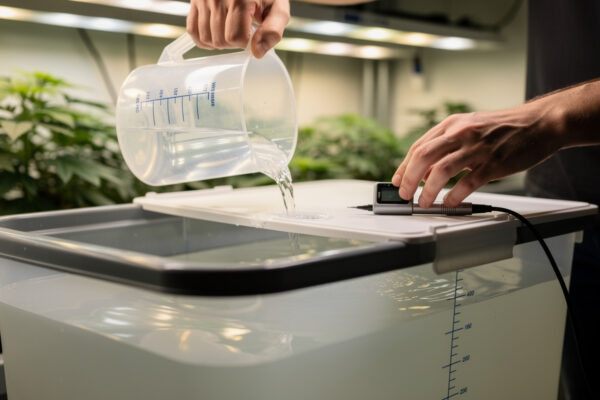
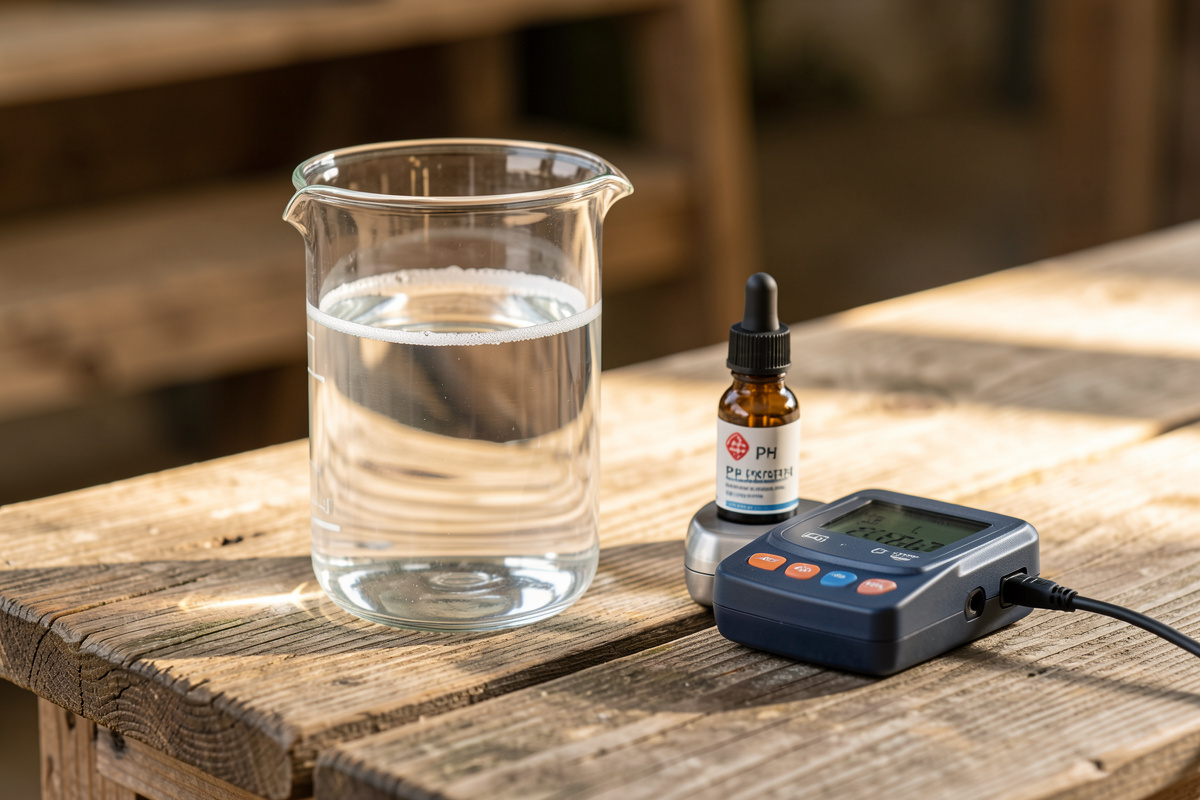
The first number I take off any source water is starting EC, and I take it before a single salt goes in. This is the measurement that tells you how much of your total dissolved-solids budget is already spent. If your target crop EC is 1.8 mS/cm and your tap already reads 0.7, your nutrients only get to contribute 1.1 of that — and if you blindly follow a feeding chart that assumes a blank 0.0 starting water, you will overshoot. The reading and calibration routine is the same one I detail in the EC meter guide: calibrate in 1.413 mS/cm solution, read at a stable temperature, and log the number every res fill.
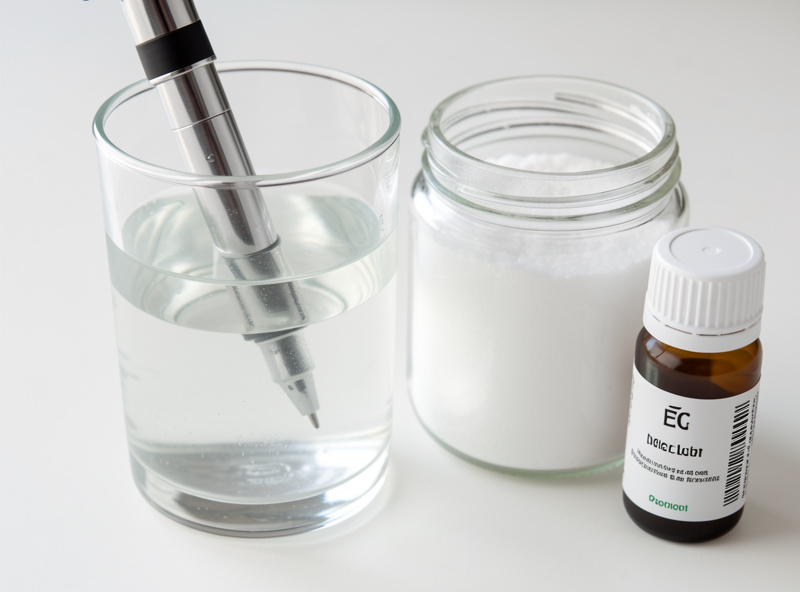
There is a unit conversion trap worth pausing on. EC in mS/cm is the honest measurement; the ppm or TDS number your meter shows is a conversion that depends on which scale the meter uses — 500 (NaCl), 700 (442), or sometimes a KCl scale. My 0.7 mS/cm tap reads 350 ppm on the 500 scale but would read 490 on a 700-scale meter. Same water, two very different ppm numbers. This is why I log and talk in mS/cm whenever I can, and why comparing your ppm to a forum post without knowing the scale is meaningless. A calibrated EC pen and a bottle of calibration solution remove the ambiguity.
The Hardness Scale and Where My Tap Sits
The USGS classification is the reference most growers use to frame their water, and it gives you a quick shorthand for what you are dealing with. The table below maps the standard classes to the units you will see on a test report and to the practical implication at a hydroponic reservoir.
| Classification | mg/L CaCO3 (ppm) | Approx. dGH | Typical starting EC | Hydroponic implication |
|---|---|---|---|---|
| Soft | 0–60 | 0–3.4 | 0.05–0.25 mS/cm | Ideal blank-ish water; add full CalMag, manage pH easily |
| Moderately hard | 61–120 | 3.4–6.7 | 0.25–0.50 mS/cm | Workable; reduce CalMag, watch pH buffer |
| Hard | 121–180 | 6.7–10.1 | 0.50–0.80 mS/cm | My tap lives here; blend or skip CalMag, expect pH climb |
| Very hard | 181–350+ | 10.1+ | 0.80–1.2+ mS/cm | RO or heavy blend; direct use risks precipitate |
| Extremely hard | 350+ | 20+ | 1.2+ mS/cm | Do not run straight; full RO is the practical answer |
One degree of general hardness, 1 dGH, equals 17.8 mg/L calcium carbonate — a unit you will see on aquarium and European test kits, since dGH is more common across the Atlantic than the USGS ppm scale. My tap sits squarely in the hard band at roughly 150 mg/L and 8.4 dGH, which is typical for groundwater-sourced municipal supplies in limestone geology. Soft water looks like a luxury from where I sit, but it carries its own headache: with almost no buffering, pH swings wildly, which I cover from the other side in the companion piece on starting-water alkalinity.
Why Hard Water Causes pH to Climb
The carbonate and bicarbonate in hard water are bases, and bases push pH up. When you mix nutrients into hard tap and then dial pH down to 5.8 with phosphoric or nitric acid, the carbonate buffer neutralizes a chunk of that acid before it ever touches the actual pH — which is why hard water eats pH Down faster than soft water does. Worse, the buffer keeps working after you set the pH, so a res that reads 5.8 at lights-on can climb back to 6.5 by the next morning. This is the single most common “my pH will not stay put” complaint, and on hard water the root cause is almost always alkalinity, not a bad pH pen.
The fix is not more acid; it is less buffer. Two practical levers reduce the buffer load. The first is a partial RO blend — cut your tap 50/50 with RO water and you halve both the hardness and the alkalinity in one move, which is usually enough to make pH behave without going full RO. The second is a one-time larger pH Down addition at the res change to deliberately neutralize the buffer up front, accepting that you will use more acid on hard water than a soft-water grower would. I lean on the blend, and I keep the pH Down dosing technique from the pH Down guide in mind: add acid slowly, mix, wait, re-read, because overshooting on a buffered res then bouncing back up is worse than a slow approach.
Calcium, Phosphorus, and the White Cloud
This is the failure mode that cost me a res, and it is the one every hard-water grower needs to understand. Calcium and phosphate, at high enough concentrations, precipitate as insoluble calcium phosphate — it falls out of solution as a white cloud and a chalky sediment, and the phosphorus your bloom feed promised is suddenly sitting on the bottom of the res instead of feeding the plant. The more calcium your source water already carries, the lower the threshold at which your bloom salts trigger this. On my hard tap, a full-strength bloom dose mixed directly into uncut water turned cloudy within an hour.
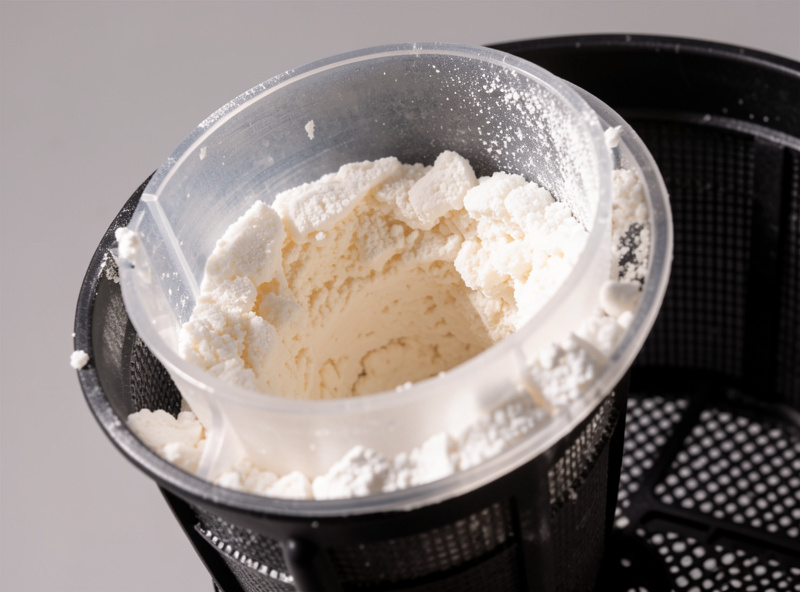
The chemistry and the full fix are in the Masterblend precipitation fix piece, but the source-water dimension is simple: less calcium at the start means more headroom for phosphate to stay dissolved. Cutting my tap with RO to drop the starting EC from 0.7 to about 0.35 solved the precipitate problem entirely without me having to weaken my bloom feed. The res walls stopped growing that chalky film, and the bloom salts stopped vanishing. If you are mixing a calcium-heavy line into very hard water and seeing cloudiness, your nutrients are not necessarily bad — your water is too loaded to hold them.
How I Adjust for Hard Water Without RO
Not every hard-water grower needs an RO unit. Before I committed to a blend, I ran straight hard tap for a full cycle on leafy greens by making three adjustments, and it worked. First, I skipped added CalMag entirely, because the tap was already supplying roughly 40 mg/L calcium and meaningful magnesium — more than enough for lettuce. Second, I aimed my total EC about 0.2 lower than a soft-water feeding chart would suggest, because the tap’s contribution was already in there. Third, I accepted a slightly higher pH target — 6.0 to 6.2 instead of 5.8 — because fighting the buffer down to 5.8 was burning acid for no biological gain in that range. Leafy greens are forgiving, and the cycle was clean.
The crop matters here as much as the water. Lettuce, herbs, and other vegetative crops tolerate hard water far better than heavy-feeding fruiting crops, because the phosphorus-precipitation problem is worst at bloom strength and vegetative feeds are lighter. My Masterblend vegetative recipe, which I mix to a target EC the way I describe in the 4-18-38 recipe piece, ran fine on cut hard water. My bloom recipe on the same tap did not. Match the water strategy to the crop stage, and you can get away with a lot before RO becomes mandatory.
When Hard Water Means It Is Time for a Blend
The honest threshold, which I lay out fully in the RO decision piece, is somewhere around 0.6 to 0.8 mS/cm starting EC for a general grower, and lower for anyone running heavy bloom feeds or sensitive cultivars. Above that band, the headroom for nutrients gets tight, the pH buffer gets stubborn, and the precipitate risk climbs. A partial blend — mixing tap and RO to land at a target starting EC around 0.3 — fixes all three problems at once and costs far less in waste water than running pure RO. I blend to a target, not a fixed ratio, because my tap EC drifts a tenth or two seasonally and a fixed ratio would drift with it.
The other reason to consider RO or a blend even at moderate hardness is consistency. Hard tap changes with the seasons and with utility maintenance, and a res strategy tuned to last summer’s tap can quietly fail on this winter’s. Blending toward a consistent starting EC smooths that out. Whether full RO is worth it depends on your tap, your crop, and your scale — the full tap-versus-RO trade analysis is in the RO vs tap comparison, and the disinfectant side of the same water is covered in the chlorine versus chloramine piece and the dechlorination methods guide.
What I Would Do Starting Today
If I were a new grower staring at a hard-water tap, here is the sequence. Read your starting EC and your utility water report for the hardness number; both are free or nearly free. Test your tap with a hardness kit if the report is vague, and classify yourself on the table above. If you land in the soft or moderately hard band, run it straight with reduced CalMag and a slightly relaxed pH target. If you land in the hard band like me, plan a partial RO blend to a target starting EC around 0.3 for bloom crops, and consider running vegetative crops straight to save the RO water. Skip the CalMag addition on hard water unless a leaf symptom and a deficiency reading tell you otherwise — and when in doubt, remember that the precipitate res I mixed taught me that more is not always more. Hard water is not your enemy; unmeasured water is.
As an Amazon Associate I earn from qualifying purchases.
What EC is considered hard water for hydroponics?
There is no fixed line, but source water above roughly 0.5 to 0.6 mS/cm (about 250 to 300 ppm on the 500 scale) is in the hard range and usually needs adjustment. The USGS hardness classification uses mg/L calcium carbonate: 121 to 180 mg/L is hard, and that typically maps to about 0.5 to 0.8 mS/cm starting EC.
Can I use hard tap water directly in a hydroponic reservoir?
Often yes, for leafy greens and vegetative crops, if you skip added CalMag, lower your target EC by the tap contribution, and accept a slightly higher pH target. Fruiting crops at bloom strength are riskier because the existing calcium can precipitate with phosphorus. Very hard water above about 0.8 mS/cm generally needs blending.
Do I still need CalMag with hard water?
Usually no. Hard water already supplies substantial calcium and magnesium, so a standard CalMag dose is often redundant or even excessive. Add CalMag only if leaf symptoms and a deficiency reading confirm a shortfall, which on hard water is more often a magnesium than a calcium gap.
Why will my pH not stay down with hard water?
Because the carbonate and bicarbonate in hard water are alkalinity, a pH buffer that neutralizes acid and keeps pushing pH back up. The fix is reducing the buffer load with a partial RO blend, not endlessly adding more pH Down.
Does hard water cause the white cloud in a nutrient reservoir?
It can. High calcium from hard water plus high phosphorus from bloom nutrients can precipitate as insoluble calcium phosphate, the white cloud and chalky sediment you see. Cutting the tap with RO to lower the starting calcium usually stops it.