The right hydroponic system is not the most advanced one — it is the one that matches your crop, your space, your tolerance for fuss, and how reliable your power is. Having run DWC, Kratky, NFT and ebb-and-flow side by side on my own bench for years, the single most useful thing I can tell a new grower is that the “best system” question is backwards. There is no universally best method. There is the method that fits what you are trying to grow and how much you want to be involved — and once you frame it that way, the choice usually makes itself.
This guide is the decision tree I actually use when someone asks which system to build. It walks through the four questions that matter, in order, and lands you on a method. No hype, no “this one triples your harvest” — just the trade-offs I have lived with across the systems I run.
Question 1: What Are You Growing?
Crop is the first and biggest filter, because it eliminates whole methods immediately.
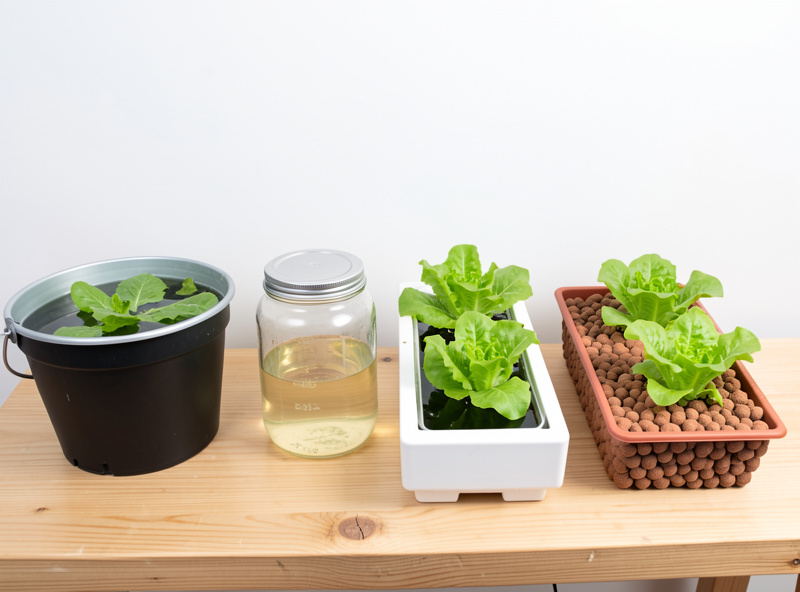
- Leafy greens and herbs (lettuce, kale, basil, chard): almost any method works, so you get to choose on convenience. Kratky for hands-off simplicity, DWC for speed, NFT if you want volume.
- Large fruiting crops (tomatoes, peppers, cucumbers): you need a system that supports weight and feeds heavily for months. That means ebb-and-flow or, for the biggest plants, Dutch buckets. Shallow-water methods like NFT and a passive Kratky jar simply cannot carry them.
- Cuttings and propagation: a low-pressure aeroponic cloner roots them fastest, but a simple DWC or a humidity dome works too.
If you answered “lettuce and herbs,” your decision is mostly about lifestyle, covered below. If you answered “tomatoes,” you can already cross off half the list.
The reason crop filters so hard comes down to two physical realities: root mass and feeding duration. A mature tomato grows an enormous root system and drinks heavily for three or four months. A shallow NFT film cannot keep that much root wet, a passive Kratky reservoir runs dry long before the plant finishes fruiting, and a small bucket cannot physically hold the roots. Leafy greens, by contrast, are small, fast, and undemanding — they finish in weeks and never outgrow any of the systems. So the bigger and longer-lived your crop, the fewer methods can actually carry it, while a lettuce will happily grow in literally any of them. Start your decision here and you avoid the single most common beginner mistake: building a system the chosen crop was never going to thrive in.
Question 2: How Much Do You Want to Fuss?
This is the question people skip and then regret. Be honest about how much daily attention you will actually give a system.
- “Set it and forget it”: Kratky. You fill it once and walk away until harvest. No pump, no top-ups, no daily checks. It is the most forgiving entry into hydroponics there is, limited only to fast leafy crops.
- “I will check it most days”: DWC. A little monitoring — pH, EC, water temperature — rewards you with fast growth across a wider crop range. This is the sweet spot for most engaged hobbyists.
- “I enjoy tinkering and tuning”: NFT or ebb-and-flow. Both have flow rates, timers and slopes to dial in, which is a chore to some people and a pleasure to others. If you like the engineering, you will run them well.
The mistake I see most often is an ambitious beginner building an NFT or aeroponic system they do not have the time to babysit, then losing a crop to a problem a Kratky jar would never have had. Match the method to the attention you will genuinely give it.
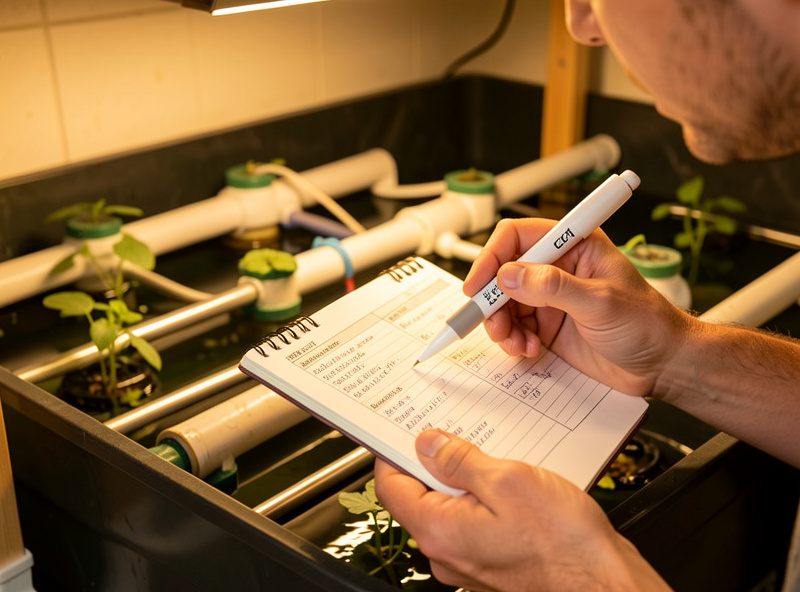
It helps to think about what each system asks of you and when. Kratky asks for careful attention exactly once — at the fill — and nothing afterward. DWC asks for a small, steady drip of attention spread across the grow: a daily glance, a pH check every couple of days, a water change every week or two. NFT and ebb-and-flow ask for that same ongoing attention plus a tuning phase up front, where you get the flow rate or the timer cycle right. None of these is harder than the others in total effort; they just distribute the effort differently. Be honest about whether you would rather do all the thinking on day one (Kratky), a little every day (DWC), or enjoy an ongoing tinkering relationship with the build (NFT, ebb-and-flow). That self-knowledge predicts your success better than any spec.
Question 3: How Reliable Is Your Power?
Every active system depends on a pump, and the systems differ enormously in how fast they fail when that pump stops. This matters more in some homes than others.
- Flaky power or you travel a lot: lean passive. Kratky has no pump to fail. Ebb-and-flow’s clay-pebble bed stays damp for hours after an outage, buying you time.
- Reliable power, you are usually home: any method is fine. DWC and NFT both depend on continuous aeration or flow, but a stable grid makes that a non-issue.
- You want maximum growth and accept the risk: aeroponics, with a backup-power plan. It has zero buffer, so it is only sensible where power is dependable and you have redundancy.
There is a related factor that catches cold-climate growers in particular, and I say this as someone growing indoors through long Nordic winters: water temperature and power often interact. A reservoir running warm in a heated room pushes you toward methods that tolerate lower dissolved oxygen, while a chiller or an aerator adds another powered component that can fail. The more powered parts a system has, the more failure points it carries — so if your setup or your climate already demands a heater, a chiller, or supplemental lighting on timers, factor that load and that fragility into the system choice rather than treating the grow method in isolation.
Question 4: How Much Space and Budget?
Finally, the practical constraints. They rarely override crop and lifestyle, but they break ties.
- Tiny space, tiny budget: a Kratky jar or a single DWC bucket. Either grows real food for the price of a takeaway.
- A shelf or small tent: a row of DWC totes or a compact NFT run scales leafy production without much footprint.
- A dedicated grow area: ebb-and-flow tables or a Dutch bucket row make sense once you have the room and want fruiting crops at volume.
Budget deserves one honest caveat: the cheapest system to build is not always the cheapest to run, and almost never the cheapest per head of food. A countertop appliance with proprietary pods looks affordable until you price the refills; a Kratky jar costs almost nothing to build and grows food on plain nutrients and water. On the other end, an ebb-and-flow or Dutch bucket build costs more up front but the clay-pebble medium is reusable for years and the per-plant cost falls fast at volume. I would rather someone spend a little more on a good EC pen and a reliable pump than save money on the structure, because the meter and the pump are what actually protect the crop.
Putting It Together: A Quick Reference
Here is the decision distilled into the trade-offs that actually drive the choice, drawn from running these systems side by side:
| If you want… | Best method | Why |
|---|---|---|
| Hands-off leafy greens | Kratky | No pump, no upkeep, fill once |
| Fast greens, a bit of monitoring | DWC | Speed and simplicity, wide crop range |
| Volume leafy production | NFT | Scales along channels, water-efficient |
| Fruiting crops in a bed | Ebb & flow | Medium supports weight, outage-tolerant |
| Large vining fruiters at scale | Dutch bucket | Modular, isolates each big plant |
| Fastest growth / propagation | Aeroponics | Maximum oxygen, but least forgiving |
My Honest Default Recommendations
If you are completely new and growing leafy greens, start with a Kratky jar — it teaches you nutrients and pH with nothing to fail, and it is almost free. When you want faster growth and a few more crops, move up to DWC, which is the system I keep running as my daily workhorse. If you catch the bug and want fruiting crops, build an ebb-and-flow bed. NFT, Dutch buckets and aeroponics are all excellent at their specialties, but they are second or third systems, not first ones.
Whatever you choose, the method matters less than the habit. The grower who logs EC, watches pH, and keeps the reservoir cool will out-grow a fancier system run on guesswork every time. Pick the system that fits your answers to these four questions, get an EC pen, and start measuring. The rest is just refinement — and that is the fun part.
And do not agonise over the decision as if it were permanent. Almost every grower I know started with one method and added others as their interests grew — a Kratky jar on the windowsill, then a DWC bucket, then a tent with an ebb-and-flow table. The systems are not rivals; they are tools for different jobs, and the lessons transfer. The EC and pH discipline you learn on your first jar is exactly what makes your fifth, fancier build succeed. So choose the one that fits today, grow something real in it, and let the next system come when the next crop asks for it.
Related Guides
- Hydroponic Systems: Complete Guide to All Methods
- Deep Water Culture (DWC): The Bucket-and-Bubbles Guide
- The Kratky Method: Passive Hydroponics With No Pump
- NFT Hydroponic Systems: The Nutrient Film Technique
- Ebb and Flow Hydroponics: How Flood-and-Drain Works
- Dutch Bucket Hydroponics: Bato Buckets for Fruiting Crops