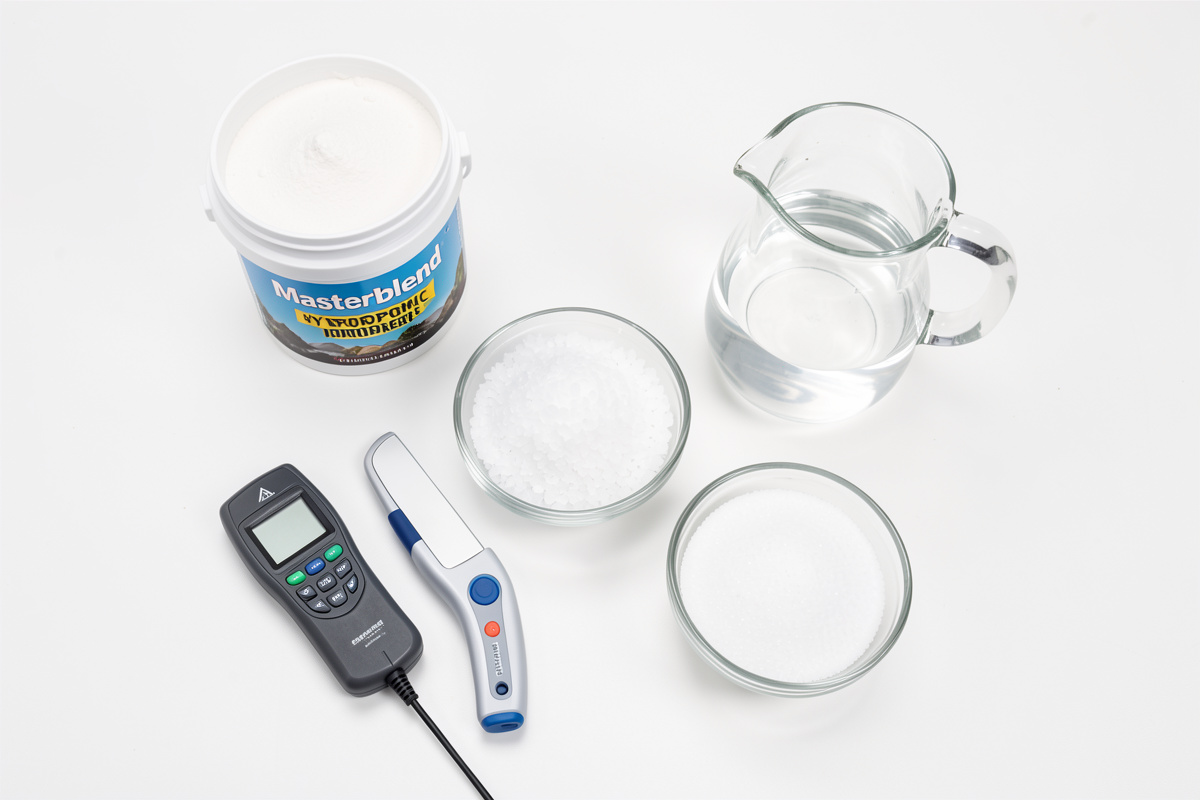
The 2-1-2 Masterblend mixing ratio is two parts Masterblend 4-18-38 to one part Epsom salt to two parts calcium nitrate, by weight. At full fruiting strength that lands me around EC 2.0-2.4 mS/cm. The ratio exists to balance N, Ca, Mg and S across three salts that one product cannot supply alone.
I run DWC totes, NFT channels, Kratky jars and an ebb-and-flow hydroton bed side by side under lights in Sweden, where short winter days make my light and EC math non-negotiable. Across every one of those reservoirs I mix Masterblend the same way, to a target EC, and I dissolve each salt separately. This guide explains exactly why the numbers are 2-1-2, what each salt is doing, how to scale it to any volume, and why calcium nitrate goes in last or you get white sludge on the bottom of the tote.
Why The Ratio Is 2-1-2 In The First Place
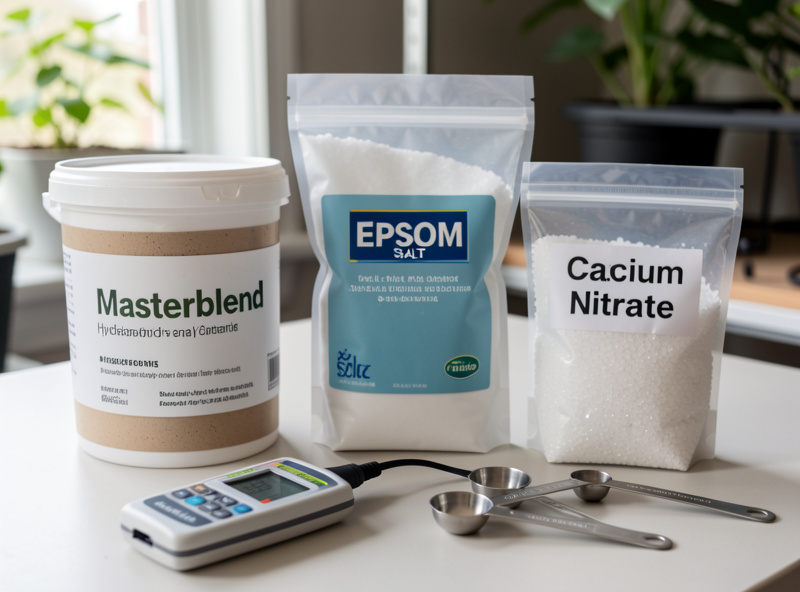
Masterblend 4-18-38 is not a complete nutrient. It carries phosphorus, potassium and chelated micros but almost no calcium and not enough magnesium. The 2-1-2 ratio adds calcium nitrate and Epsom salt back in the proportions a fruiting plant actually draws down, so the finished solution reads balanced on the meter and in the plant.
Here is what each of the three salts brings to the reservoir, and why the proportions sit where they do:
- Masterblend 4-18-38 (2 parts) — the “Tomato & Vegetable Formula”: 4% N, 18% P2O5, 38% K2O plus chelated iron, manganese, zinc, copper, boron and molybdenum. It is the phosphorus and potassium backbone. It is deliberately low in nitrogen because the calcium nitrate covers most of the N.
- Calcium nitrate 15.5-0-0 (2 parts) — roughly 19% calcium plus a big slug of nitrogen carried as nitrate. This is where most of your N comes from, and it is your only meaningful calcium source. Calcium drives cell walls; skimp on it and you invite blossom-end rot and tip burn. It sits at two parts because calcium and nitrate demand are both high in fruiting plants.
- Epsom salt, MgSO4·7H2O (1 part) — about 9.8% magnesium and 13% sulfur. Magnesium is the metal at the center of every chlorophyll molecule, so a shortfall shows as interveinal yellowing on older leaves. It is one part because plants need far less Mg than they do N, K or Ca, but it is non-negotiable because Masterblend alone runs short of it.
Notice the same recipe gets written two ways and people think they are different. “2 g Masterblend, 2 g calcium nitrate, 1 g Epsom” per gallon is identical to “2-1-2 Masterblend : Epsom : calcium nitrate”. It is the same three numbers reordered. Once you see that, the conflicting forum posts stop looking contradictory. For the deeper formula breakdown I keep a separate Masterblend 4-18-38 recipe page, and the full system overview lives on my Masterblend hydroponic nutrients hub.
The 2-1-2 Amounts At Every Batch Size
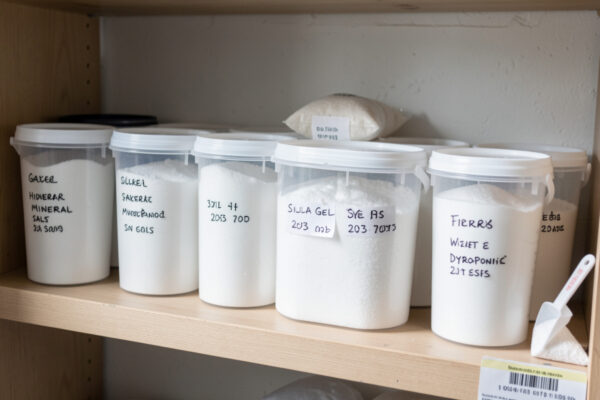
Scaling is pure ratio. Full fruiting strength is roughly 2 g Masterblend, 1 g Epsom and 2 g calcium nitrate per US gallon (3.78 L), which reads about EC 2.0-2.4 mS/cm on my pen. For leafy crops I run the same ratio at half strength. The table below is the cheat sheet taped to my mixing shelf.
| Batch volume | Masterblend (g) | Epsom (g) | Calcium nitrate (g) | Approx. EC (mS/cm) |
| 1 litre (full) | 0.5 | 0.25 | 0.5 | 2.0-2.4 |
| 1 US gallon (full) | 2 | 1 | 2 | 2.0-2.4 |
| 5 US gallons (full) | 10 | 5 | 10 | 2.0-2.4 |
| 5 US gallons (half, leafy) | 5 | 2.5 | 5 | 1.0-1.2 |
| 20 litres (full) | 10.5 | 5.3 | 10.5 | 2.0-2.4 |
Two things about that table. The grams scale linearly but EC does not climb forever in a straight line at the extremes, so always confirm with a pen rather than trusting the math blindly. And the “approximate” EC depends on your source water; my tap starts around EC 0.3, so I subtract that base reading when I decide whether I have hit target. For step-by-step solution mixing across any nutrient line, my how to mix hydroponic nutrient solution guide walks the whole bench routine.
Matching The Ratio To EC Targets By Crop
The 2-1-2 ratio stays constant; what changes between crops is total concentration, which you read as EC. Run leafy greens lean, herbs in the middle, fruiting plants strong. Dialing strength by EC rather than by feel is the single biggest accuracy upgrade I made.
These are the EC bands I actually target on my reservoirs, all at the same 2-1-2 ratio, just more or less of it dissolved per litre:
- Lettuce and leafy greens: EC 0.8-1.4 mS/cm. That is roughly half-strength on the table above.
- Herbs (basil, mint): EC 1.0-1.6 mS/cm.
- Fruiting (tomato, pepper, cucumber): EC 2.0-3.5 mS/cm. Full strength sits near the bottom of that band, and I creep up as the plant loads fruit.
Across all of those I hold pH at 5.5-6.0. If you prefer ppm, multiply EC by 500 on a 500-scale pen (or by 700 on a 700-scale pen), so EC 2.0 reads about 1000 ppm or 1400 ppm depending on which scale your meter uses. Knowing your pen’s scale matters more than the number it shows.
Why I Dissolve Each Salt Separately And Add Calcium Nitrate Last
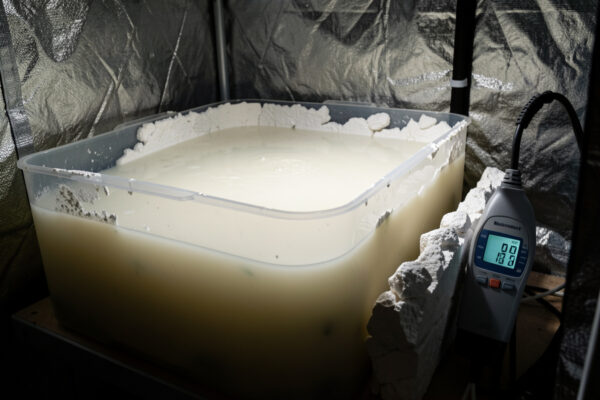
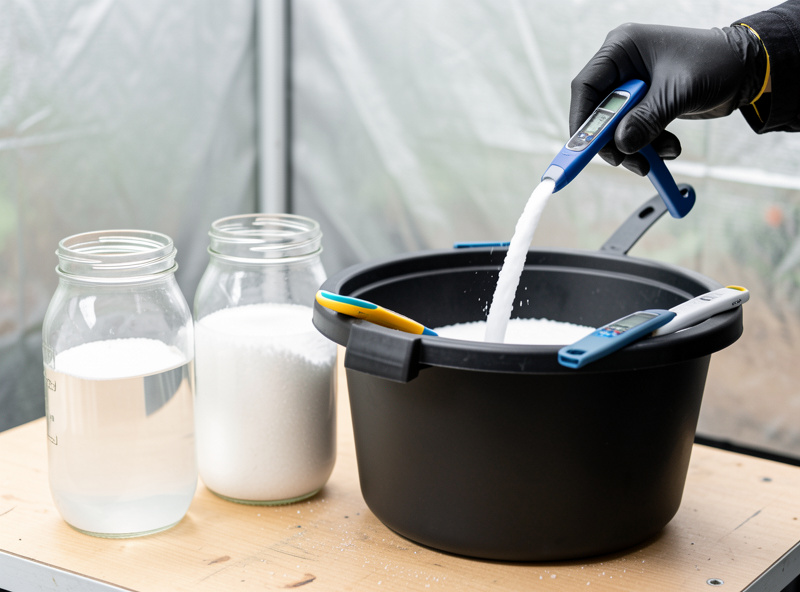
This is the part most people skip and it is the whole reason the article exists. I dissolve Masterblend, Epsom and calcium nitrate each in its own jar of water, then add them to a full reservoir in that order, calcium nitrate last. Combine concentrated calcium and concentrated sulfate or phosphate and you get insoluble precipitate dropping out of solution.
The chemistry is plain once you say it out loud. Calcium ions love to bond with two things in your mix: the sulfate from Epsom salt and the phosphate from Masterblend. Crowd them together at high concentration and they react:
- Calcium + sulfate → calcium sulfate (gypsum, CaSO4): the chalky white film you see settling on the bottom of a tote.
- Calcium + phosphate → calcium phosphate: another insoluble solid that locks up both your calcium and your phosphorus.
When that happens, the nutrients are not just sitting there harmlessly. They drop out of solution, so your plants never see that calcium or phosphate, and your EC reads lower than the grams you added should give. That is a lockout you caused at mixing, not a feeding problem.
The fix is dilution and order. Add Masterblend to a full, already-large volume so the phosphate is dilute. Add Epsom next. Add the calcium nitrate jar last, poured slowly into all that water, so the calcium meets only dilute sulfate and phosphate in a big low-pH volume and never reaches the concentration where it precipitates. Never pour calcium nitrate into a concentrated Masterblend slurry, and never store the two combined as a concentrate. If you have already seen white sludge, my Masterblend precipitation fix guide covers recovery, and the calcium-specific handling lives on my calcium nitrate Masterblend mix page.
One more handling note: calcium nitrate is hygroscopic, meaning it grabs moisture out of the air and clumps. Keep it sealed, and weigh it last so it spends the least time open on a humid bench. Epsom is the easiest of the three to dissolve and rarely fights you.
My Bench Routine, Start To Finish
Calibrate first, fill first, dissolve separately, add in order, then read and adjust pH. That sequence has kept every one of my reservoirs precipitate-free. Doing it in any other order is where the white sludge and the low EC readings come from.
Here is exactly how a mix goes on my bench, for a 20 L DWC tote at full strength:
- Calibrate the EC pen against 1.413 mS/cm calibration solution. An uncalibrated pen makes every later number a guess. Calibrate the pH pen too, with drops on standby as a cross-check.
- Fill the reservoir with all 20 L first. Salts go into a full volume, never the other way around.
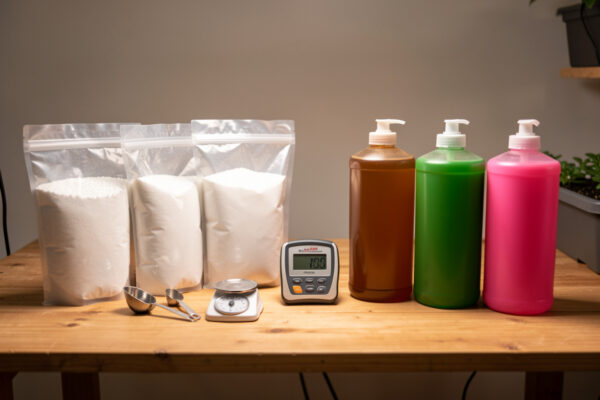
- Weigh each salt separately: about 10.5 g Masterblend, 5.3 g Epsom, 10.5 g calcium nitrate, each in its own cup.
- Dissolve each in its own jar of warm reservoir water until fully clear.
- Add in order: Masterblend first, Epsom second, calcium nitrate last, each poured slowly into the moving water.
- Read EC. I want roughly 2.0-2.4 mS/cm minus my source-water base reading. Short? Add a touch more of all three in ratio. Over? Dilute with plain water.
- Adjust pH to 5.5-6.0 last, after EC is locked, because pH-down shifts once salts are in.
- Drop an air stone in for DWC and confirm dissolved oxygen is moving; calcium uptake suffers in dead, warm water.
I log EC, pH and PPFD on every res change and every top off. Top-offs get plain pH-adjusted water, not full-strength nutrient, because plants drink water faster than salts and your EC drifts up as the tote empties if you top off with food.
Source Water, Drift, And The Mistakes I See Most
Your source water sits underneath every number in this article. Tap water already carries dissolved minerals that show up as EC before you add a single gram, so the 2.0-2.4 mS/cm target is really your base reading plus what the salts contribute. Mine starts near EC 0.3, so I aim higher to compensate.
A few specifics worth pinning down before you trust your readings. If your tap is hard, it likely already carries calcium and magnesium, which means a strict 2-1-2 can push you heavy on those; soft or reverse-osmosis water carries almost nothing, so the full ratio lands closer to the textbook EC. Either way, the move is the same: read your plain source water on a calibrated pen first, write that number down, and treat it as the floor.
The mistakes I see most often, in rough order of how much damage they cause, are these. People combine the salts dry, or premix them into a single concentrated stock bottle, and within a day there is white sediment at the bottom of the bottle that never goes back into solution. People top off an emptying reservoir with full-strength nutrient, so EC climbs run after run until the plants show salt stress. People chase pH before EC is settled, then have to redo it because adding salts moved the pH anyway. And people trust an uncalibrated pen, which means every gram and every EC reading downstream is a guess dressed up as a measurement.
Once the ratio is right and the order is right, the system is genuinely low-maintenance. I check EC and pH at every top off, change the full reservoir on a schedule rather than waiting for trouble, and keep a running log so drift shows up as a trend instead of a surprise. The 2-1-2 ratio does not change across any of that; only the strength and the source water do.
Where To Buy The Three Salts
You only need three products and they last a long time. A Masterblend 4-18-38 kit usually bundles the calcium nitrate and Epsom together, which is the cheapest way in. Epsom is also a standalone staple worth keeping extra of since it dissolves easily and you reach for it for magnesium top-ups.
I buy the complete kit and a separate bag of magnesium sulfate so I never run short on the cheapest salt of the three: a Masterblend 4-18-38 complete kit and a bag of Epsom salt magnesium sulfate.
As an Amazon Associate I earn from qualifying purchases.
Frequently Asked Questions
What is the 2-1-2 Masterblend ratio?
It is two parts Masterblend 4-18-38 to one part Epsom salt to two parts calcium nitrate, by weight. Per US gallon at full strength that is 2 g Masterblend, 1 g Epsom and 2 g calcium nitrate, which reads roughly EC 2.0-2.4 mS/cm.
Why do I dissolve each salt separately?
Concentrated calcium reacts with concentrated sulfate (from Epsom) and phosphate (from Masterblend) to form insoluble calcium sulfate and calcium phosphate. Dissolving each salt on its own and adding them to a large, dilute, already-mixed reservoir keeps the calcium from ever reaching the concentration where it precipitates out.
Why does calcium nitrate go in last?
Calcium is the reactive ion. If it meets concentrated sulfate or phosphate it drops out as white sludge and your plants never get it. Adding it last, poured slowly into a full reservoir that already holds dilute Masterblend and Epsom, means the calcium only ever sees dilute partners and stays in solution.
How do I scale the 2-1-2 ratio to my reservoir?
It scales linearly. Per litre at full strength use about 0.5 g Masterblend, 0.25 g Epsom and 0.5 g calcium nitrate. For 5 US gallons use 10, 5 and 10 grams. For leafy greens run the same ratio at half strength and confirm the result with a calibrated EC pen.
What EC should the finished 2-1-2 solution read?
Full fruiting strength reads about EC 2.0-2.4 mS/cm, or roughly 1000-1200 ppm on a 500-scale pen. Lettuce and leafy greens want 0.8-1.4, herbs 1.0-1.6, and fruiting crops 2.0-3.5 mS/cm. Hold pH at 5.5-6.0 across all of them.