Cold tap water is the reservoir-change mistake almost nobody warns you about, and in winter it’s brutal. My tap runs at about 5°C in January; my reservoir sits at 18°C. Dump 20 litres of that straight onto a warm root mass and I’ve just cold-shocked the plant harder than a slow week of drift ever would — roots stall, growth pauses, and the seedlings I just fed sulk for days. I temper every drop of change water to within a couple of degrees of the res before it touches roots, and it takes five minutes. This is why, and exactly how I do it on my bench.
The shock is invisible until it isn’t. There’s no wilting, no obvious damage — just a res that goes quiet after a change you thought was routine maintenance. I learned to temper the hard way, watching a tray of transplants stall the day after a winter top-up, and it took me embarrassingly long to connect the dots to the icy water I’d poured in. Once I did, the fix was permanent and free.
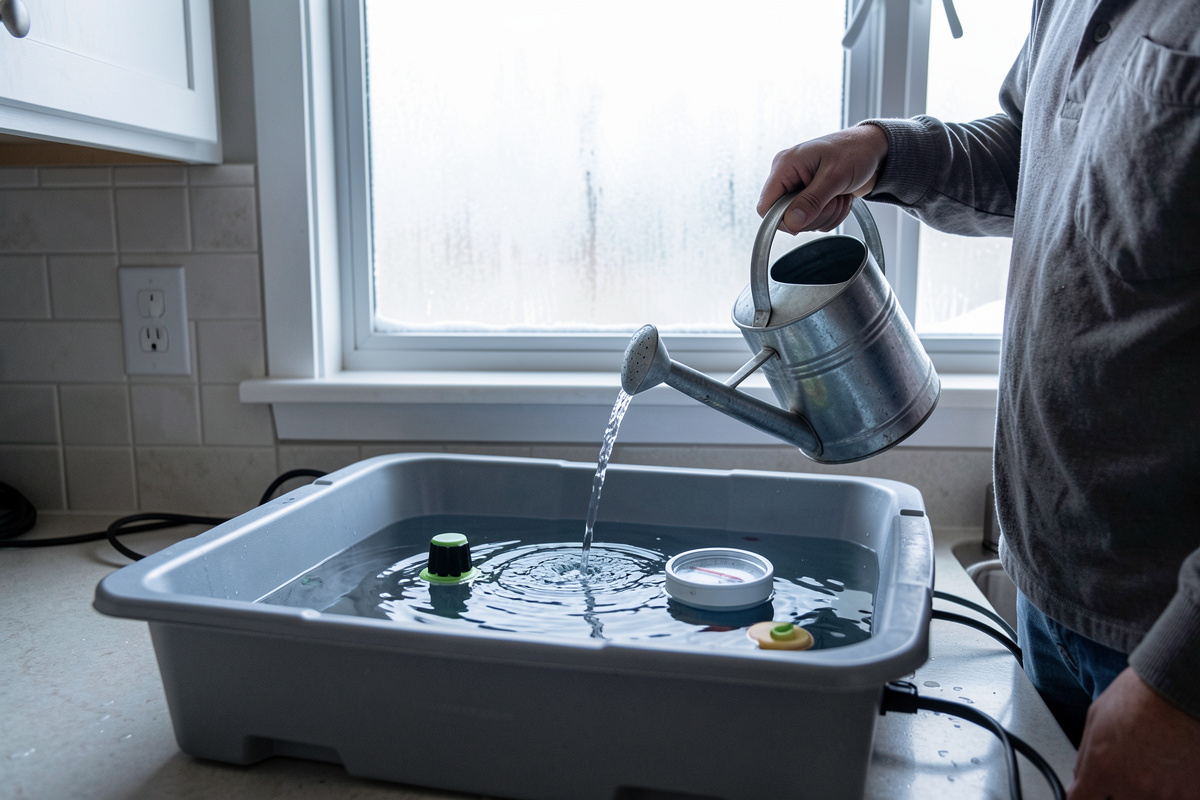
Why Does Cold Tap Water Shock Hydroponic Roots?
Roots respond to sudden temperature change, not just the absolute number. A fast drop of ten degrees or more constricts root function and interrupts the uptake that was happening moments before, so the plant effectively slams on the brakes. It’s the same reason you don’t pour ice water on a tropical houseplant — the shock, not the cold alone, is what does the damage. In a hydroponic res, where the roots live directly in the water, there’s no soil buffer to soften the blow.
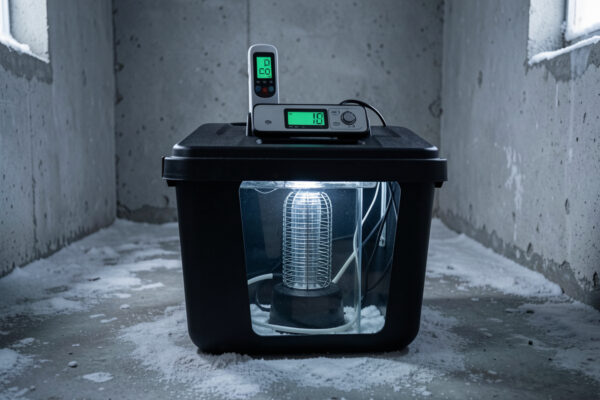
Winter makes this worse in two ways at once. The incoming tap water is far colder than in summer — mains water tracks ground and season, and in a cold climate that means single digits — and the temperature gap between that water and a properly heated res is at its widest. So the exact time you most need to protect root-zone temperature, as I lay out in the cold-climate indoor hydroponics hub, is the time a careless water change does the most harm. It undoes the work of the heater you installed to keep the reservoir warm in one careless pour.
How Cold Is Your Winter Tap Water, Really?
Colder than you think. In winter, mains water in a cold climate commonly arrives at the tap somewhere around 4–8°C, because it’s been sitting in pipes running through cold ground. The “cold” tap in July might be 15°C; in January the same tap can be under 6°C. That’s a 12–14 degree gap from a res held at 18°C — more than enough to shock roots.
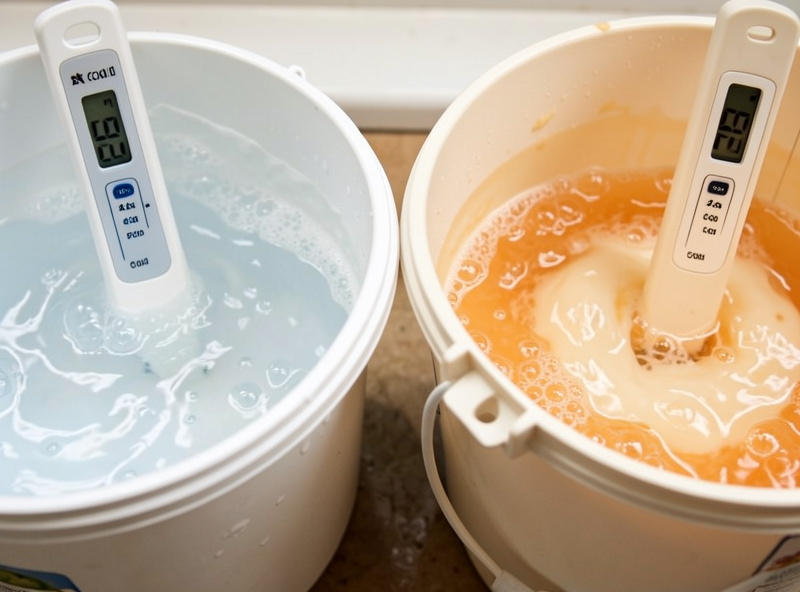
The only way to know is to measure. I keep a thermometer in the bucket I fill for a change, and I’m routinely surprised how cold it reads even after it’s been running a few seconds. Don’t trust the “it feels cool” test — your hand is a terrible thermometer, and the difference between 8°C and 15°C water is invisible to touch but very visible to roots. This is the same measure-don’t-guess habit that runs through everything on this site: the EC pen for chemistry, the PAR meter for light (the winter math for that one is in winter DLI math), and a plain thermometer for change water.
How Do I Temper Change Water Before a Res Change?
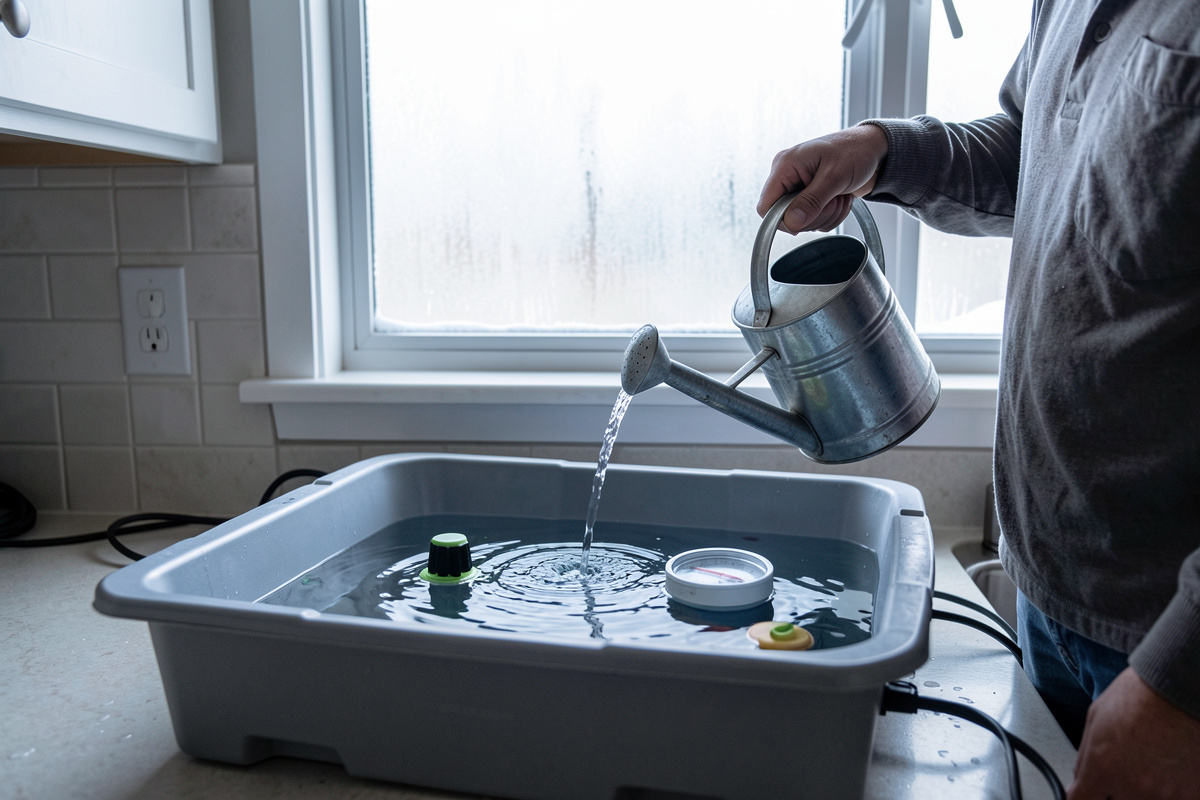
Two methods, both simple. The first and laziest: fill the change bucket and let it stand in the warm grow room for a few hours — overnight is ideal — so it drifts up to room temperature before it goes in. I usually prep tomorrow’s water tonight. The second, when I’m impatient: blend in a kettle of hot water or a jug of warm to hit the target, checking with the thermometer as I go. I aim to land the change water within about 2–3°C of the reservoir before a single litre touches roots.
A few practical notes from doing this every winter. If I’m mixing nutrients into the change water, I temper first and mix second, because nutrient solubility and my EC reading are both a bit temperature-dependent and I’d rather dose into water that’s near its final temperature. I also pour slowly and let the air stones mix it in rather than dumping it all at one end of the tote. And for a big change I’ll do it in two goes with a few minutes between, so the res temperature never dips far even briefly. The general cadence of when to change versus top off is in hydroponic water change schedule and topping off a reservoir — tempering just layers a winter step on top of both.
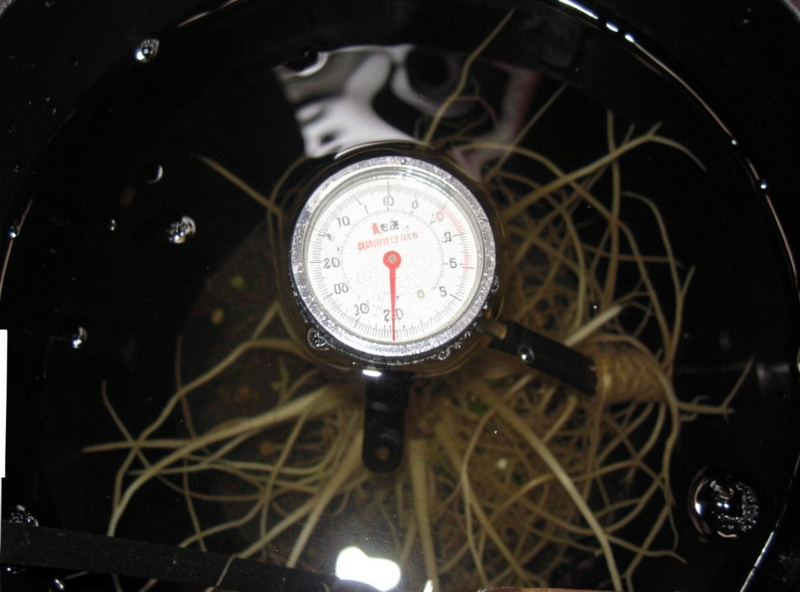
The one tool that makes this effortless is a cheap floating or submersible thermometer you leave in the change bucket and another in the res. I search for a basic submersible aquarium thermometer and keep a couple around — they cost almost nothing and turn tempering from guesswork into a glance.
As an Amazon Associate I earn from qualifying purchases.
Does Water Type Matter as Much as Temperature in Winter?
Temperature is the acute winter problem, but while you’re already handling the change water it’s worth thinking about what’s in it. Very cold water also holds dissolved gases differently and can carry more chlorine or chloramine straight from a cold tap, and letting it stand warm in the room — which you’re doing anyway to temper it — conveniently lets some chlorine off-gas at the same time. So the standing method solves two small problems at once.
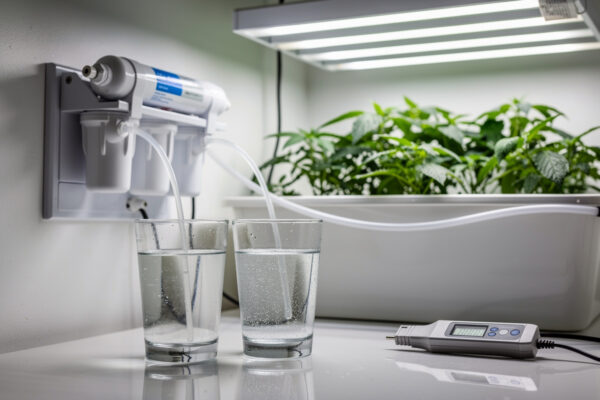
Whether you should be on tap or RO in the first place is a separate decision that depends on your source water’s hardness and your crop, and I work through it in RO vs tap water for hydroponic reservoirs. For the winter-temperature issue specifically, the type of water barely matters — RO straight from a cold system is just as shocking as cold tap. Temper it regardless. The broader science on why root-zone temperature swings hurt, and the safe ranges, is covered by controlled-environment resources like University of Minnesota Extension, and the full temperature picture lives in hydroponic water temperature.
What Order Do I Run a Winter Res Change In?
I do a cold-season change in a fixed sequence because the order protects root-zone temperature at every step. The night before, I fill the change bucket and leave it standing in the warm grow room so it’s already near res temperature by morning. That one habit removes almost all the tempering effort — the water warms itself while I sleep.
The next morning I check the change bucket with a thermometer; if it’s within 2–3°C of the res I proceed, and if it’s still cool I blend in a little hot water to close the gap. Then I mix nutrients into that already-tempered water to my target EC, so I’m never adjusting chemistry in near-freezing water where readings drift. I pour slowly, letting the air stones fold it in rather than dumping it at one end, and for a large change I split it into two pours a few minutes apart so the res temperature barely dips. Finally I take one last thermometer reading of the res itself to confirm it’s still sitting in the 18–20°C band before I walk away.
The whole thing adds maybe five minutes to a routine change, and it’s the difference between a res that keeps growing through the change and one that sulks for a week. On my coldest-morning changes I’ve watched the difference directly: the tempered totes never miss a beat, while the one time I got lazy and poured cold, the transplants told me about it for days. Winter rewards the boring, patient version of every task — and a res change is no exception.
Frequently Asked Questions
Why do I need to warm tap water before a hydroponic reservoir change in winter?
Winter tap water can arrive at 4 to 8 degrees Celsius while your reservoir is held at 18 degrees. Pouring cold water straight onto a warm root mass causes a sudden temperature drop that shocks the roots and stalls uptake for days. Tempering the change water to within a couple of degrees of the reservoir prevents the shock.
How cold is tap water in winter?
In a cold climate, mains water in winter commonly arrives at the tap around 4 to 8 degrees Celsius because it has been sitting in pipes running through cold ground. That is often 12 to 14 degrees colder than a properly heated reservoir, which is more than enough to shock roots.
How do I temper change water quickly?
Either let the filled bucket stand in the warm grow room for a few hours so it drifts up to room temperature, or blend in a kettle of hot water to hit the target, checking with a thermometer as you go. Aim to land the change water within about 2 to 3 degrees Celsius of the reservoir before it touches roots.
Should I temper water even if I use RO instead of tap?
Yes. The winter problem is temperature, not water type. RO water straight from a cold system is just as shocking as cold tap water. Temper it to near reservoir temperature regardless of whether you run tap or reverse osmosis.
Can I just add nutrients to warm the water?
No, mixing nutrients does not meaningfully warm the water. Temper the water first by standing or blending, then mix nutrients into water that is already near its final temperature, since your EC reading and nutrient solubility are both slightly temperature-dependent.
Related Articles
- Cold-climate indoor hydroponics: my winter system
- Keeping a reservoir warm enough in an unheated room
- Hydroponic water change schedule: how often to dump and refill
- RO vs tap water for hydroponic reservoirs
What I’d do starting today: put a thermometer in the bucket next time you fill for a change and read it before you pour. If it’s more than a few degrees off your res, stand it in the warm room first. Five minutes of patience saves a week of stalled roots.