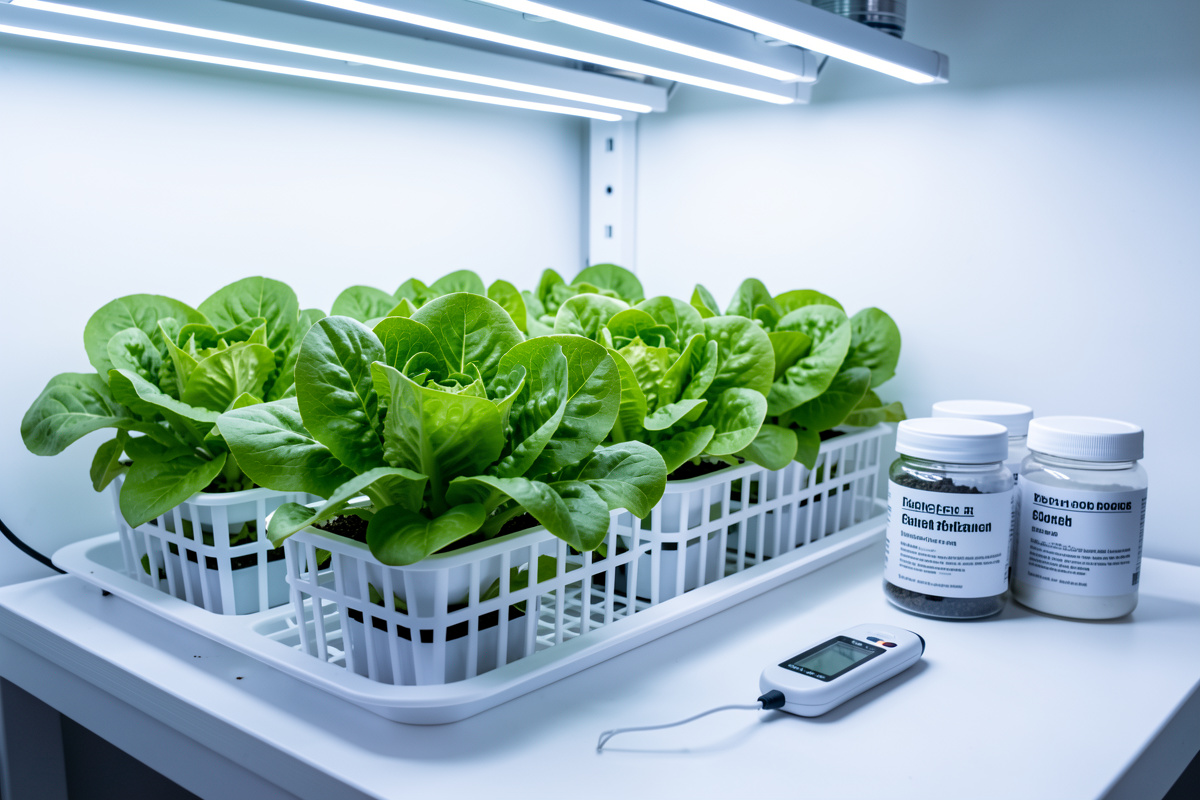
Masterblend runs lighter for lettuce than for fruit. I keep my leafy reservoirs at EC 0.8-1.4 mS/cm depending on stage — roughly half to two-thirds the fruiting dose — at pH 5.5-6.0. On my own pens, a mature lettuce res sits around 1.2 mS/cm and grows clean, dense heads.
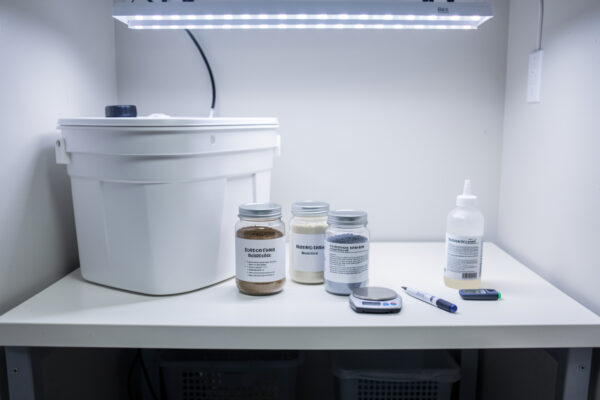
I run four hydroponic methods side by side in a Swedish basement — DWC totes, NFT channels, Kratky jars, and an ebb-and-flow hydroton bed — and lettuce is the crop I grow most through the dark months. Over years of res logs I have landed on a Masterblend program for leafy greens that is deliberately leaner than the fruiting recipe everyone copies off the back of the bag. This guide is exactly how I run it: the salts, the stage-by-stage EC ramp, the pH window, and how I keep tipburn off the inner leaves when the winter light is thin. Every number here I confirm on a calibrated EC pen, not by feel.
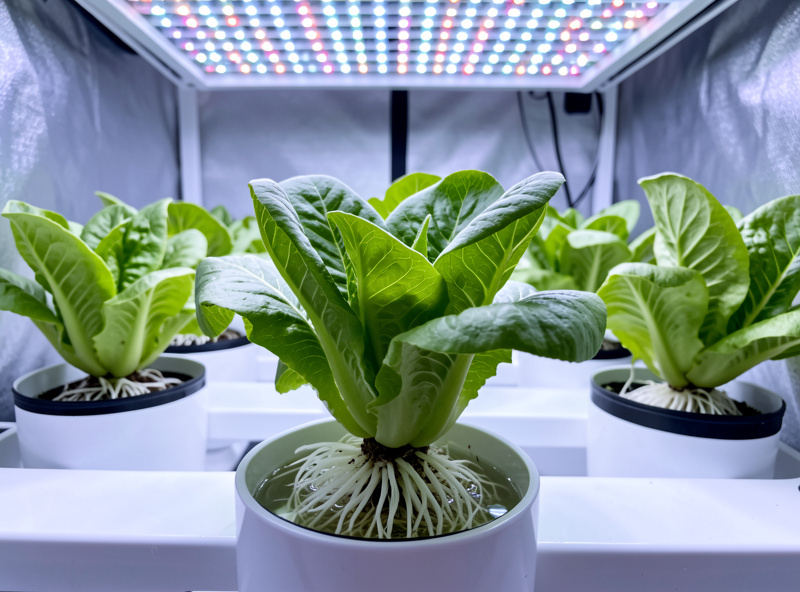
Why lettuce gets a lighter Masterblend than fruit
Lettuce is a low-feed leafy crop. Push the EC where you would feed tomatoes and you invite tipburn and bitter, bolting-prone heads. I run Masterblend for lettuce at roughly half to two-thirds strength, landing the reservoir EC between 0.8 and 1.4 mS/cm instead of the fruiting 2.0-2.4.
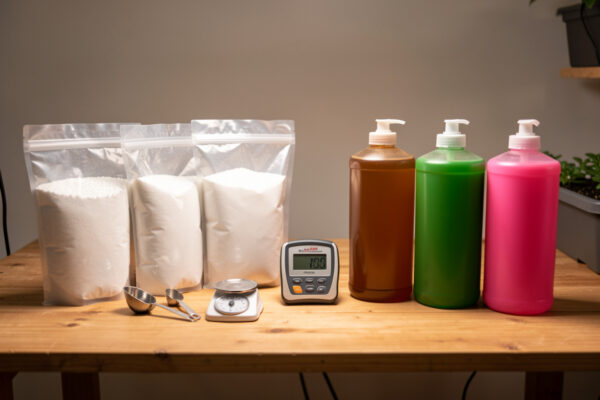
Masterblend 4-18-38 is the “Tomato & Vegetable Formula.” It is a 4-18-38 powder with chelated micronutrients, and on its own it is not a complete fertilizer — it carries no calcium and no magnesium. You pair it with calcium nitrate (15.5-0-0, about 19% Ca) and Epsom salt (magnesium sulfate heptahydrate, about 9.8% Mg). That three-part system is the same whether you are growing fruit or greens. What changes for lettuce is the concentration, not the parts.
The full fruiting dose is the well-known “2-1-2” by weight — Masterblend : Epsom : calcium nitrate at 2 : 1 : 2. Per US gallon that is 2 g Masterblend, 1 g Epsom, and 2 g calcium nitrate, which lands somewhere around EC 2.0-2.4 mS/cm on my benchtop meter. That is a fruiting reservoir. Feed lettuce at that strength and the plant takes up water faster than it can move calcium to the youngest, fastest-growing tissue, and the leaf margins scorch. I cover the base chemistry and full mixing logic in my Masterblend hydroponic nutrients hub and the exact 2-1-2 mixing ratio if you want the fruiting numbers.
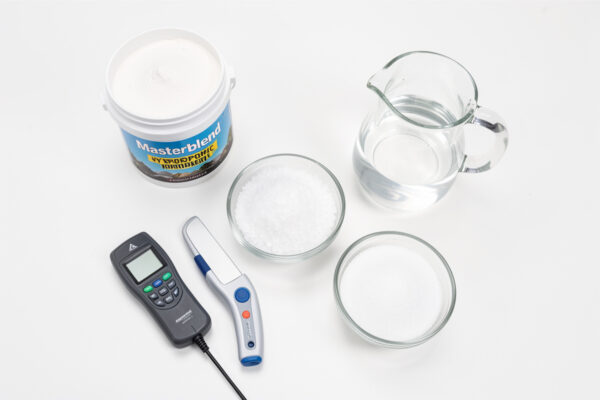
For leafy greens I cut that roughly in half. Around 1 g Masterblend, 0.5 g Epsom, and 1 g calcium nitrate per US gallon lands near EC 1.0-1.2 mS/cm on my pen — a comfortable mature-lettuce strength. I never assume the gram count gives me the EC; I always confirm against the meter after the calcium nitrate dissolves, because powder density, water temperature, and your tap water’s starting EC all move the final number.
My EC targets for lettuce by stage
I ramp EC up as the plant grows. Seedlings and fresh transplants get 0.6-0.8 mS/cm; early vegetative gets 0.8-1.0; mature heads run 1.0-1.4. I never push leafy past about 1.6, and I hold pH at 5.5-6.0 the whole way through.
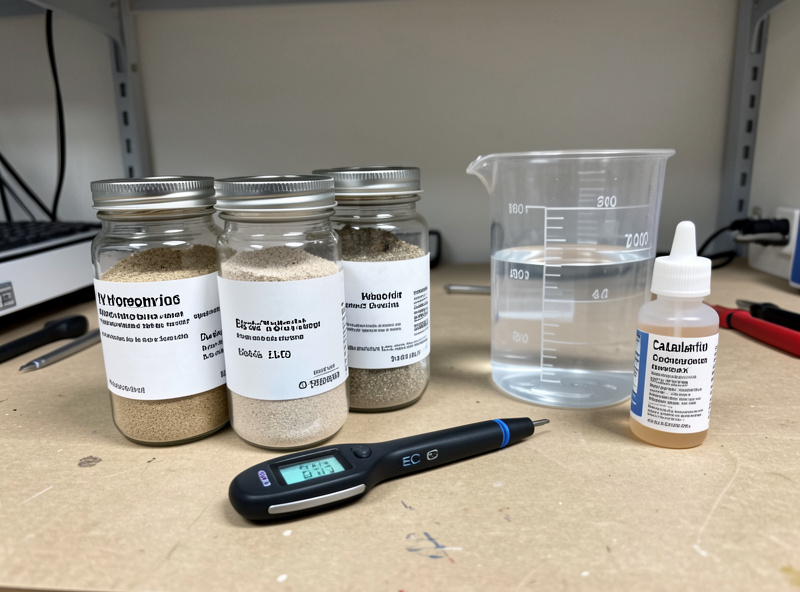
The table below is the actual ramp I follow on my own reservoirs. The ppm column uses the 500 scale (ppm = EC × 500), which is what most of the cheap US-market TDS pens display; if your pen reads on the 700 scale the ppm numbers will be higher for the same solution, so always trust the mS/cm value and know which scale your pen uses. The Masterblend strength column is relative to the full fruiting dose.
| Stage | Target EC (mS/cm) | ppm (500 scale) | pH | Masterblend strength |
|---|---|---|---|---|
| Seedling / transplant | 0.6-0.8 | 300-400 | 5.5-6.0 | About one-third strength |
| Early vegetative | 0.8-1.0 | 400-500 | 5.5-6.0 | About half strength |
| Mature head | 1.0-1.4 | 500-700 | 5.5-6.0 | Half to two-thirds strength |
| Hard ceiling | Never past ~1.6 | ~800 | 5.5-6.0 | Stop before fruiting strength |
A few notes on how I use this in practice. Seedlings that have just put out their first true leaves are sensitive — I start them weak at 0.6-0.8 and let the EC climb only as the root system fills the net pot. By the time a butterhead or romaine is sizing up its head I am at 1.0-1.4, and that is where it stays until harvest. Loose-leaf types like oakleaf and lollo are happy at the lower end of mature; heading types take the upper end. I top off with plain pH-adjusted water between res changes and only re-dose nutrients when the EC drifts low, because lettuce tends to drink water faster than it eats salts, which slowly concentrates the reservoir if you top off with full-strength solution.
If you are new to reading these numbers, my guide to growing lettuce hydroponically walks through the whole crop cycle, and hydroponic lettuce vs soil covers why the EC control is the real advantage over a garden bed.
The pH window and why I hold it tight
I keep lettuce reservoirs at pH 5.5-6.0. Inside that band the full Masterblend micronutrient package — iron, manganese, the chelated metals — stays available. Let pH climb above 6.5 and you start chasing iron deficiency on the new growth even though the iron is sitting right there in the bottle.
pH is not a set-and-forget number in an active reservoir. As the plants pull nutrients and as the solution warms under lights, pH drifts — usually upward in my DWC totes over a few days. I check it with a calibrated pH pen backed up by reagent drops as a sanity test, and I nudge it down with a few drops of pH-down when it climbs past 6.0. The “lockout” people describe on hydroponic lettuce — pale new leaves, stalled growth — is far more often a drifted-pH availability problem than an actual shortage of any element. Fix the pH before you reach for more nutrients.
One thing I do not do is over-correct. pH-down is strong; I add it a few drops at a time, stir, wait, and re-read. Chasing the number with big slugs of acid bounces the reservoir around and stresses the roots more than a steady 5.8 ever would.
Tipburn: it is calcium delivery, not calcium quantity
Tipburn is a calcium-delivery failure, not an empty bottle. Calcium nitrate at the 2-1-2 ratio supplies plenty of calcium — the problem is getting that calcium to the fast-growing inner leaves. Weak transpiration, dead air, and EC run too high are the usual culprits, not a shortage in the mix.
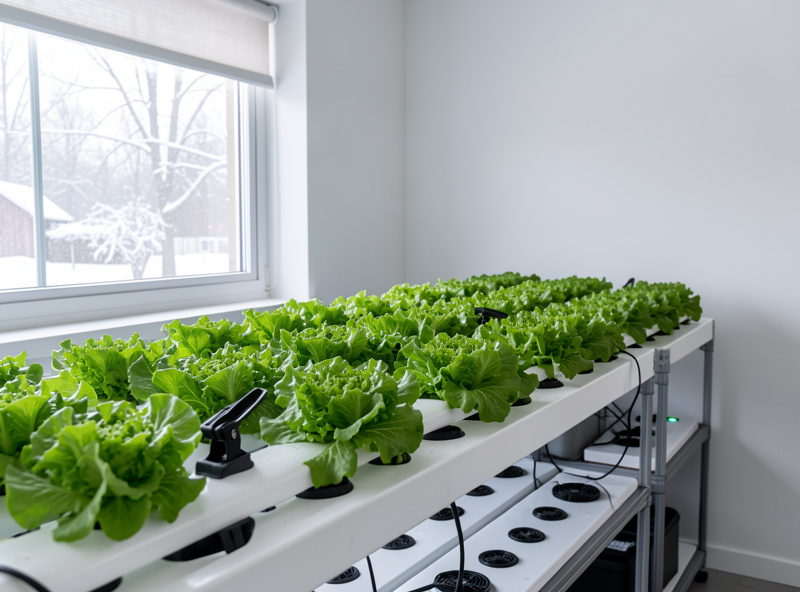
Calcium moves through the plant in the transpiration stream — it rides the water the leaves pull up and out. The youngest inner leaves of a heading lettuce transpire slowly because they sit tucked inside the canopy with little airflow, so calcium reaches them last. When growth is fast and humidity is high, those inner margins outrun their calcium supply and brown at the edges. That is tipburn, and adding more calcium nitrate rarely fixes it.
What actually fixes it in my grow: a small clip fan moving air across the canopy so the inner leaves transpire; keeping EC at or below the stage target so the plant is not osmotically stressed; and avoiding the temptation to push light and feed simultaneously when humidity is high. I also keep the EC steady — big swings between a fresh res change and a depleted reservoir stress calcium uptake more than a constant moderate EC does. Steady beats strong, every time, on leafy greens.
If you only own one instrument, make it a good EC meter, because the whole leafy program is built on hitting these EC targets precisely. I keep a pocket pen for daily res checks and verify it against the benchtop meter; my notes on choosing one are in picking an EC meter for hydroponics.
The Nordic short-daylight angle: match EC to the light you can deliver
Low light means low feed. Through a Swedish winter the daily light integral my lights can realistically deliver is modest, so I stay at the lower end of every EC band. A plant that is light-limited cannot use a strong nutrient solution — overfeeding it in dim conditions just builds salt in the reservoir and invites tipburn.
This is the part most generic Masterblend recipes ignore. Those recipes assume bright summer-equivalent PPFD. In December at my latitude, even under decent LED panels, I am running shorter photoperiods and lower delivered PPFD than a grower in a glasshouse in July. The plant’s appetite for nutrients tracks the light it gets — growth is paced by photosynthesis, and photosynthesis is paced by light. So when the days are shortest I keep mature lettuce nearer EC 1.0-1.1 rather than pushing 1.4, and the heads stay clean and unstressed. When I add light — longer photoperiod, brighter panel — I let the EC creep up toward the top of the band, because now the plant can actually use it.
I track delivered PPFD with a PAR meter and think in DLI (daily light integral) terms: PPFD multiplied by photoperiod. If the DLI is low, the EC stays low to match. This light-to-EC matching is the single biggest lever I have found for indoor leafy greens in a dark climate, and it is why I distrust any one-size-fits-all “lettuce recipe” that hands you a fixed EC with no reference to your light.
For the exact gram weights and the order I dissolve the salts in, my Masterblend 4-18-38 recipe has the step-by-step. The mixing order matters even at lettuce strength: each salt goes in separately, Masterblend first, then Epsom, then calcium nitrate last, because calcium will precipitate with the sulfates and phosphates if you mix them concentrated.
My quick-start leafy program
Mix lean, confirm on the pen, hold pH steady. For a mature lettuce reservoir I dissolve about 1 g Masterblend, 0.5 g Epsom, and 1 g calcium nitrate per US gallon — salts added separately, calcium nitrate last — then read the EC, expecting roughly 1.0-1.2 mS/cm, and adjust pH to 5.8.
From there it is maintenance: top off with plain pH-adjusted water as the level drops, re-dose only when EC drifts below the stage target, and do a full reservoir change roughly weekly so salts do not accumulate out of balance. Keep a fan on the canopy, keep the EC steady, and lettuce is genuinely one of the easiest and most forgiving crops you can grow indoors once your meters are calibrated and your numbers are honest.
Whichever Masterblend kit and EC meter you start with, calibrate the pen against a 1.413 mS/cm standard before you trust a single reading — an uncalibrated pen is the most common reason a “correct” recipe goes wrong.
Masterblend 4-18-38 complete kits on Amazon — the three-part set with calcium nitrate and Epsom. And a reliable hydroponic EC meter on Amazon is the one instrument this whole leafy program depends on.
As an Amazon Associate I earn from qualifying purchases.
What EC should lettuce be in hydroponics?
Run seedlings and fresh transplants at EC 0.6-0.8 mS/cm, early vegetative at 0.8-1.0, and mature heads at 1.0-1.4. Never push leafy greens past about 1.6 mS/cm. On my own reservoirs mature butterhead sits comfortably around 1.2 mS/cm at pH 5.5-6.0.
How much Masterblend do I use for lettuce?
Run it lighter than the fruiting dose, roughly half to two-thirds strength. About 1 g Masterblend 4-18-38, 0.5 g Epsom salt, and 1 g calcium nitrate per US gallon lands near EC 1.0-1.2 mS/cm. Always confirm the final EC on a calibrated pen, since gram counts only estimate the strength.
What pH is best for hydroponic lettuce?
Hold lettuce reservoirs at pH 5.5-6.0. Inside that band the Masterblend micronutrients, including iron, stay available. If pH drifts above 6.5 you can see iron deficiency on new growth even though the nutrients are present, so correct the pH before adding more fertilizer.
Why does my hydroponic lettuce get tipburn?
Tipburn is a calcium-delivery problem, not a shortage in the bottle. Calcium nitrate at the 2-1-2 ratio supplies plenty of calcium, but it has to reach the fast-growing inner leaves through transpiration. Weak airflow, high humidity, and EC run too high are the usual causes. A clip fan and steady, moderate EC fix it.
Can I use the same Masterblend mix for lettuce and tomatoes?
You use the same three salts, Masterblend 4-18-38, calcium nitrate, and Epsom, but at different strengths. Tomatoes run the full 2-1-2 fruiting dose near EC 2.0-2.4 mS/cm; lettuce runs roughly half that, near EC 1.0-1.2. The parts stay the same, only the concentration changes.
In what order do I mix Masterblend salts for lettuce?
Dissolve each salt separately and add Masterblend first, then Epsom, then calcium nitrate last. Calcium will precipitate with the sulfates and phosphates if you mix them while concentrated, so the calcium nitrate always goes in last into the already-diluted solution.