Growing lettuce hydroponically comes down to four numbers I hold steady: EC 0.8–1.2 mS/cm, pH 5.5–6.0, a reservoir under 20°C (68°F), and a daily light integral around 12–14 mol/m²/day. Hit those and you go from seed to a cuttable head in 28–45 days, no soil, no weeds, no guesswork.
Lettuce is the crop I measure every system on my bench against, and it’s the one I start every new grower on. It’s fast, it’s forgiving, and it gives you honest feedback inside a month — if your EC, pH and root-zone temperature are right, lettuce tells you with thick, crisp leaves; if they’re wrong, it tells you just as plainly with bolting, bitterness or browning tips. This guide is exactly how I run mine, across the methods I keep going side by side. It’s a core crop in the wider hydroponic crops guide.
Why Lettuce Is the Best First Crop
Lettuce is a light feeder with a shallow, fast root system, which is exactly why it forgives beginner mistakes. It wants a weak nutrient solution, modest light, and cool water — three things that are cheap and easy to deliver indoors even through a dark Nordic winter.
Compare it to a tomato: a fruiting crop is a 90-to-120-day commitment with high EC, double the light demand, pollination chores and a feed change at flowering. Lettuce asks for none of that. You mix a gentle reservoir, keep the water cool and oxygenated, give it a sensible photoperiod, and harvest in a month. Because the cycle is so short, a mistake costs you a single salad, not a season — which is why I tell people to earn their EC and pH instincts here before graduating to the high-maintenance crops. If you’re still weighing soil against soilless, the lettuce vs soil comparison lays out why the hydroponic version usually wins indoors.
EC, pH and Water Temperature Targets
Lettuce runs lean. I mix to EC 0.8–1.2 mS/cm (roughly 560–840 ppm on the 700 scale), hold pH between 5.5 and 6.0, and keep the reservoir below 20°C. Push EC much past 1.4 and the leaves toughen and the margins can burn; let the res warm past 22°C and root rot moves in fast.
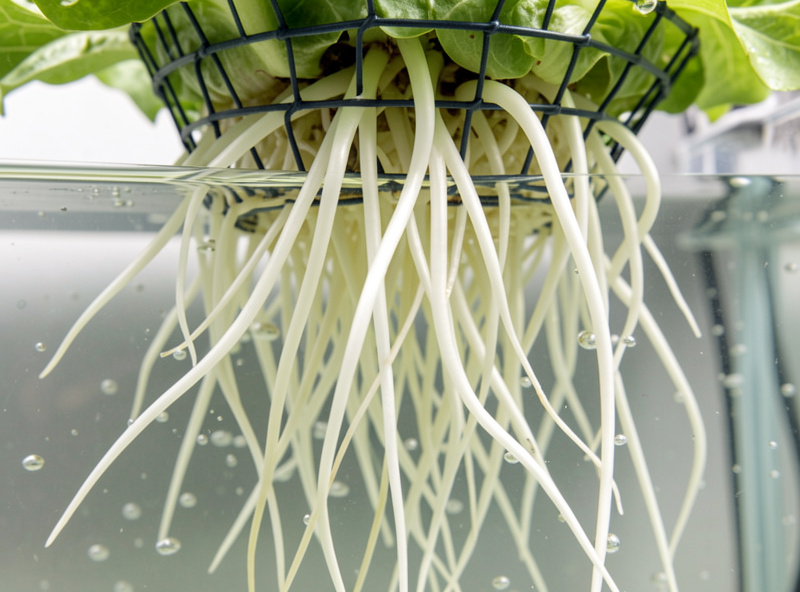
The water-temperature line is the one most indoor growers miss. Warm water holds less dissolved oxygen, and lettuce roots sitting in warm, oxygen-poor solution brown and slime over within days — that’s the start of Pythium, not a nutrient problem. In summer I’ll freeze bottles of water and float them in the res, or move the tank off the warm floor; the detail is in my water temperature guide. On pH, lettuce sits comfortably in the broad uptake band, but I still cross-check my pen against drops at every res change so I’m not chasing a miscalibrated meter — the full logic is in the water chemistry guide, and the per-crop numbers live in the EC-by-crop chart.
Best Lettuce Varieties for Hydroponics
Loose-leaf and butterhead types are the easiest and fastest hydroponic lettuces because you harvest outer leaves and keep the plant producing, while crisphead and romaine want more light and cooler roots to avoid bolting. For a first crop, start loose-leaf.
Salanova and other multi-leaf types are bred for exactly this — dense rosettes you cut all at once or pick leaf by leaf. Oakleaf, lollo rossa and butterheads like Rex and Buttercrunch are reliable and quick. Romaine takes a little longer and wants brighter light to stand up properly. True crispheads (iceberg) are the fussiest: they need the most light and the coolest roots, and they’ll bolt the moment they get warm. I keep a rotation of two or three loose-leaf varieties going so I’m always cutting something.
| Type | Examples | Difficulty | Days to harvest |
|---|---|---|---|
| Loose-leaf | Salanova, oakleaf, lollo | Easiest | 28–40 |
| Butterhead | Rex, Buttercrunch | Easy | 30–45 |
| Romaine | Little Gem, Parris Island | Moderate | 40–55 |
| Crisphead | Iceberg types | Hardest | 55–75 |
Which System Suits Lettuce
Lettuce thrives on almost any method, but the three I’d steer you to are DWC, NFT and Kratky. DWC is the simplest high-yield route, NFT scales beautifully for many heads, and Kratky needs no pump or power at all.
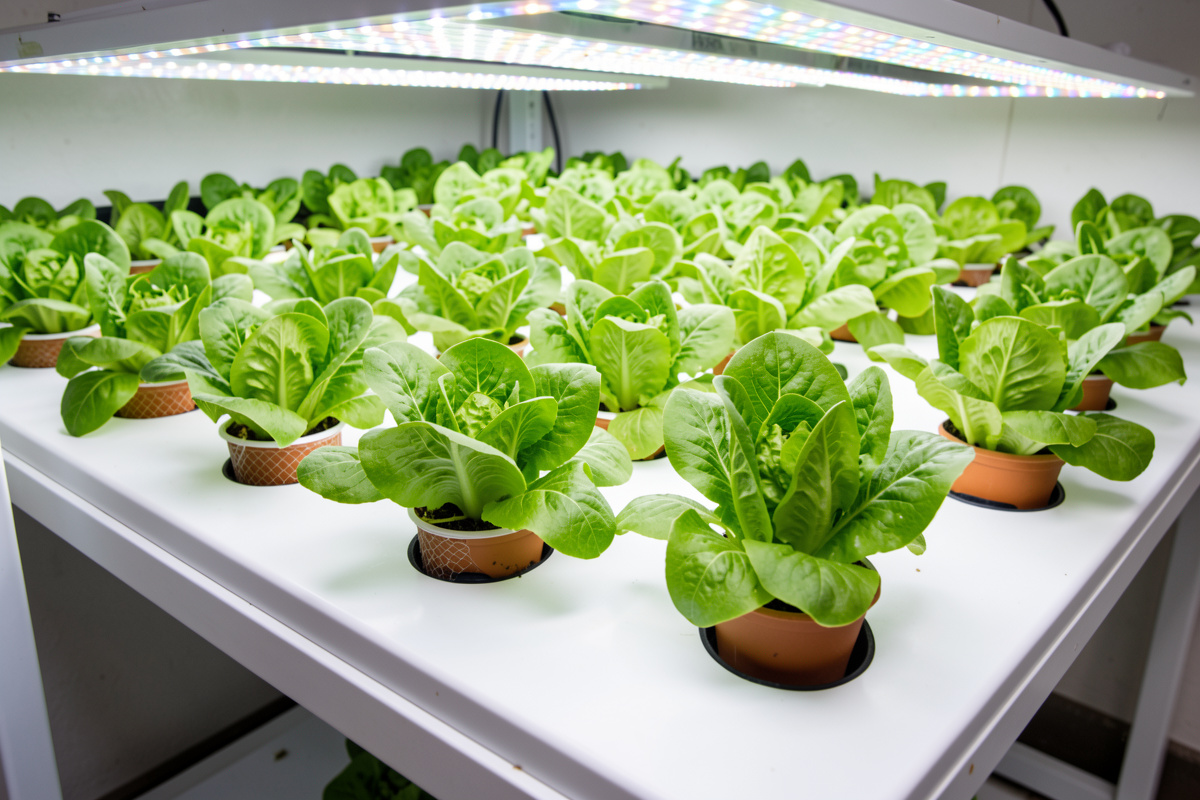
On my bench DWC is the workhorse for lettuce — a tote or bucket, an air stone running 24/7, net pots in a 3D-printed lid, and the roots sit in well-oxygenated solution that grows thick heads fast. NFT shines when you want a dozen heads in a tidy footprint: a thin film of nutrient runs down a channel past the roots, staying oxygenated by design, which is why it’s a commercial favorite for leafy greens. Kratky is the one I use to teach the fundamentals because it strips everything back — a jar, net pot and static solution, no electricity — and lettuce is the crop it does best, since a fast, light-feeding plant finishes before the static reservoir runs out. For a first build, a DWC tote with two or three net pots is hard to beat.
Seed Starting and Transplanting
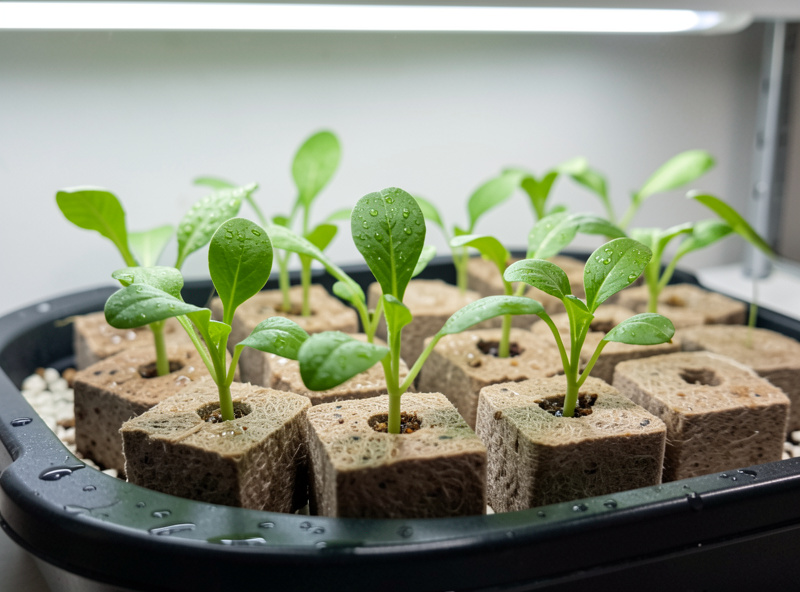
I start lettuce in rockwool cubes or grow plugs, germinate in 2–5 days at room temperature, and transplant into the system once seedlings show 2–3 true leaves and roots poke through the cube — usually around day 10–14.
The trick at the seedling stage is to keep things humid and gently lit, not blasted. I run new seedlings under modest light and keep the cubes moist with a quarter-strength solution (EC ~0.4–0.6) until the roots reach into the system, then ramp to full lettuce strength. Don’t bury the crown — the cube sits so the seedling’s base is at media level, never drowned. When I move them across, I match the seedling’s water temperature to the reservoir so I’m not shocking the roots; the handoff is covered in the transplanting guide. From transplant, a loose-leaf head is usually ready to start cutting in another two to three weeks.
Light: How Much Lettuce Actually Needs
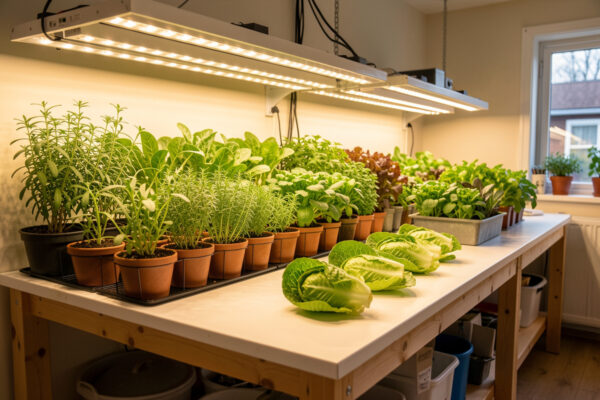
Lettuce is a low-light crop by hydroponic standards — about 12–14 mol/m²/day of DLI, which a modest full-spectrum LED bar delivers over a 14–18 hour photoperiod. More light past that point grows faster but also pushes bolting and tipburn, so brighter isn’t automatically better.
This is where the cold-climate angle actually helps lettuce growers: because the DLI target is low, even a six-hour Swedish winter day plus a cheap LED bar gets there easily. I aim for roughly 150–250 µmol/m²/s at canopy height and stretch the photoperiod to fill the DLI rather than running an intense fixture for fewer hours — lettuce responds well to long, gentle days. A leafy-green grow light is plenty; you do not need the high-output fixture a tomato demands. Keep the light at a sensible distance so the canopy stays cool, and let the photoperiod timer do the work.
Common Lettuce Problems and Fixes
The three failures I see most are bolting, tipburn and bitterness — and all three trace back to heat and light stress more often than to nutrition. Cool the root zone, ease the light, and most lettuce troubles disappear.
Bolting (the plant shooting up a flower stalk and turning bitter) is triggered by heat and stress; keep the res cool and harvest before maturity in warm spells. Tipburn — brown, crispy leaf margins on the newest growth — is a localized calcium-delivery problem, not usually a calcium shortage in the tank: it shows up when growth is fast and airflow over the canopy is poor. A small clip fan moving air across the leaves and steady humidity fix it more reliably than dumping in more nutrient, though a touch of CalMag on soft water helps. Bitterness is the flavor signature of heat-stressed or over-mature lettuce — cut earlier and keep it cool. Holding humidity in a sensible band, covered in the humidity and VPD guide, quietly prevents most of it.
As an Amazon Associate I earn from qualifying purchases.
Harvesting for Continuous Supply
The way to never run out of lettuce is cut-and-come-again harvesting plus staggered planting: take outer leaves from loose-leaf heads and leave the center growing, and start a few new seedlings every week or two so something is always finishing.
For a full head, cut the whole plant at the base when it’s the size you want. For continuous supply — the way I actually run it — I pick the outer leaves of loose-leaf and butterhead types and let the crown keep pushing new growth, which extends a single plant for weeks. Pair that with a rolling seed start every 10–14 days and a small system feeds a household steadily instead of dumping six heads at once. Harvest in the cooler part of the photoperiod for the crispest leaves, and rinse only what you’re about to eat. For the rest of the leafy-and-herb lineup, the herbs guide and the honest crop ranking in what grows best in hydroponics are the natural next reads.
Frequently Asked Questions
How long does hydroponic lettuce take to grow?
From seed, loose-leaf lettuce is ready to start cutting in 28 to 45 days. Germination takes 2 to 5 days, transplant happens around day 10 to 14, and harvest follows two to three weeks after that depending on variety and light.
What EC and pH does hydroponic lettuce need?
Lettuce wants a weak solution at EC 0.8 to 1.2 mS/cm, roughly 560 to 840 ppm, with pH held between 5.5 and 6.0. It is a light feeder, so going much above EC 1.4 toughens the leaves and can burn the margins.
What is the best hydroponic system for lettuce?
DWC, NFT and Kratky all grow excellent lettuce. DWC is the simplest high-yield choice for a few heads, NFT scales best for many heads in a small footprint, and Kratky needs no pump or power at all, which suits a fast light-feeding crop like lettuce.
Why is my hydroponic lettuce bitter or bolting?
Both are heat and stress signals. A warm reservoir or hot canopy pushes lettuce to shoot a flower stalk and turn bitter. Keep the reservoir below 20 degrees Celsius, ease back the light intensity, and harvest before full maturity in warm spells.
What causes brown tips on hydroponic lettuce?
Brown, crispy leaf margins are tipburn, a localized calcium-delivery failure that appears during fast growth with poor airflow. A small fan moving air across the canopy and steady humidity fix it more reliably than adding nutrients, though CalMag helps on soft water.
How do I get a continuous lettuce harvest?
Combine cut-and-come-again picking with staggered planting. Take outer leaves from loose-leaf and butterhead heads and let the crown keep growing, and start a few new seedlings every 10 to 14 days so a fresh plant is always finishing as you harvest the last.