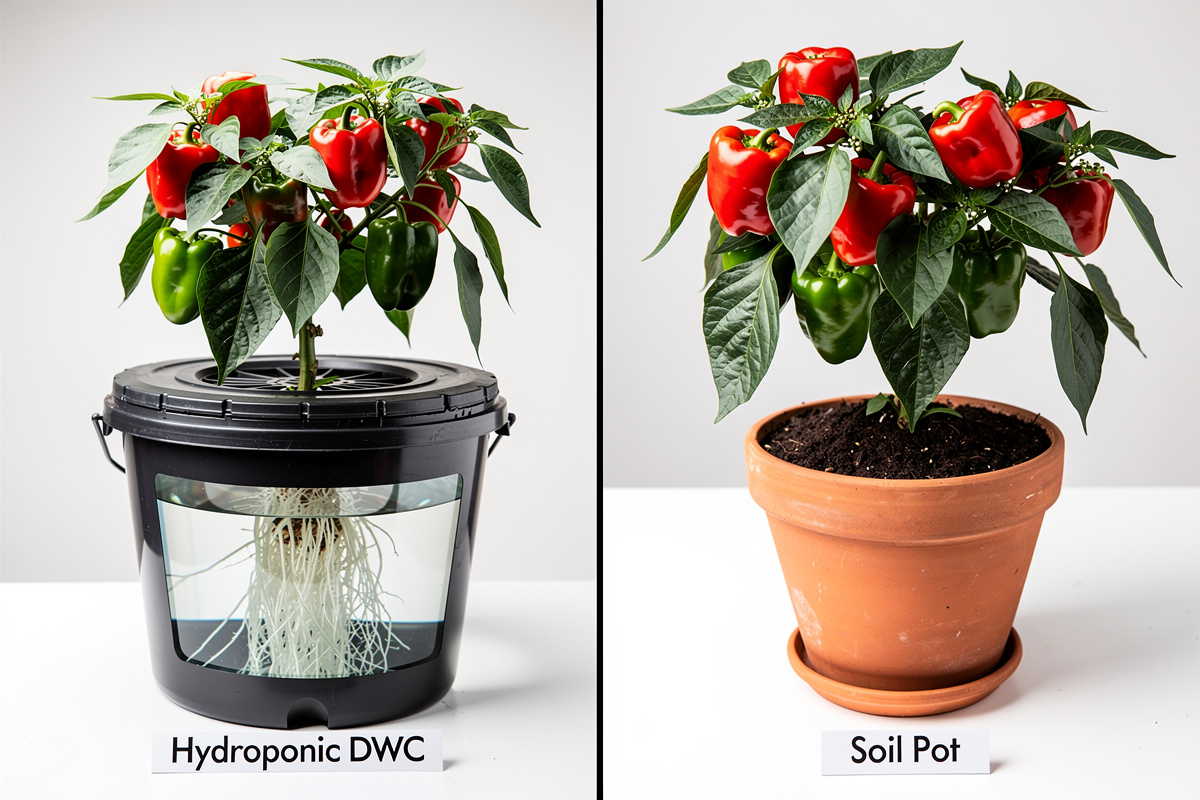
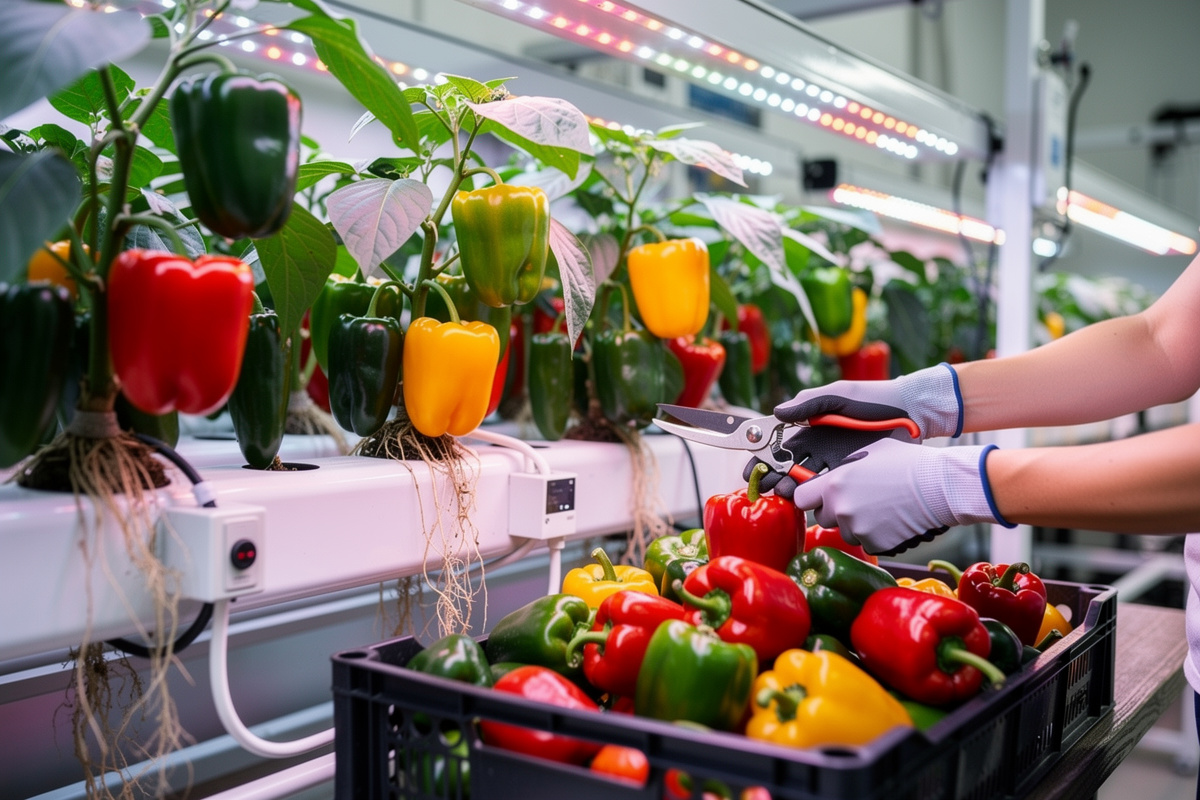
On my bench, hydroponic peppers reliably beat soil to first harvest — in the 70-90 day range under LED versus 90-110+ days in a container — and the yield per plant runs higher too, mostly down to more consistent nutrient delivery than a pot of soil can match. Soil-grown peppers cost less to start and tolerate beginner mistakes more gracefully, but hydroponic peppers produce more fruit per square foot with fewer pest problems. This guide compares both methods across growth speed, yield, cost, and difficulty so you can choose the right approach for your indoor setup.
As an Amazon Associate I earn from qualifying purchases.
Hydroponic Peppers vs Soil Grown: Key Differences at a Glance
| Factor | Hydroponic Peppers | Soil-Grown Peppers |
|---|---|---|
| Growth speed | Faster to first harvest — several weeks sooner in side-by-side runs | Standard growth rate |
| Yield per plant | Higher — more consistent nutrient delivery | Good — depends on soil quality |
| Setup cost | $50–$200+ depending on system | $10–$30 for containers and soil |
| Ongoing cost | Nutrient solution, pH supplies, electricity | Fertilizer, potting mix top-ups |
| Difficulty | Moderate — requires monitoring pH and EC | Easy — more forgiving of mistakes |
| Space needed | Compact — vertical systems possible | More floor space per plant |
| Pest risk | Lower — no soil-borne pests | Higher — fungus gnats, soil pathogens |
| Flavor | Excellent — nutrient-controlled | Excellent — traditional flavor profile |
| Water usage | 80–90% less than soil | Standard — frequent watering needed |
How Hydroponic Pepper Growing Works
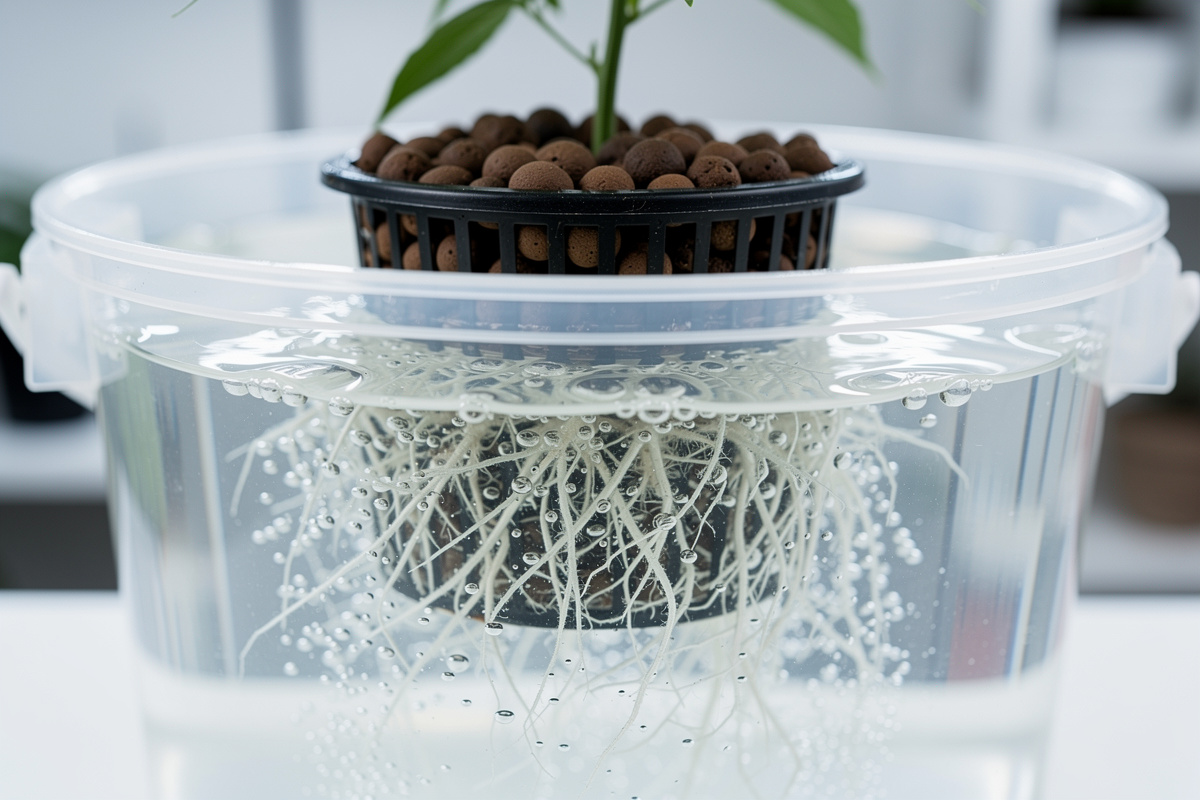
In hydroponics, pepper roots grow in an inert medium (clay pebbles, perlite, rockwool, or coco coir) and receive water and nutrients directly through a circulating solution. The plant never has to “search” for food — everything it needs is delivered to the root zone in precise concentrations.
This direct delivery system is why hydroponic peppers grow faster. In soil, roots expend energy pushing through dense medium and competing with microorganisms for nutrients. In hydroponics, that energy goes into stem, leaf, and fruit production instead.
Best Hydroponic Systems for Peppers
Not every hydroponic method works equally well for peppers. Peppers are medium-sized plants with substantial root systems and heavy fruit loads, so the system needs to provide strong support and consistent nutrient flow.
| System Type | Pepper Suitability | Pros | Cons |
|---|---|---|---|
| Deep Water Culture (DWC) | Excellent | Fast growth, simple setup, great oxygenation | Needs air pump, temperature control important |
| Dutch Bucket / Drip | Excellent | Best for large pepper plants, scalable, easy to manage | More components, needs drain-to-waste or recirculation |
| Ebb and Flow | Good | Reliable, periodic flooding promotes strong roots | Heavier setup, flood table needed |
| Kratky (Passive) | Good for small varieties | No pumps, no electricity, zero noise | Limited to smaller pepper plants, slower growth |
| NFT (Nutrient Film) | Fair | Water efficient, good for leafy greens | Channels too shallow for large pepper root systems |
| Aeroponics | Excellent but complex | Fastest growth possible, maximum oxygenation | Expensive, mist nozzles clog, less forgiving |
For most home growers, DWC or Dutch bucket systems offer the best balance of performance and simplicity for peppers. DWC is ideal for 1 to 4 plants, while Dutch buckets scale better for larger setups. On my own bench, peppers are one of the few crops where I move off DWC once flowering starts — the fruit load wants more support than a net-pot lid gives you, so my ebb-and-flow hydroton bed does the heavy lifting for anything past a jalapeño. Dutch bucket / drip gets recommended everywhere for peppers because it scales cleanly for a row of plants, even though it isn’t a system I run myself.
Nutrient Requirements for Hydroponic Peppers
Peppers are heavy feeders, especially during flowering and fruiting. A two-part or three-part hydroponic nutrient system gives you control over the nitrogen-to-potassium ratio at each growth stage.
Vegetative stage (weeks 1–6): Higher nitrogen for leaf and stem growth. EC 1.0–1.5, pH 5.8–6.2. Use the “grow” formula of your nutrient line.
Flowering stage (weeks 6–10): Reduce nitrogen, increase phosphorus and potassium. EC 1.8–2.2, pH 5.8–6.0. Switch to the “bloom” formula. Add calcium-magnesium supplement to prevent blossom end rot. Blossom end rot is fundamentally a calcium-transport problem rather than a straight pH problem — University of Florida IFAS Extension research on pepper BER traces it to calcium moving with the plant’s water flow rather than a simple soil or reservoir deficiency, which is why I keep CalMag in the mix by default for peppers instead of waiting for leaf symptoms to show up.
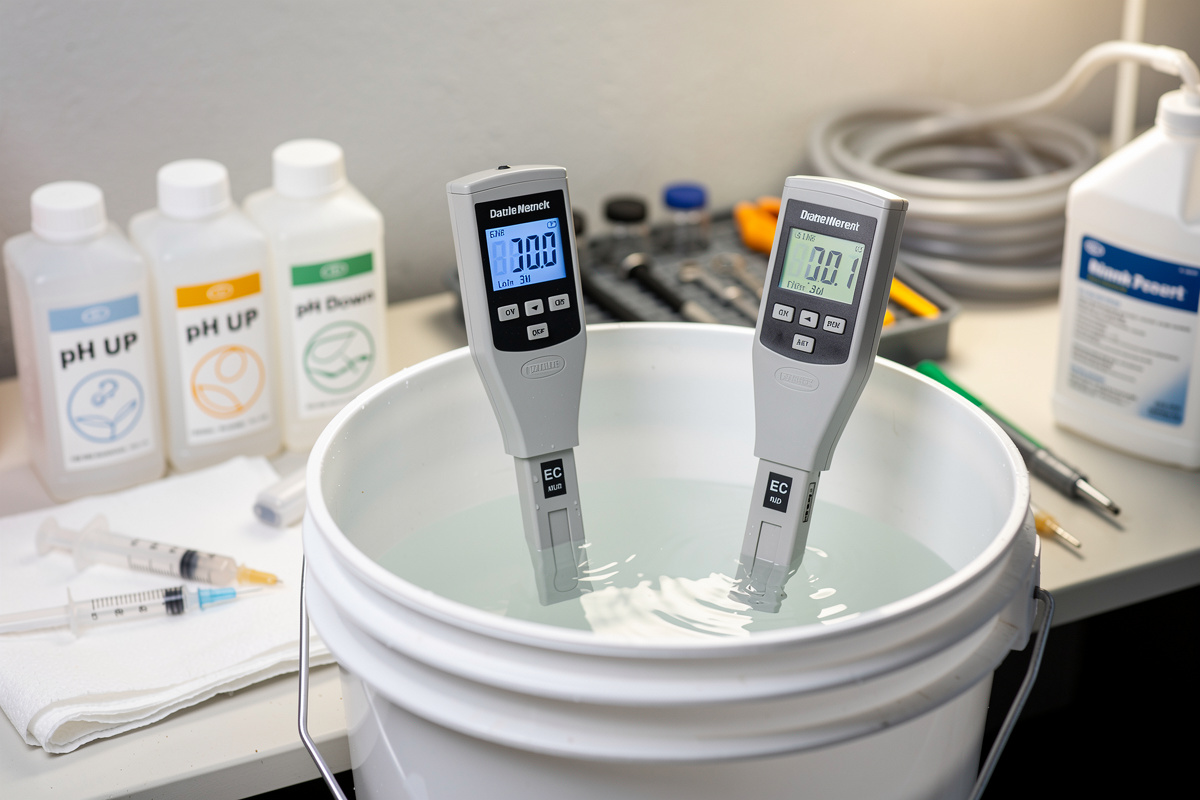
Fruiting stage (weeks 10+): Maintain bloom nutrients. EC 2.0–2.5, pH 5.8–6.0. Potassium drives fruit size and flavor development. Monitor closely — peppers drink more water during heavy fruiting, which concentrates the nutrient solution. I mix to the EC number on my pen rather than trusting a bottle’s dosing chart for this reason; a reservoir that’s drinking down fast during heavy fruiting will creep in EC within a day or two if you’re not checking it.
If you are new to managing nutrient solutions, the essential equipment guide covers the meters and tools you need to measure pH and EC accurately.
How Soil-Grown Pepper Growing Works
Soil growing is the traditional method: fill a container with quality potting mix, plant the pepper, water regularly, and fertilize every few weeks. The soil acts as both the growing medium and the nutrient reservoir. Beneficial microorganisms in the soil break down organic matter into forms the plant can absorb.
The simplicity of soil growing makes it the natural starting point for most indoor pepper growers. There is no pH meter, no EC meter, no nutrient mixing, and no pump. You water when the soil feels dry, feed with a general-purpose fertilizer, and the soil buffers minor mistakes.
If you prefer the container approach, CityRooted has a complete guide to growing peppers indoors in containers that covers variety selection, container sizing, soil mix, and the full seed-to-harvest process using traditional methods.
Best Soil Setup for Indoor Peppers
Indoor peppers in containers need a well-draining potting mix — never garden soil, which compacts and suffocates roots in containers. A standard recipe is 60% quality potting mix, 20% perlite for drainage, and 20% compost for nutrients and moisture retention.
Container size matters significantly. Peppers need at least 10 to 15 liters (3 to 5 gallons) per plant for full-sized varieties. Smaller containers restrict root growth, which directly limits plant size and yield. A 20-liter (5-gallon) fabric grow bag or plastic pot with drainage holes is the sweet spot for most varieties.
Fertilizing Soil-Grown Peppers
Unlike hydroponics where nutrients are delivered continuously, soil-grown peppers need periodic feeding. Start with a slow-release granular fertilizer mixed into the potting soil at planting. Supplement with liquid fertilizer every 2 weeks once flowering begins.
Use a balanced formula (10-10-10) during vegetative growth and switch to a high-potassium formula (5-10-10 or tomato fertilizer) once flowers appear. Potassium drives fruit production in both soil and hydroponic systems — the difference is delivery method, not the nutrient itself.
Head-to-Head Comparison: Growth Speed and Yield
Germination to Transplant (Weeks 1–8)
Both methods start the same way: seeds germinate in moist seed starting mix or rockwool cubes under warmth (27°C–30°C). There is no speed difference during germination — the seed does not care whether it will eventually grow in soil or hydroponics.
The divergence begins after transplanting into the final system. Hydroponic seedlings typically show faster root establishment and earlier vegetative growth because nutrients are immediately available in solution. Soil-grown seedlings need 1 to 2 weeks for roots to colonize the new potting mix before growth accelerates.
Vegetative Growth (Weeks 8–14)
This is where hydroponics pulls ahead measurably. With optimized nutrient delivery and constant access to water, hydroponic pepper plants grow noticeably faster during the vegetative phase — in my own side-by-side buckets it’s landed in the 20-30% range by the time flowers set, roughly in line with the general hydroponic growth-rate advantage extension-adjacent research documents for soilless crops. Plants are typically bushier with more branching points, which translates to more flower sites later.
Soil-grown plants grow at a respectable pace but are more dependent on watering consistency and fertilizer timing. A missed feeding or a dry spell slows growth noticeably, while hydroponic systems deliver nutrients continuously.
Flowering and Fruiting (Weeks 14–20+)
Hydroponic peppers typically flower 1 to 2 weeks earlier than soil-grown equivalents and produce more flowers per plant. Extension-adjacent grow research puts the general soilless yield edge in roughly the 20-50% range, and what I’ve tracked in my own pepper runs falls within that band, though real-world results depend heavily on light quality, temperature, and grower experience. A University of Florida IFAS trial growing bell peppers in soilless culture under shade structures also came in above typical open-field yields for the region, which lines up with the direction of the advantage even though the numbers won’t transfer plant-for-plant to a home reservoir.
Soil-grown peppers compensate with flavor complexity. Many growers report that soil-grown peppers have deeper, more nuanced flavor — likely due to the diverse microbial activity in soil that produces trace compounds absent in sterile hydroponic solutions. The difference is subtle but noticeable in taste tests.
Cost Comparison: First Year and Ongoing
| Expense | Hydroponic Setup | Soil Container Setup |
|---|---|---|
| Growing system | $60–$150 (DWC bucket or Dutch bucket kit) | $10–$25 (containers) |
| Growing medium | $15–$30 (clay pebbles or perlite) | $15–$25 (potting mix) |
| Nutrients | $25–$40 (hydroponic nutrient concentrate) | $10–$15 (fertilizer) |
| pH/EC meters | $25–$50 | $0 (not needed) |
| Grow light | $40–$100 | $40–$100 |
| Air pump (DWC) | $15–$25 | $0 |
| Year 1 Total | $180–$395 | $75–$165 |
| Annual ongoing | $40–$70 (nutrients, pH supplies) | $25–$40 (soil, fertilizer) |
Hydroponics costs roughly twice as much in the first year but the gap narrows significantly after that. If you are growing 4+ plants and value higher yields, the per-pepper cost of hydroponics drops below soil growing within 2 seasons. For a budget DWC build under $50, the breakeven point comes even sooner.
Pepper Varieties That Perform Best in Each System
Not all peppers respond equally to hydroponics. Compact varieties with heavy fruit loads tend to benefit most from the consistent nutrient delivery of hydroponic systems, while sprawling varieties with massive root systems do well in large soil containers.
Best for hydroponics: Jalapeños, habaneros, Thai chilies, cayenne, and compact bell pepper varieties. These stay relatively small (60–90 cm), branch well, and produce prolifically in DWC or Dutch bucket systems.
Best for soil containers: Large bell peppers, poblanos, Anaheim, and banana peppers. These need more root space and grow taller (90–120 cm), making large soil containers the simpler choice.
Excellent in both: Shishito, serrano, Hungarian wax, and most ornamental hot peppers. These adaptable varieties perform well regardless of growing method.
Light Requirements: Same for Both Methods
Whether you grow in hydroponics or soil, indoor peppers need 14 to 16 hours of strong light per day from a full-spectrum LED grow light. Light is the one variable that does not change between methods — peppers are high-light crops regardless of what their roots sit in.
A minimum of 300 PPFD (photosynthetic photon flux density) at the canopy is needed for pepper production. For fruiting, 400–600 PPFD produces significantly better results. Budget LED panels (100–200 watts) cover 2 to 4 pepper plants adequately. Check the equipment guide for specific light recommendations.
Common Problems: Hydroponic vs Soil
| Problem | Hydroponic Cause | Soil Cause |
|---|---|---|
| Yellowing leaves | pH drift locking out nutrients (check pH) | Nitrogen deficiency or overwatering |
| Blossom end rot | Calcium deficiency in nutrient solution | Inconsistent watering disrupting calcium uptake |
| Flower drop | Temperature too high, EC too high | Temperature stress, underwatering |
| Slow growth | Low EC, pH out of range, root rot | Compacted soil, insufficient fertilizer |
| Root problems | Root rot from warm reservoir (keep at or below 20°C/68°F) | Overwatering, poor drainage, fungus gnats |
| Pest issues | Aphids, whiteflies (no soil pests) | Fungus gnats, soil mites, plus aphids and whiteflies |
Hydroponic problems tend to be nutrient-related and fixable by adjusting pH or EC. Soil problems tend to be moisture-related and fixable by adjusting watering frequency. Both systems share above-ground pest issues (aphids, whiteflies) that require the same treatment regardless of growing method. I learned the warm-reservoir lesson the hard way one August when a res crept past 22°C (72°F) and a pepper plant wilted despite the pH and EC both reading fine on my pen — a warm reservoir starves roots of dissolved oxygen no matter how dialed-in your nutrient numbers are. For troubleshooting hydroponic-specific issues, see the common mistakes guide.
Which Method Should You Choose?
Choose hydroponics if: You want maximum yield per plant, enjoy monitoring and optimizing systems, plan to grow year-round, have limited floor space (vertical systems), or are already running a hydroponic setup for other crops like lettuce and herbs.
Choose soil if: You are a beginner who wants the simplest path to growing peppers, prefer lower startup costs, do not want to manage pH and EC, or value the hands-off simplicity of traditional container gardening. CityRooted’s indoor pepper growing guide walks through the entire container process from seed to harvest.
Choose both: Many experienced growers run both methods simultaneously. Start a few pepper plants in soil containers for simplicity and reliability, while experimenting with one or two plants in a DWC bucket to learn hydroponic techniques. Compare results side by side and scale whichever method works best for your situation.
Growing Hydroponic Peppers: Quick Start Checklist
If you decide to go the hydroponic route, a hydroponic starter kit bundles most of items 1 through 4 below, or here is the minimum viable setup for your first hydroponic pepper plant if you’d rather piece it together yourself:
1. System: Single 20-liter DWC bucket with net pot lid, air pump, and air stone. Total cost: $25–$40.
2. Medium: Clay pebbles (hydroton) or a mix of perlite and vermiculite in the net pot.
3. Nutrients: Two-part or three-part hydroponic nutrient (General Hydroponics Flora series or similar). Start at half strength.
4. Monitoring: pH meter and EC/TDS meter. Check daily during the first month, then every 2 to 3 days once stable.
5. Light: Full-spectrum LED, 14–16 hours daily, positioned 30–45 cm above the plant canopy.
6. Environment: Temperature 21–27°C (70–80°F), reservoir temperature at or below 20°C (68°F) — treat 22°C (72°F) and up as the danger zone for root rot — humidity 50–70%.
The indoor garden setup guide covers the full installation process if you are building your first hydroponic system from scratch.
Do hydroponic peppers grow faster than soil-grown peppers?
Yes. In my own side-by-side runs, hydroponic peppers beat soil to first harvest by several weeks – bell peppers landing in the 70-90 day range under LED versus 90-110+ days in soil, hot peppers like jalapenos coming in a bit faster than that. The speed edge comes from direct nutrient delivery to the roots instead of the plant working to find food in soil.
What is the best hydroponic system for growing peppers?
Dutch bucket (Bato bucket) systems are ideal for peppers because they support large root systems and scale from one plant to dozens. DWC works well for 1-4 plants with 5-gallon buckets per plant. Avoid NFT systems — pepper root systems are too large and will clog the shallow channels.
Do hydroponic peppers taste different from soil-grown?
Hydroponic peppers tend to run more consistent from fruit to fruit since nutrients are precisely controlled – less variation in heat and sweetness batch to batch. Soil-grown peppers may develop more complex flavor from soil microbiology and trace minerals, though the difference is subtle and comes down to grower preference more than a clear winner.
What pH do hydroponic peppers need?
Hydroponic peppers grow best at a pH of 5.8-6.3. This range allows optimal uptake of calcium, which is critical for preventing blossom end rot — the most common pepper problem in hydroponics. Check pH daily and supplement calcium if blossom end rot appears even at correct pH levels.
Can you grow hot peppers hydroponically?
Yes, hot peppers like jalapenos, habaneros, and ghost peppers grow excellently in hydroponics. Research on hydroponic peppers has found that deliberately restricting nitrogen and dialing up potassium late in fruiting can push capsaicin levels higher, so a hydroponic grower has more precise control over heat than a soil grower does – it takes intentional nutrient manipulation, not just growing hydroponically by default. They need the same DWC or Dutch bucket systems as bell peppers with 400-600 PPFD lighting.
How do you pollinate hydroponic peppers indoors?
Indoor peppers need hand pollination since there are no bees or wind. Gently shake the plant daily when flowers open, or use a small paintbrush to transfer pollen between flowers. An oscillating fan set on low also helps by simulating natural breeze movement. Peppers are self-fertile, so one plant pollinates itself.
Related Articles
- Complete Guide to Hydroponic Plant Growing — Master plant selection, nutrient schedules, and harvest timing for all hydroponic crops
- Hydroponic Tomatoes vs Soil
- Hydroponic Lettuce vs Soil
- Hydroponic Strawberries vs Soil
- Hydroponic Herbs vs Soil
- Best Plants for Hydroponic Growing