The short answer: for one or two DWC buckets, a decent dual-diaphragm hobby pump is plenty; for a bucket row or anything you plan to keep running for years, a commercial linear-piston pump is the buy. Match it to your diffusers and manifold, not to the box rating.
I run DWC as my daily workhorse alongside NFT, Kratky and ebb-and-flow indoors here in Sweden, and the air pump is the one component I’ve stopped cheaping out on. Dissolved oxygen at the root zone is what keeps a DWC res from sliding into root rot, and the pump is the whole reason there’s any oxygen in the water at all. So when people ask me what the best air pump for DWC is, my answer is always “which class, for how many buckets, and for how long?” That’s what this guide sorts out.
This is a comparison by pump class, not a set of model reviews. I’m not going to tell you a specific SKU beat another SKU on a bench on a Tuesday. I’ll tell you how the three families behave, why the rated output on the box lies to you once there’s water in the way, and which family I reach for depending on the job.
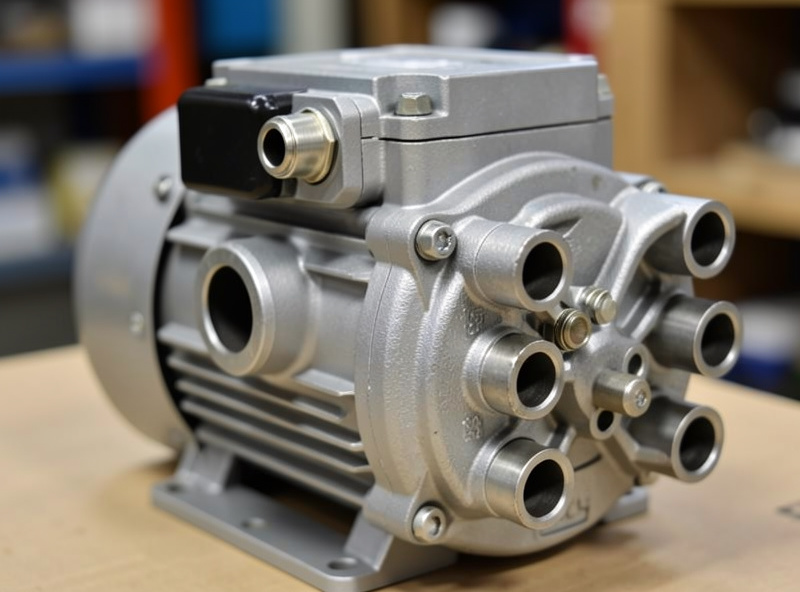
The three pump families (and why blowers don’t belong here)
Across the methods I run side by side, the air pumps I’ve owned fall into three honest families, plus one that’s overkill for a home res.
Aquarium diaphragm pumps are the little sealed boxes that ship in most DWC starter kits. A rubber diaphragm flexes back and forth driven by an electromagnet, pushing air through one or two ports. They’re cheap, quiet enough, and fine for a single bucket. The diaphragm is the wear item: it fades over months and eventually splits, and most of these are throwaway when it does.
Dual-diaphragm hobby pumps are the step up — two diaphragms, usually four ports, more pressure and volume, and often a set of replaceable diaphragm/valve rebuild kits available. This is the sweet spot for two to four buckets and the family most home DWC growers should live in.
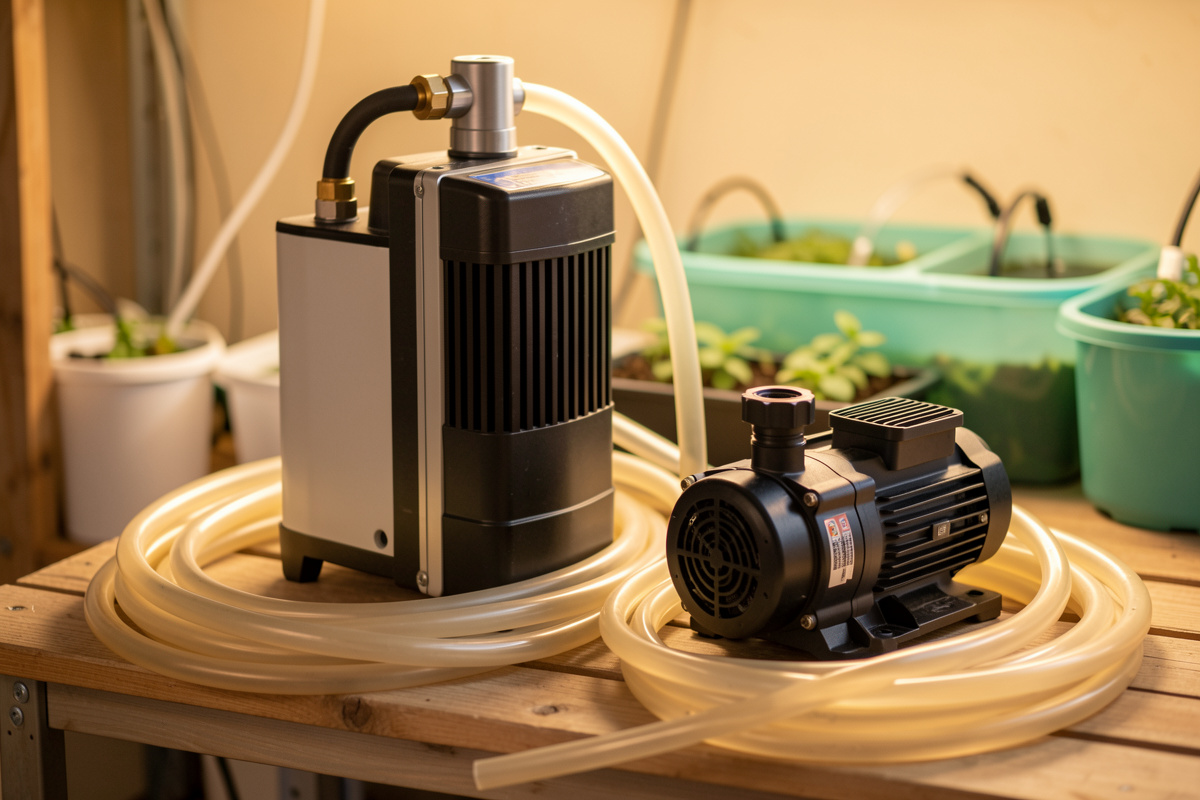
Commercial linear-piston pumps (sometimes called linear or piston-style, the same class used on septic aerators and koi ponds) use a piston rather than a flexing rubber membrane. They move real volume against real back-pressure, run for years, and are fully rebuildable with cheap service kits. They cost more and hum a bit louder, but on a per-year basis they’re the cheapest air you can buy.
Regenerative blowers are the fourth family and I’m mentioning them only to wave you off: they’re built for greenhouse-scale aeration, they’re loud, they run hot, and they’re commercial overkill for anything you’d have in a spare room. If you’re at that scale you already know it.
If you want the deeper single-source breakdown of these families, that’s the job of the hydroponics air pump hub; this page is the DWC-specific cut of it.
Why the box rating overstates what you actually get
Here’s the number that trips up almost everyone buying their first serious pump. The LPM (or LPH) figure printed on the box is measured at zero back-pressure — the pump blowing into open air. The moment you sink an air stone under 8 to 10 inches of nutrient solution, the pump has to push against the head of water plus the diffuser’s own resistance, and delivered output drops. In my res logs the honest loss is roughly 20 to 30 percent versus the free-air rating, and it’s worse with a fine disc diffuser than with a coarse stone.
So a pump rated at, say, 5 LPM is really giving you closer to 3.5 to 4 LPM at the roots. That matters because DWC oxygenation is a volume game. My sizing rule, the one I keep coming back to across every res I run, is 1 LPM of air per gallon of solution minimum, and 1.5 to 2 LPM per gallon for fruiting crops or when the room runs warm. Remember 1 LPM equals 60 LPH when you’re reading spec sheets that mix the units.
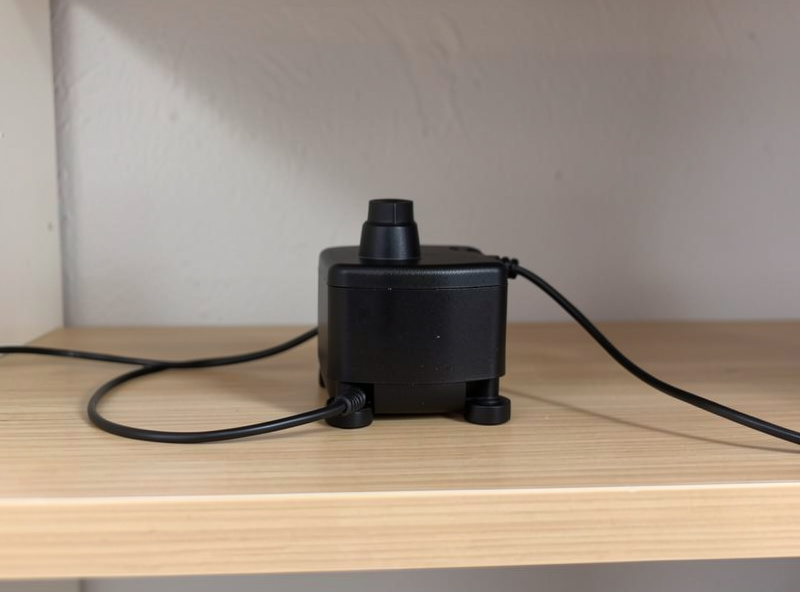
Buy for the delivered number, not the box number. That means sizing up a class from what the label suggests you need — the whole reasoning is laid out in my air pump sizing guide, and it’s the single most common mistake I see in DWC builds. It’s also why the diaphragm/back-pressure interaction pushes serious multi-bucket growers toward the piston class, which holds output far better under head.
Longevity: where linear-piston earns its price
This is the argument that actually settles the buying decision for me. A diaphragm pump’s rubber membrane is a consumable. It flexes millions of times, stiffens, and its output fades long before it audibly fails — you often don’t notice until root color or a DO reading tells you the res is under-oxygenated. On the cheap sealed aquarium units, fade means replacement.
A commercial linear-piston pump is a different animal. The piston and cylinder wear slowly, output holds steady for years, and when it does drop you rebuild it with an inexpensive service kit rather than binning the whole unit. Over a three-to-five-year horizon the piston pump running a bucket row is genuinely cheaper than the string of diaphragm pumps it replaces, and it never leaves my roots quietly starving between check-ups.
The kit pump that came with your DWC bucket is, in my view, a placeholder. It’ll keep a single bucket alive while you get going, but treat it as a temporary part you’ll replace once you know the plant’s in for the season. I’ve never had a starter pump earn a permanent spot on my bench.
None of this longevity matters if the pump can’t keep the water oxygenated in the first place, so it’s worth understanding the target: I keep dissolved oxygen around 9 mg/L at 68F, sliding toward 8 mg/L as the res warms to 77F. Cold water simply holds more oxygen, which is why pump sizing and res temperature are two halves of the same problem.
Noise, heat and living with the pump
DWC pumps run 24/7 — air stones never get switched off in a live res, because the moment aeration stops the DO crashes and Pythium gets its opening. That means whatever you buy, you’re going to hear it around the clock, so noise is a real spec, not a nicety.
Aquarium diaphragm pumps are the quietest as a class, a soft buzz you can damp with a bit of foam under the housing. Dual-diaphragm hobby pumps are louder but still tolerable in a grow room. Commercial linear-piston pumps have the most presence — a low mechanical hum plus some warmth off the housing — and if the res shares a wall with a bedroom you’ll want to think about isolation. If quiet is a hard constraint for you, I’ve written up the trade-offs separately in my quiet air pump guide, because sometimes the right answer is a slightly bigger pump run gently rather than a small one screaming.
A trick worth knowing: an oversized pump throttled down with a manifold’s bleed valves runs quieter and cooler than a small pump maxed out, and it holds output better under back-pressure. That’s one more reason the piston class ages so gracefully in a real setup.
Matching the pump to diffusers and manifold
A pump is only half the aeration system. What you bolt onto it decides how that air actually reaches the roots, and getting the pairing wrong wastes output you paid for.
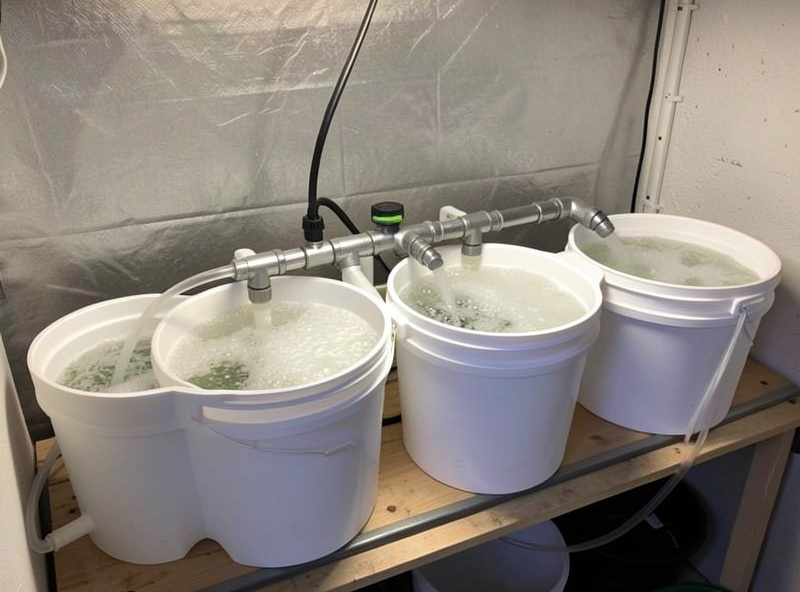
Fine disc diffusers make smaller bubbles with more surface area — better oxygen transfer per liter of air — but they impose more back-pressure, so they demand a pump with pressure to spare, which again points at the piston class. Coarse air stones are more forgiving and pair fine with diaphragm pumps. I run both across my systems and pick per res; the full comparison is in my air stone vs disc diffuser writeup.
Once you’re past one or two buckets, you stop running a pump per bucket and start running one bigger pump into a manifold with a bleed valve per line. This is exactly where the commercial pump shines: one linear-piston unit with the pressure to feed six or eight buckets evenly is simpler, quieter and cheaper than six little pumps, and the per-line valves let you balance flow so every bucket bubbles the same. This manifold approach is standard on any serious DWC build.
What I actually buy, by bucket count
Here’s how I decide, stripped to the practical rule. For a single bucket or a two-bucket starter, a solid dual-diaphragm hobby pump is the right amount of pump — enough to hit 1.5 to 2 LPM per gallon delivered, quiet, and cheap to rebuild. Don’t overthink it and don’t run the kit pump longer than you have to.
For a bucket row — four buckets and up, or fruiting crops that want more oxygen, or a room that runs warm — I move to a commercial linear-piston pump feeding a manifold. The upfront cost is higher, but it holds output under back-pressure, it doesn’t fade between res changes, it rebuilds instead of dying, and one unit replaces a shelf of little pumps. That’s the way I dial mine in, and it’s the setup I’d tell any serious DWC grower to build toward.
| Pump class | Typical delivered output | Best for | Noise | Lifespan | Relative cost |
|---|---|---|---|---|---|
| Aquarium diaphragm | ~1-3 LPM under water | 1 bucket | Low (soft buzz) | Months; usually throwaway | Cheapest |
| Dual-diaphragm hobby | ~3-6 LPM under water | 2-4 buckets | Moderate | 1-2 years; rebuild kits exist | Low-mid |
| Commercial linear-piston | ~10-40+ LPM under water | Bucket row / manifold | Higher (low hum + heat) | Years; fully rebuildable | Highest upfront, cheapest per year |
| Regenerative blower | Very high | Greenhouse scale (overkill here) | Loud | Years | High |
When you’re ready to move up to the piston class for a bucket row, this is the category to browse: commercial linear-piston air pumps on Amazon.
Disclosure: as an Amazon Associate I earn from qualifying purchases; the link above is an affiliate search link at no extra cost to you.
What size air pump do I need for a DWC bucket?
Aim for at least 1 LPM of delivered air per gallon of solution, and 1.5 to 2 LPM per gallon for fruiting crops or a warm room. Because box ratings are measured at zero back-pressure, size up to cover the 20-30 percent you lose under water.
Is a commercial linear-piston pump worth it for home DWC?
For one or two buckets, no — a dual-diaphragm hobby pump is plenty. For a bucket row, fruiting crops, or a multi-year setup, yes: it holds output under back-pressure, rebuilds instead of dying, and costs the least per year of running.
Why is my air pump weaker than its rated output?
Box ratings are taken at zero back-pressure in open air. Once an air stone sits under 8-10 inches of water plus diffuser resistance, delivered output drops roughly 20-30 percent, and finer diffusers cost more than coarse stones.
Can I run one air pump for multiple DWC buckets?
Yes, and past two buckets you should. Feed one larger pump into a manifold with a bleed valve per line so every bucket gets balanced flow. A single linear-piston unit for a bucket row is simpler and cheaper than one small pump per bucket.
Should I keep the air pump running 24/7?
Yes. Air stones run around the clock in a live DWC res. If aeration stops, dissolved oxygen crashes within hours and you open the door to Pythium and root rot. Never put a DWC pump on a timer.
Is the air pump from my DWC kit good enough?
Treat it as a placeholder. A kit pump will keep a single bucket alive while you get started, but its output fades and it is rarely rebuildable. Replace it with a proper dual-diaphragm or piston pump once the plant is in for the season.