Size your DWC air pump at a minimum of 1 LPM (60 LPH) of air per gallon of nutrient solution, and step up to 1.5-2 LPM/gal for fruiting crops or a warm reservoir. That is the floor I mix against on my bench, and it is the number that keeps my roots white instead of slimy.
I run DWC as my daily workhorse alongside NFT, Kratky and ebb-and-flow indoors here in Sweden, and across the methods I run side by side, DWC is the one that punishes weak aeration fastest. Roots sitting in still, oxygen-starved water invite Pythium and lockout within days. The 1 LPM per gallon rule is the aeration sizing rule I keep coming back to in my res logs because it is simple, it converts cleanly, and it accounts for the fact that a pump’s box rating almost never matches what actually reaches the air stone at the bottom of a full bucket.
The 1 LPM Per Gallon Rule, and Why LPM and LPH Trip People Up
Start here: 1 litre per minute of air per gallon of solution is the minimum I size for, and 1.5-2 LPM/gal is where I land for fruiting crops or any res running warm. The confusion is almost always units. Pump boxes and spec sheets flip between LPM and LPH, and the two are a factor of 60 apart: 1 LPM = 60 LPH. So a pump rated “240 LPH” is delivering 4 LPM, which on paper covers a 4-gallon res at the 1 LPM/gal floor. The way I dial mine in, I convert everything to LPM first because per-minute is how I think about a rolling boil, then multiply by my reservoir volume in gallons. A 5-gallon DWC bucket wants at least 5 LPM (300 LPH); the same bucket growing tomatoes in a warm room wants 7.5-10 LPM (450-600 LPH). Do the conversion before you buy, not after.
Why Manufacturer Ratings Overstate Real Delivery
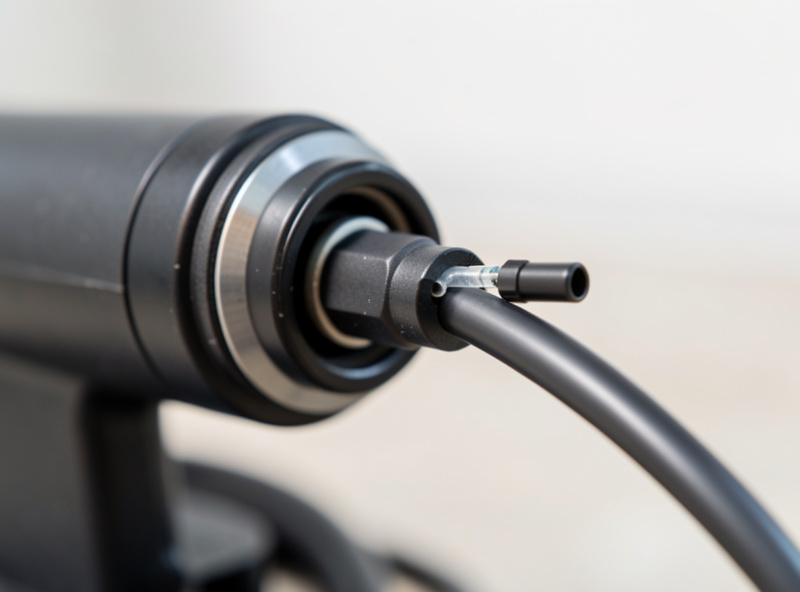
Here is the trap that ruins otherwise-correct math: pumps are rated at zero back-pressure, blowing into open air on a bench, not down a tube and out a stone under 8-10 inches of water. In my logs, that head of water and the restriction of the diffuser costs roughly 20-30% of the rated output. So a pump that says 5 LPM on the box is realistically pushing 3.5-4 LPM once it is fighting a full DWC bucket and a fine-pore air stone. That is not a defect, it is physics — a diaphragm pump loses stroke volume as it works against pressure. This is exactly why I size with headroom and never buy a pump whose rating only just meets my target. If I need 5 LPM at the stone, I buy something rated for 7 LPM in open air. My full breakdown of how I choose one lives in my air pump buying guide, and the DWC-specific picks are in my best air pump for DWC notes.
Per-Crop and Per-Stage Targets
Aeration demand is not a single number across a grow. A seedling with a few threadlike roots barely registers, while a mature root mass filling a bucket is a dense oxygen sink that also traps bubbles and slows gas exchange. Leafy greens — lettuce, herbs, chard — sit comfortably at the 1 LPM/gal floor because their metabolic oxygen demand is modest and they usually run cooler. Fruiting crops like tomatoes, peppers and cucumbers push 1.5-2 LPM/gal because heavier root respiration and warmer canopies drop dissolved oxygen faster. Temperature stacks on top of crop: dissolved-oxygen saturation is only about 9 mg/L at 68F and slides toward 8 mg/L at 77F, so a warm res holds less oxygen even before the roots start consuming it. That is why I keep res temp at or below 68F (20C) and treat anything above 72F (22C) as Pythium danger. When the water runs warm I bump aeration toward the top of the range to claw back what temperature is stealing — the physics is covered in my dissolved oxygen guide and the cooling side in my water temperature notes.
| Reservoir volume | Crop / stage | Target LPM | Target LPH | Notes |
|---|---|---|---|---|
| 2 gal | Seedlings / leafy greens | 2 LPM | 120 LPH | Floor rate; one small stone |
| 5 gal | Leafy greens, mature | 5 LPM | 300 LPH | 1 LPM/gal minimum |
| 5 gal | Fruiting or warm res | 7.5-10 LPM | 450-600 LPH | 1.5-2 LPM/gal |
| 13 gal (tote) | Leafy greens, mature | 13 LPM | 780 LPH | Split across 2 stones |
| 13 gal (tote) | Fruiting or warm res | 20-26 LPM | 1200-1560 LPH | Add headroom for back-pressure |
Eyeballing the Boil: Rolling Boil vs Weak Trickle
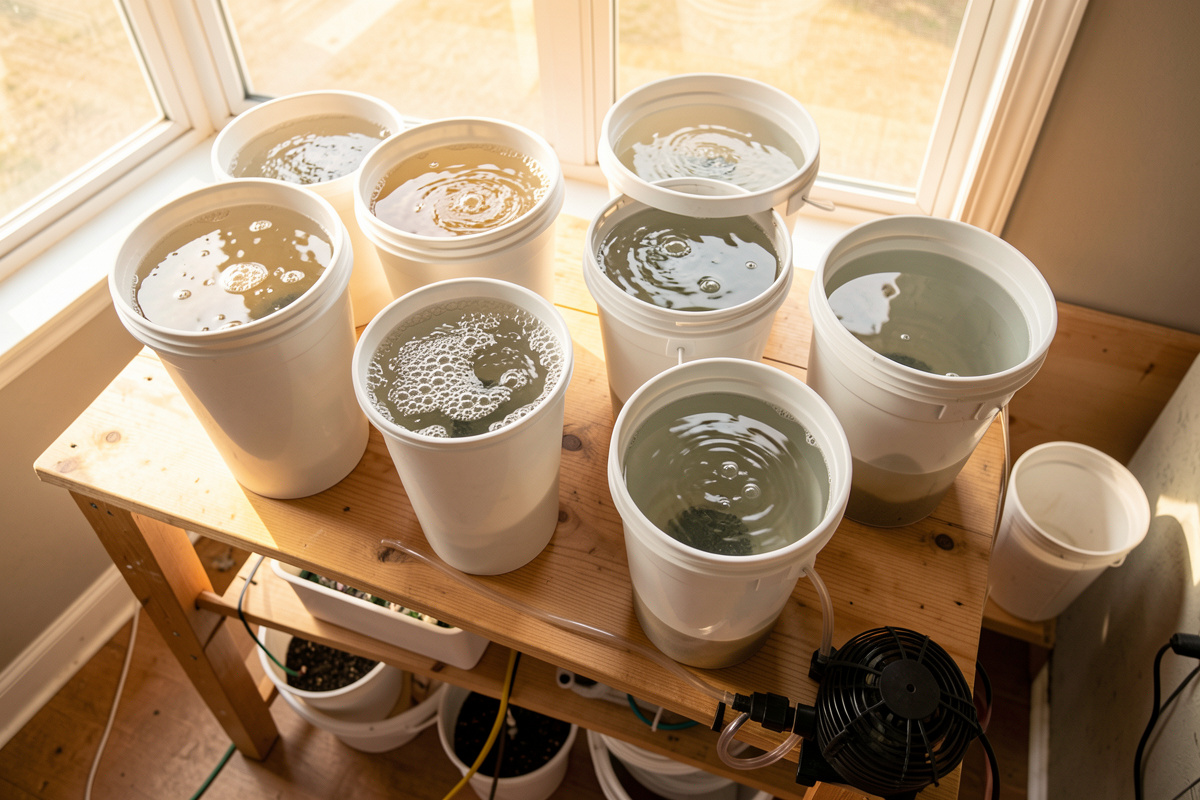
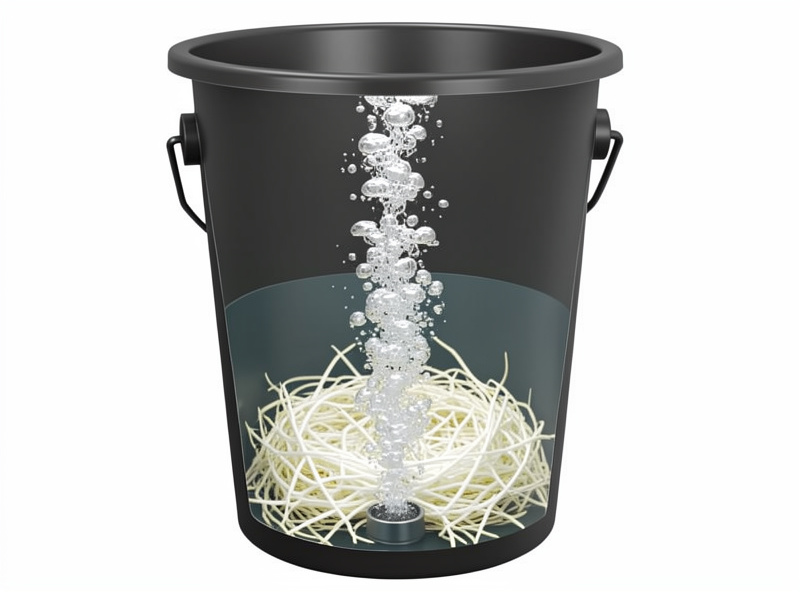
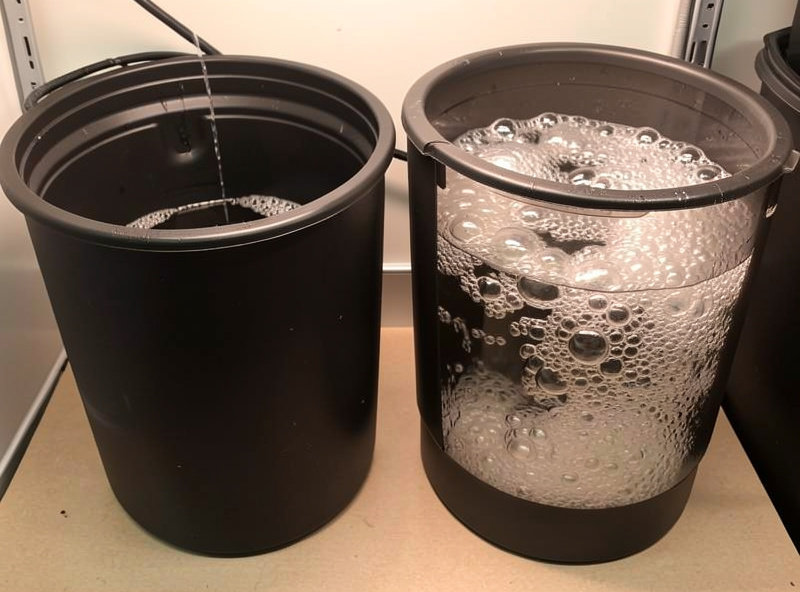
Numbers get you to the right pump, but your eyes confirm it every day. What I want to see on my bench is a healthy rolling boil — the whole surface of the reservoir alive and churning, bubbles breaking evenly across the water, not just a lazy stream rising from one spot. A weak trickle, where a thin thread of bubbles wobbles up through otherwise-still water, tells me the pump is under-sized, the tubing is kinked, or the air stone is clogging. That surface agitation matters beyond just the bubbles: it constantly renews the air-water interface, which is where most oxygen actually dissolves. A vigorous boil at 68F is doing real work toward that ~9 mg/L saturation; a trickle leaves the water stagnant and stratified. If a stone that used to boil starts trickling, it is usually mineral buildup — I cover the fix in my cleaning a clogged air stone guide before I ever blame the pump.
Buying With Headroom, and Stone vs Diffuser Choice
Because back-pressure eats 20-30% of rated output and root mass only grows over a cycle, I always buy up. If my math says 5 LPM at the stone, I buy a pump rated 7-8 LPM in open air so it is loafing, not maxed. An over-sized pump running easy is quieter, runs cooler, and lasts longer than a small one hammering at full duty. The other half of the equation is what you put on the end of the line: a coarse air stone and a fine disc diffuser move the same air very differently, and finer bubbles dissolve more oxygen per litre but also add restriction. I run both depending on the res, and I break the tradeoffs down in my air stone vs disc diffuser comparison. Whatever you pick, add a check valve so a power blip cannot siphon water back into the pump — my check valve and tubing guide covers that plumbing. If quiet matters in a living space, my quiet air pump notes help.
When I need serious output, I reach for a commercial-grade pump. Commercial air pumps for hydroponics give the headroom to feed multiple buckets without gasping.
As an Amazon Associate I earn from qualifying purchases.
Scaling One Pump Across Several Buckets
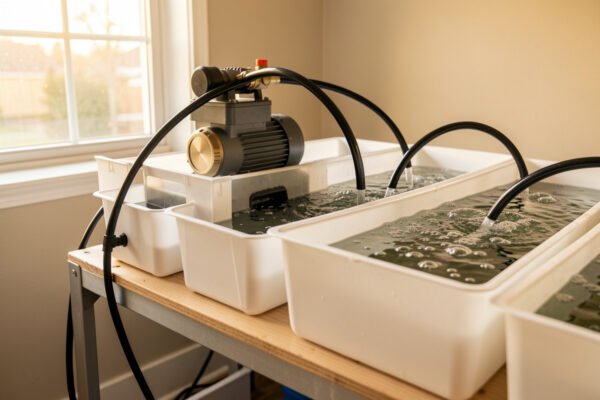
The rule does not change when you branch — the math just adds up. If I feed four 5-gallon DWC buckets of leafy greens off one pump, I need at least 20 LPM (1200 LPH) reaching the stones, which after back-pressure losses means a pump rated closer to 28-30 LPM in open air. Split evenly through a manifold so every bucket gets its share; an unbalanced manifold starves the far buckets while the near ones over-boil. I run a gang valve or dedicated manifold and tune each outlet until every reservoir shows the same rolling boil — my air pump manifold guide walks through balancing it. This is also where reservoir sizing and DWC method interact: a bigger shared res is more thermally stable but demands proportionally more air, which ties back to my reservoir size guide and the broader DWC method walkthrough. Get the air right and root rot mostly takes care of itself.
How many LPH of air per gallon does DWC need?
At minimum 60 LPH (1 LPM) of air per gallon of nutrient solution. Step up to 90-120 LPH (1.5-2 LPM) per gallon for fruiting crops or any reservoir running warm, since warm water holds less dissolved oxygen.
How do I convert LPM to LPH for an air pump?
Multiply LPM by 60. One litre per minute equals 60 litres per hour, so a 4 LPM pump is rated 240 LPH. I always convert box ratings to LPM first because per-minute matches how a rolling boil looks in the reservoir.
Why does my air pump deliver less than its rating?
Pumps are rated at zero back-pressure into open air. Pushing air down a tube and out a stone under 8-10 inches of water costs roughly 20-30% of rated output, because a diaphragm pump loses stroke volume as it works against pressure.
Should I buy a bigger air pump than my math says?
Yes. Because back-pressure eats 20-30% of output and root mass grows over the cycle, I buy a pump rated well above my target. An over-sized pump loafing is quieter, cooler, and longer-lived than a small one running maxed out.
What does a healthy DWC boil look like?
A rolling boil agitates the whole surface with bubbles breaking evenly, not a thin thread rising from one spot. That surface churn constantly renews the air-water interface where oxygen dissolves. A weak trickle means an under-sized pump, kinked tubing, or a clogged stone.
Can one air pump feed several DWC buckets?
Yes, if you add the volumes. Four 5-gallon buckets need at least 20 LPM at the stones, so buy a pump rated near 28-30 LPM to cover back-pressure. Split through a balanced manifold so every bucket gets the same boil.