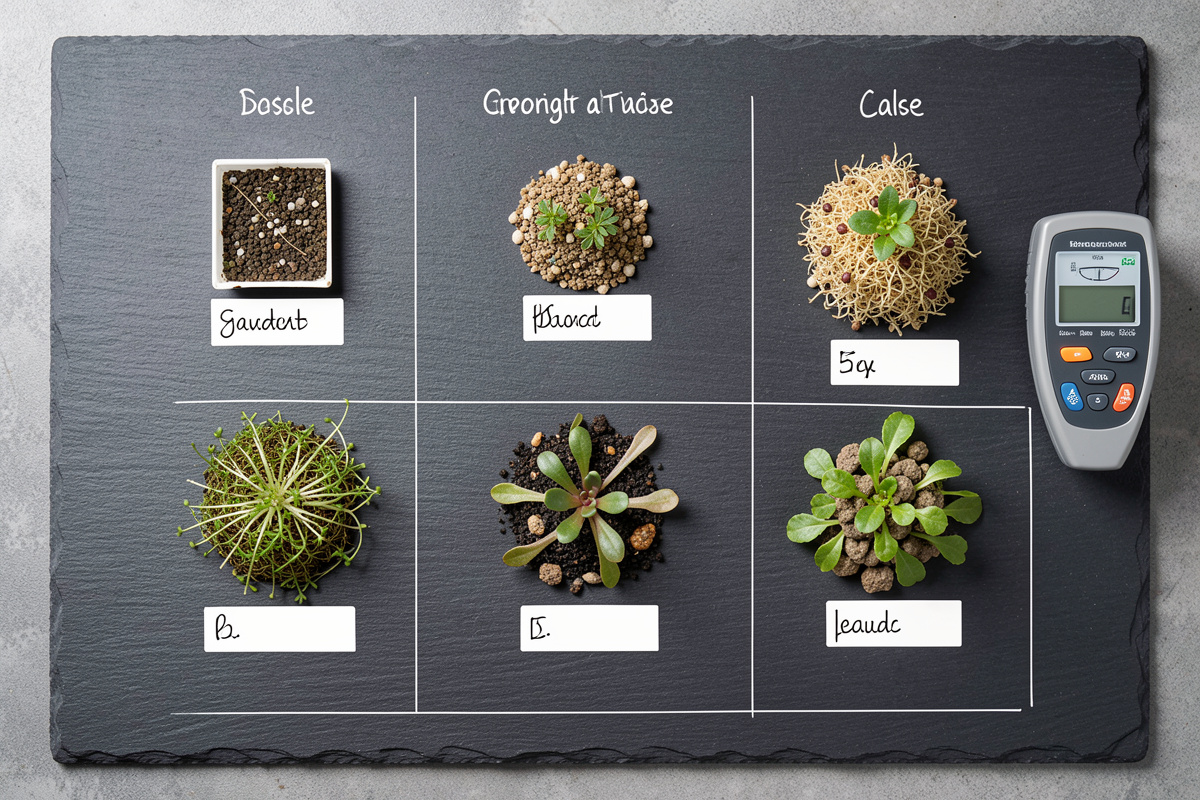
This hydroponic growing media comparison puts the five substrates I run side by side — coco coir, perlite, clay pebbles, rockwool, and a coco-perlite blend — across the things that actually decide a grow: water retention, aeration, pH behavior, reusability, cost, and which system each one suits. There is no single best medium, only the right match for your method and how often you want to water.
I have grown the same crops in all of these with the same meters, so this is a working comparison rather than a datasheet. If you only take one thing away, take the master table below; everything after it explains the trade-offs behind the numbers.
The Master Comparison Table
Every rating here is relative across these five media in a real hydroponic system. “Raw pH effect” is what the medium does to your reservoir before you correct it; an inert medium leaves your numbers alone, which is what you want when feeding to a target EC.
| Medium | Water Holding | Aeration | Raw pH Effect | Reusable | Relative Cost | Best System |
|---|---|---|---|---|---|---|
| Coco coir | High | Medium | Neutral, strips CalMag | 1–2 grows | Low | Drip, hand-water, Dutch bucket |
| Perlite | Very low | Very high | Inert | Many grows | Low | Amendment, net pots, Dutch bucket |
| Clay pebbles | Low | High | Inert after rinse | Years | Medium up front | Ebb-and-flow, Dutch bucket, net pots |
| Rockwool | Very high | Low–medium | High, ~7.5–8.5 | Single use | Low per cube | Propagation, slab growing |
| Coco/perlite (70/30) | Medium | High | Neutral, strips CalMag | 1–2 grows | Low | Most versatile all-rounder |
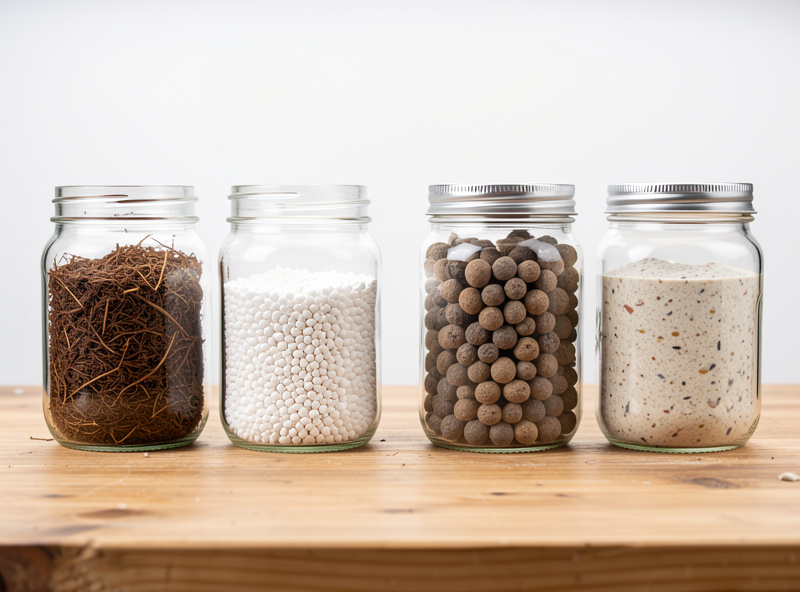
Water Retention vs Aeration: The Core Trade-Off
Every medium in that table is really being scored on one axis: how it splits water and air in the root zone. Rockwool and coco sit at the wet end — they hold a big reserve, so they forgive a forgetful waterer but punish an over-eager one. Perlite and clay pebbles sit at the dry end — they hold almost nothing, drain instantly, and supply abundant oxygen, but they need frequent watering or plants go thirsty. The coco-perlite blend deliberately splits the difference, which is why it is the most forgiving choice for a new grower.
This axis sets your watering schedule before you buy a pump. A coco bed might take one or two feeds a day; a hydroton ebb-and-flow bed might flood many times a day; a rockwool cube wants watering only when it lightens. Pick the medium first, then build the schedule around its dry-down — never the reverse. The deeper logic behind matching media to systems is in the growing media guide hub.
Chemistry: Inert vs Active Media
The second big divide is chemical. Perlite and rinsed clay pebbles are inert — they have no meaningful cation exchange and leave your EC and pH exactly where you set them. That is a real advantage when you want your meter readings to mean something. Coco coir is chemically active: it strips calcium and magnesium from solution until buffered, which is why it pairs with extra CalMag and a buffering step. Rockwool is the other active one — it pushes pH up until conditioned. Neither is a flaw; they just demand a prep step that the inert media skip.
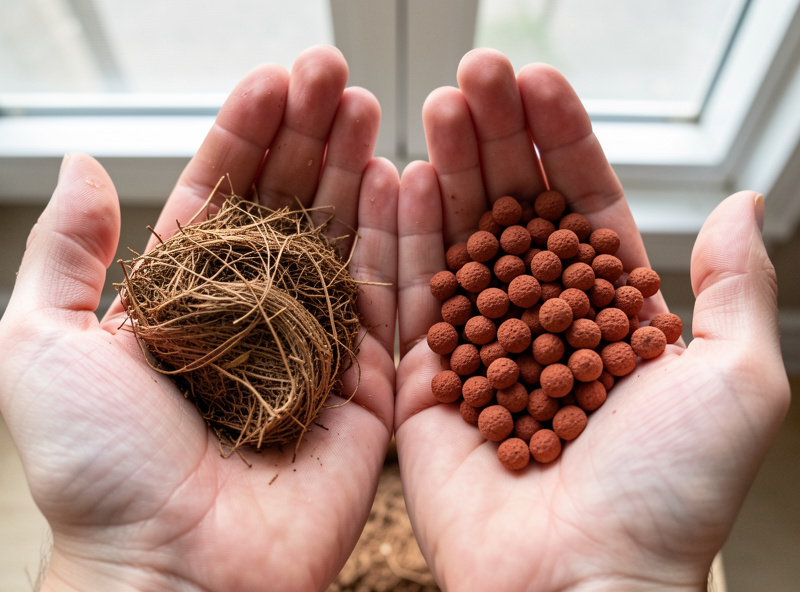
Cost and Reuse Over Time
Shelf price misleads. Clay pebbles cost more up front but are reusable for years, so their cost per grow is the lowest of the lot once you rinse and re-bed them. Rockwool is cheap per cube but single-use, so it adds up over continuous growing. Coco and perlite sit in the middle — cheap to buy, with perlite reusable many times and coco good for a grow or two. If you grow year-round, the reusable media win the long game; if you grow occasionally, the cheaper single-use options are fine. The full reuse process for each is in reusing growing media.
A Closer Look at Each Medium
Coco coir is the soil-like all-rounder. It holds water generously, keeps decent air, and forgives irregular watering, which is why it is my default recommendation for a first grow. Its one demand is buffering, because fresh coir strips calcium and magnesium from your feed. Buffer it, add CalMag, and it behaves predictably across drip and hand-watered systems.
Perlite is pure aeration. It holds almost no water and is chemically inert, so its job is to open up air channels — either mixed into a heavier medium or run straight in net pots where you want maximum drainage. It is light enough to float, so it suits blends and pots better than flooded beds. Rinse the dust off first, every time.
Clay pebbles are the reusable workhorse. They drain hard, hold little water, never break down, and rinse clean for years of reuse. That makes them the long-run economy choice for ebb-and-flow and Dutch buckets, where a pump brings the solution back on a schedule. The trade-off is frequent watering, since they hold so little reserve.
Rockwool is the propagation specialist. Its high water retention and sterility make it unbeatable for germinating seeds and rooting cuttings, but it ships at a high pH that must be conditioned down, and it holds so much water that over-watering is the classic failure. Most growers treat it as single-use.
The coco-perlite blend is the medium I hand to anyone unsure where to start. A 70/30 mix combines coco’s water retention with perlite’s air, giving a substrate that forgives mistakes at both ends of the watering schedule and works in nearly every system except pure water culture. If you want one bag to cover most of your growing, this is it.
How I Test a New Medium on the Bench
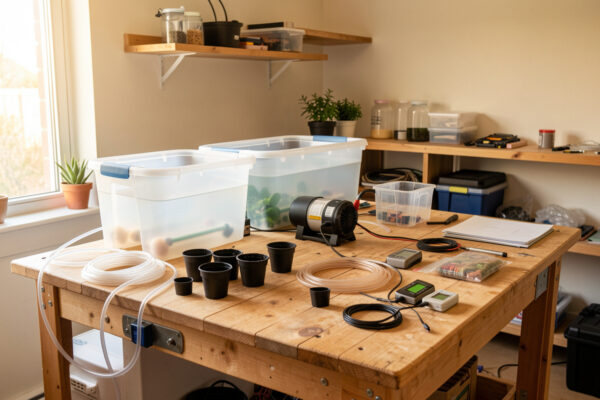
When a new medium comes onto my bench I run the same quick checks before I trust it with a crop. First I wet a sample, let it drain, and feel how heavy it stays — that tells me its place on the water-air axis and roughly how often I will water. Second I soak a sample in plain pH-7 water for an hour and read the runoff with my pH and EC pens; an inert medium barely moves the numbers, while raw coco or rockwool shifts them and tells me what prep it needs. Third I check for dust and debris, because anything that clouds a reservoir gets a pre-rinse.
Those three checks take ten minutes and have saved me more crops than any product review. A medium is not a mystery once you measure how it holds water and what it does to your chemistry — and measuring beats guessing every time, which is the whole philosophy behind how I run this lab.
Which Medium Should You Pick?
Strip it down to your situation. For the most forgiving start with leafy greens, run a coco-perlite blend. For a reusable medium in ebb-and-flow or Dutch buckets, run clay pebbles. For starting seeds and clones, use rockwool cubes and transplant them on. For pure aeration mixed into a heavier medium, add perlite. And for DWC, use only a token inert medium in the net pot, since the roots live in solution.
The honest takeaway from running all five side by side is that most growers end up with two or three on the shelf, not one. Rockwool for propagation, clay pebbles or a coco blend for the main system, and a bag of perlite to tune the air balance covers nearly everything a hobby grower will do. Match each medium to the job it wins, and your grow gets easier the moment you stop forcing one substrate to do everything. For where these media sit in the bigger setup, see the hydroponic systems guide and the guide to choosing a system.
Mistakes I See When Growers Choose Media
The most common mistake is copying a medium from a grower whose system is nothing like yours. A channel running rockwool slabs in a warm commercial greenhouse is solving a different problem than a hobbyist with a Dutch bucket in a cool spare room. Match the medium to your method and climate, not to someone else’s setup. The second mistake is ignoring the prep step: running coco unbuffered or rockwool unconditioned guarantees a deficiency or a pH lockout in the first two weeks, no matter how good the medium is.
A third trap is judging cost by the shelf price alone. The reusable media look expensive until you divide by the number of grows you will get from them, at which point clay pebbles become the cheapest option on the wall. And the last one is trying to make a single medium do every job — one substrate that is perfect for propagation and for a flooded fruiting bed does not exist. Owning two or three media, each used where it wins, is cheaper, easier, and far more reliable than forcing one to stretch across every stage of the grow.