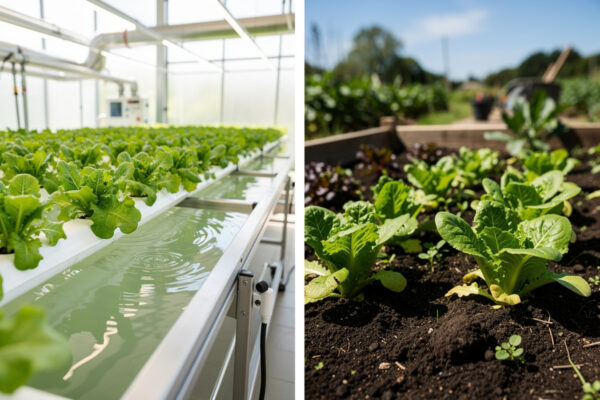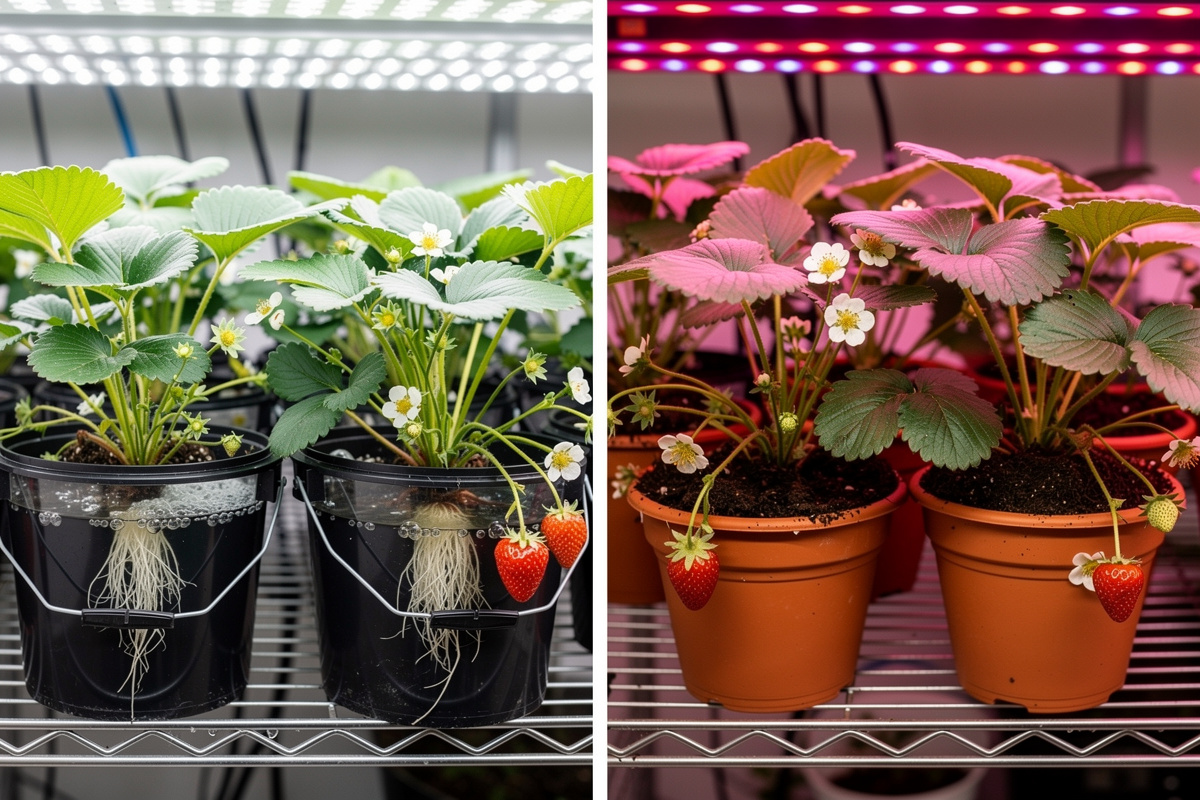
On my bench, hydroponic strawberries beat soil to first fruit and carry a heavier load per plant than soil-grown equivalents — in my own NFT channel that’s landed in roughly the 25-35% faster / 30-50% higher-yield range, with cleaner berries and fewer pest issues since there is no soil to harbor fungal spores or insects. Soil strawberries are simpler to maintain and cost a fraction of the hydroponic startup investment. This guide compares both methods across growth speed, yield, flavor, cost, and maintenance demands so you can pick the right system for your indoor berry garden.
As an Amazon Associate I earn from qualifying purchases.
Hydroponic Strawberries vs Soil Grown: Key Differences at a Glance
| Factor | Hydroponic Strawberries | Soil-Grown Strawberries |
|---|---|---|
| Growth speed | Faster to first harvest — 25-35% in my own channel | Standard growth rate |
| Yield per plant | Higher with optimized nutrients — 30-50% on my bench | Good — depends on soil quality |
| Setup cost | $60–$200 depending on system | $10–$30 for containers and soil |
| Ongoing cost | Nutrient solution, pH supplies | Fertilizer, potting mix replacement |
| Difficulty | Moderate — requires pH and EC monitoring | Easy — forgiving of mistakes |
| Space needed | Compact — vertical NFT and tower systems | More floor space per plant |
| Pest risk | Lower — no soil-borne diseases or fungus gnats | Higher — root rot, fungus gnats, soil pathogens |
| Flavor | Excellent — clean, consistent sweetness | Excellent — complex, traditional flavor |
| Water usage | 80–90% less than soil | Standard — frequent watering needed |
How Hydroponic Strawberry Growing Works
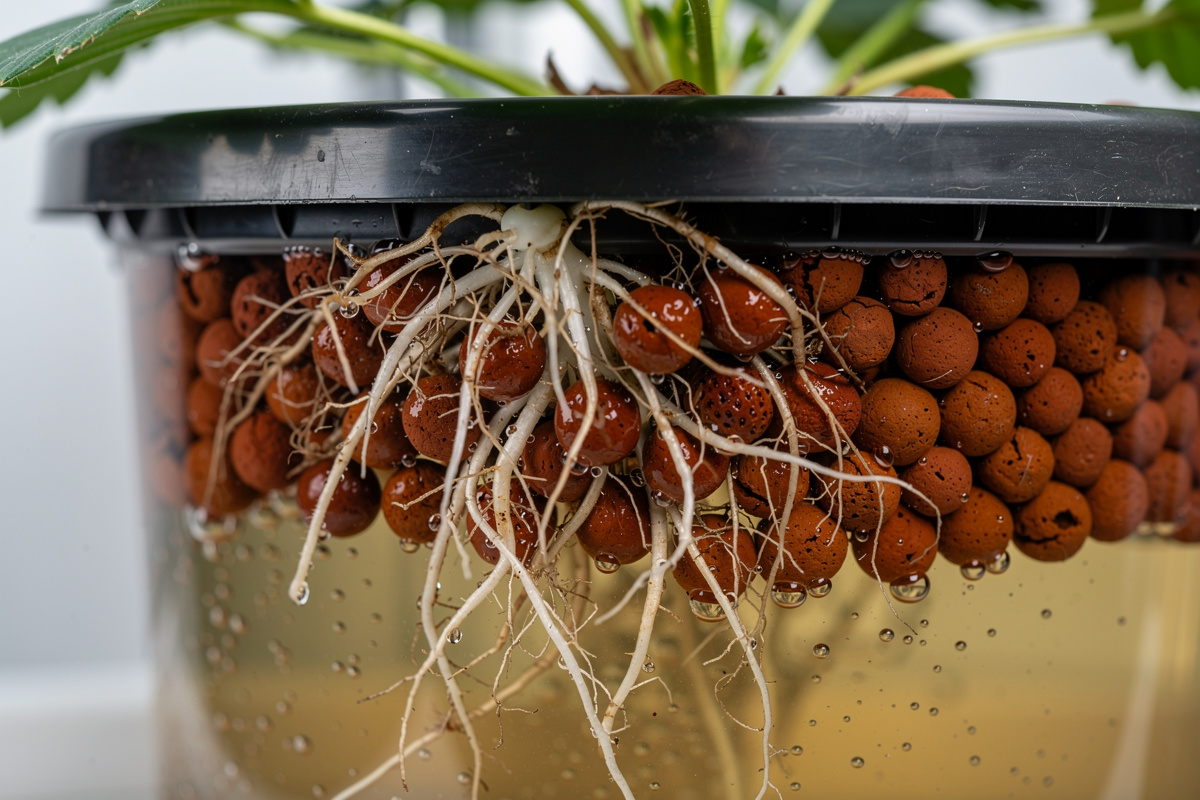
In hydroponic systems, strawberry roots grow in an inert medium — clay pebbles, perlite, rockwool, or coco coir — and receive water and dissolved nutrients directly through a circulating solution. The plant never searches for food or pushes roots through dense soil. Everything it needs is delivered to the root zone in precise, measurable concentrations.
This direct delivery is why hydroponic strawberries grow faster and produce more fruit. In soil, roots expend energy expanding through the medium and competing with microorganisms for nutrients. In hydroponics, that energy goes directly into crown development, flowering, and fruit production. A recirculating NFT channel also uses dramatically less water than a tray of soil containers — research on hydroponic water productivity puts the savings in the 80-90% range, which is roughly what I top off on my own channel compared to what the soil planters next to it drink in a week.
Best Hydroponic Systems for Strawberries
Strawberries are compact plants with relatively shallow root systems, making them excellent candidates for several hydroponic methods. Their small size and low nutrient demands mean even simple systems work well.
| System Type | Strawberry Suitability | Pros | Cons |
|---|---|---|---|
| NFT (Nutrient Film Technique) | Excellent | Perfect for shallow roots, space-efficient, scales to dozens of plants | Pump-dependent, power outage kills plants quickly |
| Dutch Bucket / Drip | Excellent | Reliable, scalable, good for larger varieties | More components, needs drain-to-waste or recirculation |
| Deep Water Culture (DWC) | Good | Simple setup, affordable, great oxygenation | Reservoir temperature control critical, limited scalability |
| Ebb and Flow | Good | Reliable, periodic flooding promotes strong roots | Heavier setup, flood table needed |
| Kratky (Passive) | Fair | No pumps, no electricity, zero noise | Limited to small setups, reservoir management tricky for fruiting |
| Aeroponics | Excellent but complex | Fastest growth, maximum oxygenation | Expensive, mist nozzles clog, less forgiving |
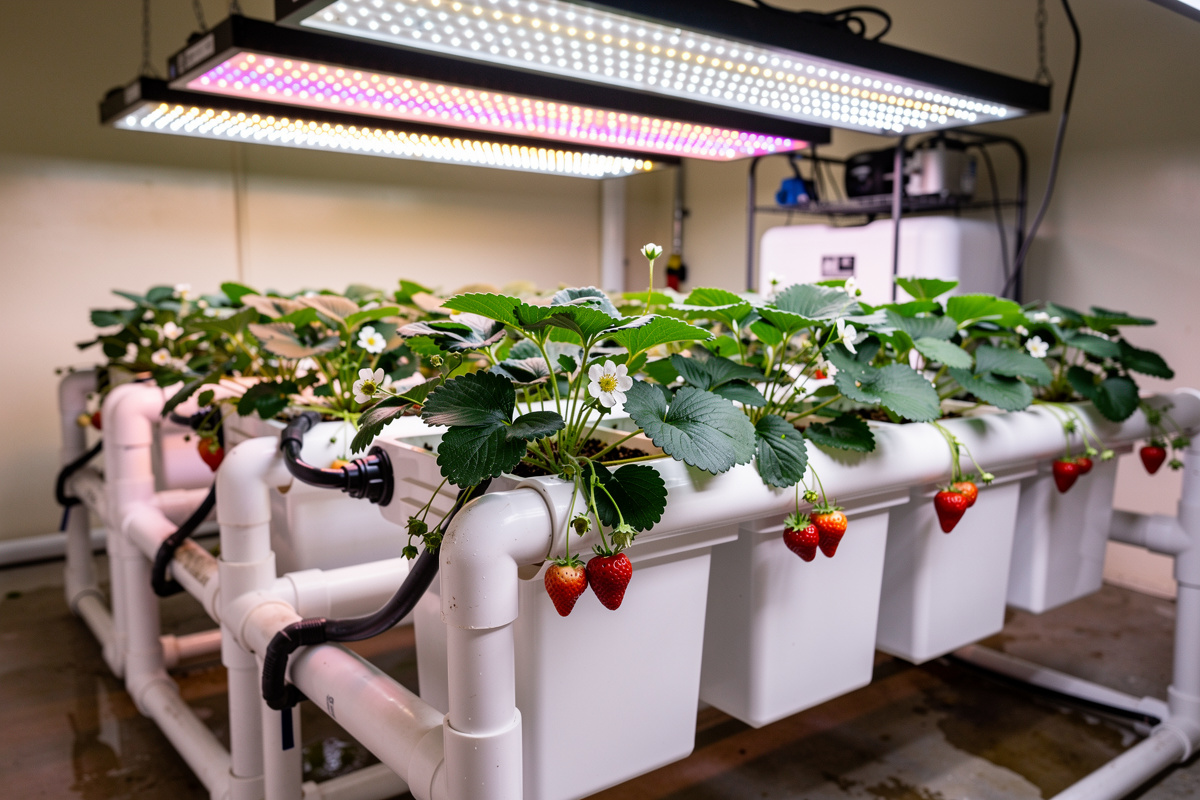
For most home growers, NFT or Dutch bucket systems offer the best balance of performance and simplicity for strawberries. NFT channels are the industry standard for commercial hydroponic strawberry production and can hold 20 to 40 plants in a compact footprint. DWC works well for 1 to 4 plants on a windowsill or grow shelf. Strawberries are one of the crops where my own NFT run genuinely earns its keep — shallow roots and a compact crown are exactly what a nutrient film channel is built for, and it’s the one crop in my rotation where I’d pick NFT over DWC without hesitation.
Nutrient Requirements for Hydroponic Strawberries
Strawberries are moderate feeders compared to heavy crops like tomatoes, but they still need precise nutrient management for optimal fruit production. A two-part or three-part hydroponic nutrient system gives you control over the N-P-K ratio at each growth stage.
Vegetative stage (weeks 1–4 after transplanting): Balanced nutrients with moderate nitrogen for crown and leaf development. EC 0.8–1.2, pH 5.5–6.0. Use a balanced “grow” formula.
Flowering stage (weeks 4–8): Reduce nitrogen, increase phosphorus and potassium. EC 1.2–1.6, pH 5.5–6.0. Switch to the “bloom” formula. Add calcium-magnesium supplement — strawberries are sensitive to calcium deficiency, which causes tip burn and poor fruit development. Ohio State University’s Controlled Environment Berry Production program traces tip burn to calcium simply not reaching fast-growing shoot tips fast enough, which is why I keep CalMag in the mix by default on my strawberry channel rather than waiting for the necrotic leaf edges to show up.
Fruiting stage (weeks 8+): Maintain bloom nutrients. EC 1.4–1.8, pH 5.5–6.0. Potassium drives fruit size, sweetness, and color. Strawberries are sensitive to salt buildup — flush the system with plain pH-adjusted water every 2 to 3 weeks to prevent nutrient accumulation.
If you are new to managing nutrient solutions, the essential equipment guide covers the pH meters, EC meters, and mixing tools you need.
How Soil-Grown Strawberry Growing Works
Soil growing is the traditional method: fill a container with quality potting mix, plant the strawberry crown, water regularly, and fertilize on a schedule. The soil acts as both the growing medium and the nutrient reservoir. Beneficial microorganisms in the soil break down organic matter and fertilizer into forms the plant can absorb.
The simplicity of soil growing makes it the natural starting point for most strawberry growers. There is no pH meter to calibrate, no EC meter to read, no nutrient mixing ratios to calculate, and no pump to maintain. You water when the soil feels dry, feed with a general-purpose fertilizer every 2 to 3 weeks, and the soil buffers minor mistakes.
If you prefer the container approach and want a comprehensive walkthrough from planting to harvest, CityRooted has a complete guide to growing strawberries in containers that covers variety selection, container sizing, soil mix, watering, pollination, and the full growing process using traditional methods.
Best Soil Setup for Container Strawberries
Container strawberries need slightly acidic, well-draining potting mix — never garden soil, which compacts in containers and suffocates roots. A standard recipe is 50% quality potting mix, 25% perlite for drainage, and 25% compost or well-rotted manure. Add a handful of peat moss to lower the pH slightly — strawberries prefer pH 5.5 to 6.5.
Container size: 20 to 30 cm diameter per plant, at least 15 cm deep. Fabric pots provide excellent aeration and prevent root circling. Tiered strawberry planters and hanging baskets are space-efficient options that also keep fruit off the ground, reducing rot and pest damage.
Head-to-Head Comparison: Growth Speed and Yield
Establishment (Weeks 1–4)
Both methods start the same way: bare-root crowns or plugs are planted and watered in. There is no speed difference during initial establishment — the crown does not know what system it will eventually grow in.
The divergence begins once roots establish. Hydroponic strawberry roots typically establish within 5 to 7 days and show visible new leaf growth within 10 days. Soil-grown crowns need 10 to 14 days for roots to colonize the new potting mix before growth accelerates.
Vegetative Growth (Weeks 4–8)
This is where hydroponics pulls ahead. With optimized nutrient delivery and constant access to water, hydroponic strawberry plants develop crowns and leaves noticeably faster than soil-grown equivalents — in the 25 to 35 percent range on my own channel, tracking the direction Illinois Extension’s hydroponic day-neutral strawberry production observations report for controlled EC/pH growing. The plants are typically more compact with denser foliage, which translates to more flower sites.
Soil-grown plants grow at a respectable pace but are more dependent on watering consistency and fertilizer timing. A dry spell or missed feeding slows growth noticeably, while hydroponic systems deliver nutrients continuously.
Flowering and Fruiting (Weeks 8–16+)
Hydroponic strawberries typically flower 1 to 2 weeks earlier than soil-grown equivalents and produce more flowers per crown. Extension-adjacent research comparing soilless and soil yields puts the general advantage in a similar band, and what I’ve counted off my own crowns lands in the 30 to 50 percent range, though real-world results depend heavily on light quality, temperature, pollination, and grower experience.
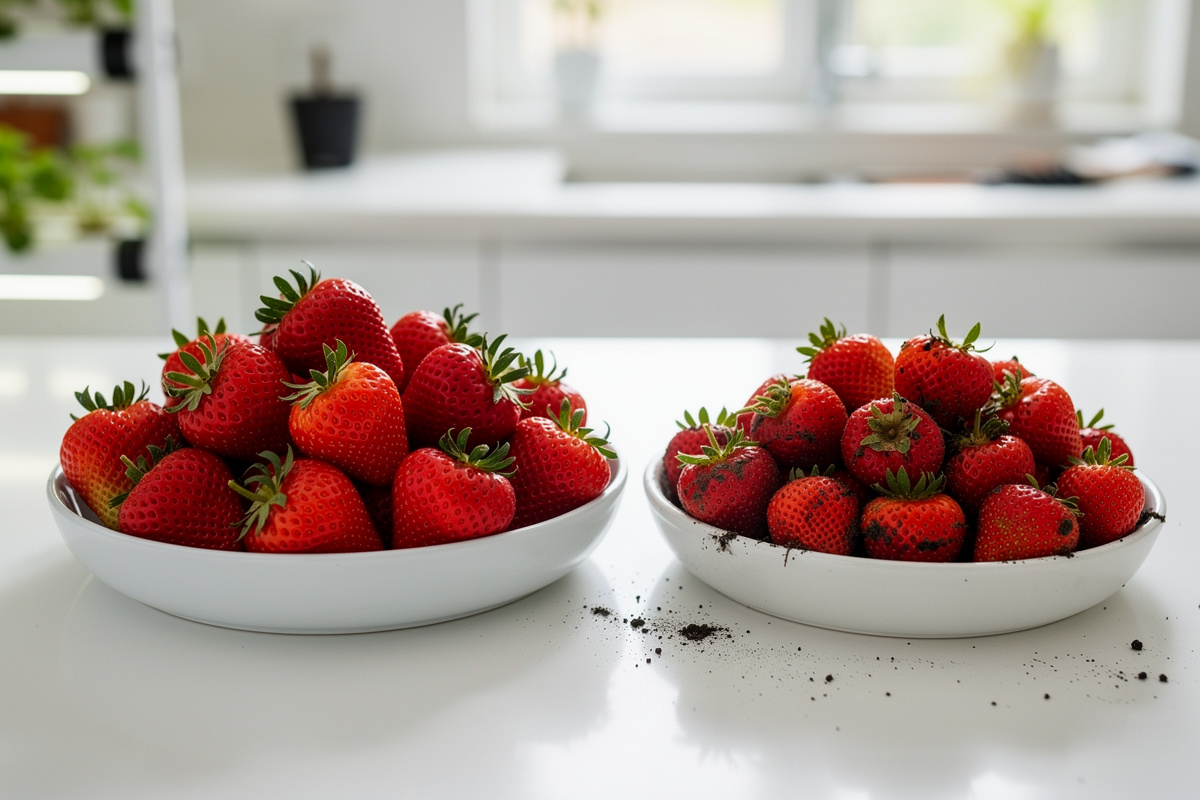
Soil-grown strawberries often produce fruit with slightly more complex flavor — likely due to the diverse microbial activity in soil that produces trace organic compounds absent in sterile hydroponic solutions. The difference is subtle but noticeable in side-by-side taste tests, particularly with heritage varieties like Mara des Bois.
Cost Comparison: First Year and Ongoing
| Expense | Hydroponic Setup | Soil Container Setup |
|---|---|---|
| Growing system | $60–$150 (NFT channel or DWC bucket) | $10–$25 (containers or tiered planter) |
| Growing medium | $15–$30 (clay pebbles or rockwool) | $15–$25 (potting mix, perlite, compost) |
| Nutrients | $20–$35 (hydroponic nutrient concentrate) | $10–$15 (fertilizer) |
| pH/EC meters | $25–$50 | $0 (not needed) |
| Grow light | $40–$100 | $40–$100 |
| Air pump (DWC) | $15–$25 | $0 |
| Year 1 Total | $175–$390 | $75–$165 |
| Annual ongoing | $35–$60 (nutrients, pH supplies) | $20–$35 (soil, fertilizer) |
Hydroponics costs roughly twice as much in the first year but the gap narrows significantly after that. If you are growing 6 or more plants and value higher yields, the per-berry cost of hydroponics drops below soil growing within 2 seasons. For a budget DWC build under $50, the breakeven point comes even sooner.
Strawberry Varieties That Perform Best in Each System
Not all strawberries respond equally to hydroponics. Compact day-neutral varieties with heavy fruit loads tend to benefit most from the consistent nutrient delivery of hydroponic systems, while larger everbearing varieties with sprawling growth habits do well in large soil containers.
Best for hydroponics: Albion, Seascape, and Tristar. These day-neutral varieties stay compact, produce continuously, and respond dramatically to optimized nutrient delivery. They are the varieties most commercial hydroponic strawberry growers use.
Best for soil containers: Ozark Beauty, Quinault, and Mara des Bois. These everbearing varieties have slightly larger growth habits and produce excellent flavor in soil. The traditional growing method complements their natural growth pattern.
Excellent in both: Chandler, Camarosa, and Jewel. These adaptable varieties perform well regardless of growing method when given adequate light and nutrients.
Light Requirements: Same for Both Methods
Whether you grow in hydroponics or soil, strawberries need 8 to 10 hours of direct light per day for good fruit production. Under grow lights, 12 to 14 hours of full-spectrum LED light produces significantly better results. Light is the one variable that does not change between methods — strawberries are moderate-to-high light crops regardless of what their roots sit in.
A minimum of 200 PPFD (photosynthetic photon flux density) at the canopy is needed for strawberry flowering and fruiting. For serious production, 300 to 500 PPFD produces significantly better results. A 40 to 100 watt LED panel covers 2 to 6 strawberry plants adequately.
Common Problems: Hydroponic vs Soil
| Problem | Hydroponic Cause | Soil Cause |
|---|---|---|
| Yellowing leaves | pH drift locking out nutrients (check pH) | Overwatering or nitrogen deficiency |
| Poor fruit set | Low phosphorus, poor pollination, temperature stress | Insufficient light, poor pollination, temperature stress |
| Gray mold (botrytis) | High humidity, poor airflow (same in both) | High humidity, poor airflow, wet foliage |
| Root rot | Warm reservoir (keep at or below 20°C/68°F), Pythium | Overwatering, poor drainage, soil pathogens |
| Tip burn on leaves | Calcium deficiency in nutrient solution | Inconsistent watering disrupting calcium uptake |
| Pest issues | Aphids, spider mites, whiteflies (no soil pests) | Fungus gnats, soil mites, plus aphids and spider mites |
Hydroponic problems tend to be nutrient-related and fixable by adjusting pH or EC. Soil problems tend to be moisture-related and fixable by adjusting watering frequency. Both systems share above-ground pest and disease issues (aphids, spider mites, gray mold) that require identical treatment regardless of growing method. UC ANR’s strawberry disorders guide notes that tip burn shows up on the youngest leaves first — I chased what I thought was a pH problem on my first strawberry channel before realizing the tip burn was calcium not reaching the new growth fast enough, even with the reservoir reading fine on my meter. For troubleshooting hydroponic-specific issues, see the common mistakes guide.
Which Method Should You Choose?
Choose hydroponics if: You want maximum yield per plant, enjoy monitoring and optimizing systems, plan to grow strawberries year-round, have limited floor space (NFT channels are very space-efficient), or are already running a hydroponic setup for other crops like lettuce and herbs. Hydroponic strawberries reward the extra attention with significantly higher production.
Choose soil if: You are a beginner who wants the simplest path to growing strawberries, prefer lower startup costs, do not want to manage pH and EC meters, or value the hands-off simplicity of traditional container gardening. Soil is forgiving, intuitive, and produces excellent strawberries with minimal technical knowledge.
Choose both: Many experienced growers run both methods simultaneously. Start a few strawberry plants in soil containers for simplicity and flavor, while experimenting with one or two plants in an NFT channel or DWC bucket to learn hydroponic techniques. Compare results side by side and scale whichever method works best for your situation.
Growing Hydroponic Strawberries: Quick Start Checklist
1. System: NFT channel or single DWC bucket. NFT total cost: $60–$120 for a 12-plant channel. DWC total cost: $25–$50 for a single bucket.
2. Medium: Clay pebbles (hydroton) for NFT channels or net pots. Rockwool cubes for starting crowns before transplanting.
3. Nutrients: Two-part or three-part hydroponic nutrient system plus calcium-magnesium supplement. Start at half strength for new transplants, increase to full strength during flowering.
4. Monitoring: pH meter and EC/TDS meter. Check pH every 2 to 3 days (target 5.5–6.0). Check EC every 3 to 4 days.
5. Light: Full-spectrum LED, 12 to 14 hours daily, 200 to 500 PPFD at the canopy.
6. Environment: Temperature 18 to 24°C (65 to 75°F) during the day, 13 to 18°C (55 to 65°F) at night. Reservoir temperature at or below 20°C (68°F) — treat 22°C (72°F) and up as the danger zone for root rot. Humidity 50 to 70 percent. Gentle air circulation for pollination and disease prevention.
The indoor garden setup guide covers the full installation process if you are building your first hydroponic system from scratch.
Are hydroponic strawberries better than soil-grown strawberries?
Hydroponic strawberries typically grow 25-35% faster and produce 30-50% higher yields per plant compared to soil-grown strawberries. However, soil-grown strawberries are simpler to manage and many growers find they have more complex, nuanced flavor. Neither method is objectively better — it depends on whether you prioritize yield and speed (hydroponics) or simplicity and lower cost (soil).
What is the best hydroponic system for growing strawberries?
NFT (Nutrient Film Technique) channels are the best system for growing strawberries hydroponically. They are perfectly suited to strawberries’ shallow root systems, space-efficient, and scale from a few plants to dozens. NFT is the industry standard for commercial hydroponic strawberry production. For home growers with 1-4 plants, Deep Water Culture (DWC) is a simpler and more affordable alternative.
What pH do hydroponic strawberries need?
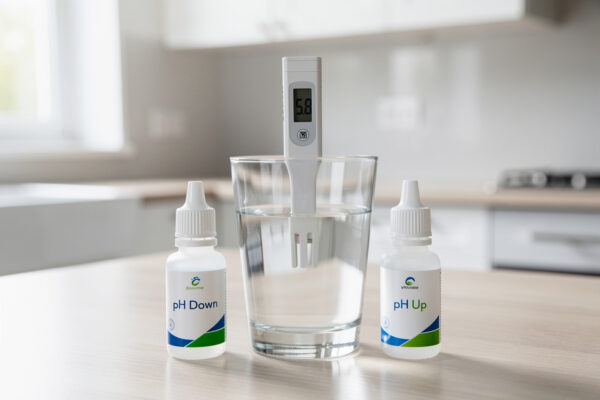
Hydroponic strawberries grow best at a pH of 5.5 to 6.0. This range allows optimal uptake of all essential nutrients including calcium, which is critical for preventing tip burn and poor fruit development. Check pH every 2-3 days with a digital meter and adjust using pH up or pH down solutions. pH drift is the most common cause of nutrient deficiency symptoms in hydroponic strawberries.
How long does it take to grow strawberries hydroponically?
From crown transplant to first harvest, hydroponic strawberries take approximately 6 to 10 weeks for day-neutral varieties and 8 to 12 weeks for everbearing varieties. This is roughly 2 to 3 weeks faster than soil-grown strawberries of the same variety. Once producing, strawberry plants continue fruiting for 4 to 6 months or longer under indoor grow lights with proper nutrient management.
Can you grow strawberries hydroponically year-round?
Yes, day-neutral strawberry varieties like Albion and Seascape produce fruit continuously under hydroponic conditions when temperatures stay between 18-24°C and plants receive 12-14 hours of LED grow light daily. Hydroponic systems make year-round growing easier than soil because nutrient delivery is consistent and not affected by seasonal soil temperature changes. Commercial hydroponic strawberry operations produce year-round using this exact approach.
Related Articles
- Complete Guide to Hydroponic Plant Growing — Master plant selection, nutrient schedules, and harvest timing for all hydroponic crops
- Hydroponic Systems Explained: DWC, NFT, Ebb and Flow — Understand which system matches your growing goals
- Essential Hydroponic Equipment Guide — pH meters, EC meters, lights, and everything you need
- DIY Hydroponics on a Budget — Build a DWC system for under $50
- 7 Common Hydroponic Mistakes — Avoid the pitfalls that kill strawberry plants
- Growing Strawberries Indoors: Container Guide — The soil-based alternative on our sister site CityRooted