Rockwool starter cubes are the propagation backbone of hydroponics: spun mineral fiber that holds water and air in the exact balance a germinating seed or fresh cutting wants. Used right, rockwool starter cubes in hydroponics give you near-perfect rooting — but they demand one thing first, conditioning, because raw cubes sit at a pH high enough to stall a seedling before it starts.
I start almost every seed and clone on my bench in rockwool, then transplant the rooted cube straight into my main system. This guide covers how I condition, sow, water, and transplant cubes, and the mistakes that turn this reliable medium into a swamp. For the dedicated germination walkthrough, pair this with my rockwool seed-starting guide.
What Rockwool Starter Cubes Are
Rockwool is made by melting basalt rock and chalk and spinning it into fine fibers, then pressing those fibers into cubes, plugs, and slabs. For propagation, the cube format dominates: small one-inch and 1.5-inch cubes for seeds and cuttings, and larger blocks for growing seedlings on. The fiber structure wicks water upward and holds a generous reserve while keeping pockets of air, which is exactly why a seed in rockwool stays evenly moist without you hovering over it.
It is also sterile straight from the wrapper, with no pathogens or weed seeds, which matters when a damping-off fungus can wipe out a tray of seedlings overnight. That sterility plus the moisture balance is why rockwool remains the propagation standard even though newer media exist. On my bench nothing roots cuttings as reliably.
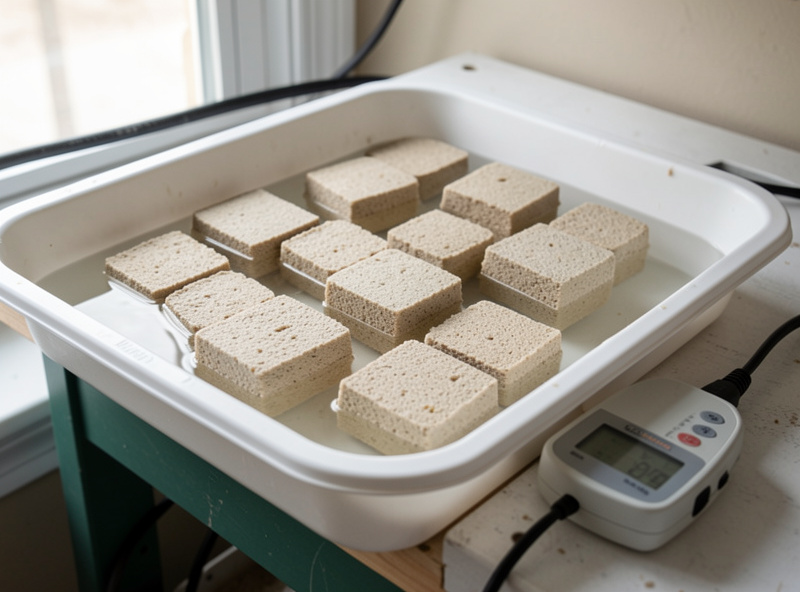
Conditioning: The Step You Cannot Skip
Here is the make-or-break habit. Raw rockwool ships at a high pH, around 7.5 to 8.5, because of the chalk in its makeup. Drop a seed into an unconditioned cube and the root zone sits far above the 5.5 to 6.2 band plants need, locking out iron and manganese and stalling growth with pale, yellow new leaves. Conditioning fixes this.
To condition, I soak the cubes for an hour or more in clean water adjusted to pH 5.5 — a touch lower than my normal target, because the cube will drift back up slightly. Some growers add a weak nutrient solution to the soak; I keep it simple with pH-adjusted water for seeds and a quarter-strength feed for cuttings. After soaking, I let the cubes drain so they are moist but not dripping. A saturated cube has no air, and that is the fastest way to drown a seedling. Keep pH Down and your meter on the bench for this; conditioning is a measurement step, not a guess.
Sowing and Watering
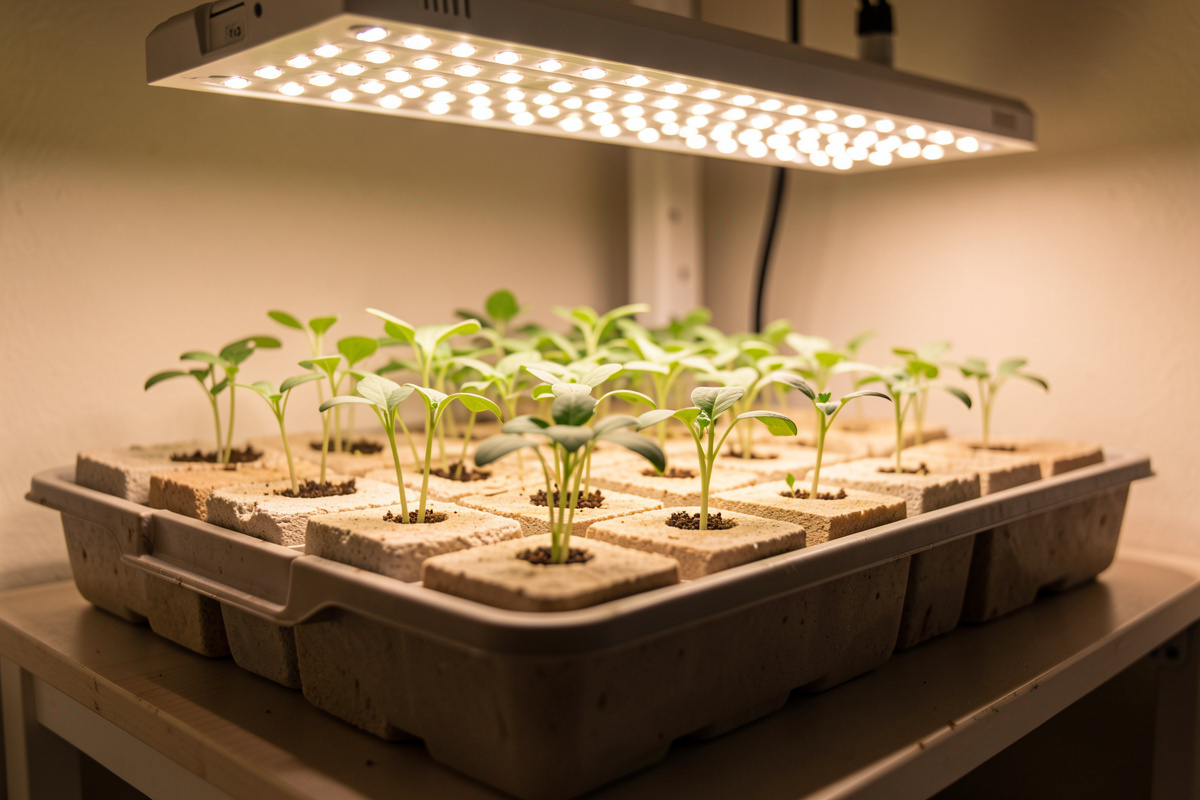
Once conditioned, sowing is simple: drop a seed into the pre-formed hole, pinch the top of the cube lightly closed over it, and keep the tray humid and warm. The single biggest error from here is over-watering. Rockwool holds so much water that a cube can look dry on the surface while it is a swamp inside, and constantly topping it up starves the developing roots of oxygen. I water only when the cube has noticeably lightened, and I let the bottom drain freely rather than leaving cubes standing in solution.
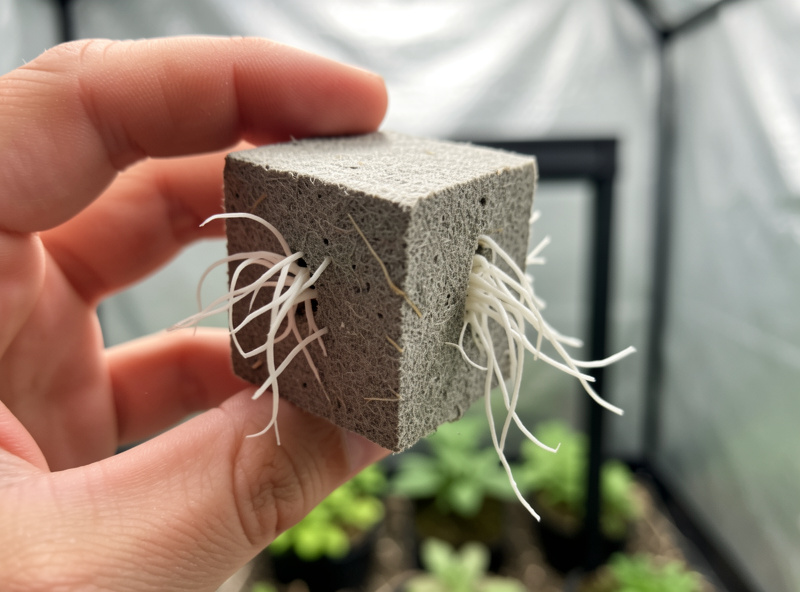
That moisture discipline is the whole skill with rockwool. Get it right and roots burst from the sides of the cube within a week or two; get it wrong and you get brown, slimy roots and stalled seedlings. Warmth helps too — a propagation tray on a warm surface roots far faster than a cold windowsill, which matters a lot in my cool Nordic grow room.
Transplanting Into Your System
The beauty of a cube is that you never disturb the roots at transplant. Once roots show at the sides and bottom, I lift the whole cube and set it into its new home. In DWC or NFT the cube nests into a net pot; in ebb-and-flow or a net pot of clay pebbles the cube sits in the middle and the pebbles surround it. That hand-off — moist cube to airy main medium — is the most common and most reliable way to move a seedling into a hydroponic system. The broader picture of how cubes fit alongside other substrates is in the growing media guide and the media comparison.
Rockwool is one medium I do not reuse. Spent cubes hold old root mass and stay too wet to trust, so I treat them as single-use — the one part of my media routine that is not part of the reusing media habit. Beginners building a first propagation setup should also read the seed-starting guide for the full workflow.
As an Amazon Associate I earn from qualifying purchases. A pack of 1.5-inch rockwool starter cubes is the size I reach for most.
Cube Sizes and Choosing the Right One
Rockwool comes in a ladder of sizes, and matching the size to the stage saves both medium and root trouble. Small one-inch plugs and cubes are for germinating seeds and rooting cuttings — they hold just enough water for a tiny root system without staying soggy. Once roots fill that cube, you either transplant straight into your system or step up to a larger 1.5-inch or three-inch block if the plant needs more time before its final home. The larger blocks have a pre-cut hole that accepts the smaller cube, so you never expose the roots.
For most leafy greens and herbs in a hobby system, a 1.5-inch cube is the do-everything size: big enough to support a seedling to transplant, small enough to dry down properly between waterings. I keep a sheet of these on the bench as my default. Larger blocks earn their place only for crops that sit in propagation longer or for bigger fruiting transplants. Whatever size you choose, the rules do not change — condition to pH 5.5, keep it moist not soaked, and let it drain. Size changes how much water the cube holds, but it never changes the discipline of not drowning it.
Frequently Asked Questions
Do rockwool cubes need to be soaked before use?
Yes. Raw rockwool sits at pH 7.5 to 8.5, which stalls seedlings by locking out iron. Soak the cubes for an hour or more in clean water adjusted to pH 5.5, then drain them so they are moist but not saturated before sowing seeds or cuttings.
How long do seeds take to germinate in rockwool?
Most leafy greens and herbs sprout in 3 to 7 days in a warm, humid rockwool cube, with roots showing at the sides within one to two weeks. Warmth speeds it up; a cold room slows germination considerably, which matters in cool climates.
Why are my rockwool seedlings yellow?
The most common cause is skipping conditioning, leaving the cube at a high pH that locks out iron. Yellow new growth points to that. The second cause is over-watering, which suffocates roots. Condition to pH 5.5 and water only when the cube lightens.
How often should I water rockwool cubes?
Only when the cube has noticeably lightened in weight. Rockwool holds a lot of water and looks dry on top while still wet inside, so frequent topping-up drowns roots. Let the cube drain freely and never leave it standing in solution.
Can you reuse rockwool cubes?
It is not recommended. Spent cubes hold old root mass, stay waterlogged, and can harbor pathogens, so most growers treat rockwool as single-use. Reusable media like clay pebbles and perlite are the better choice when you want to save and re-bed a substrate.